



SCANIA SHOWCASES IMO III 16-LITRE DIESEL
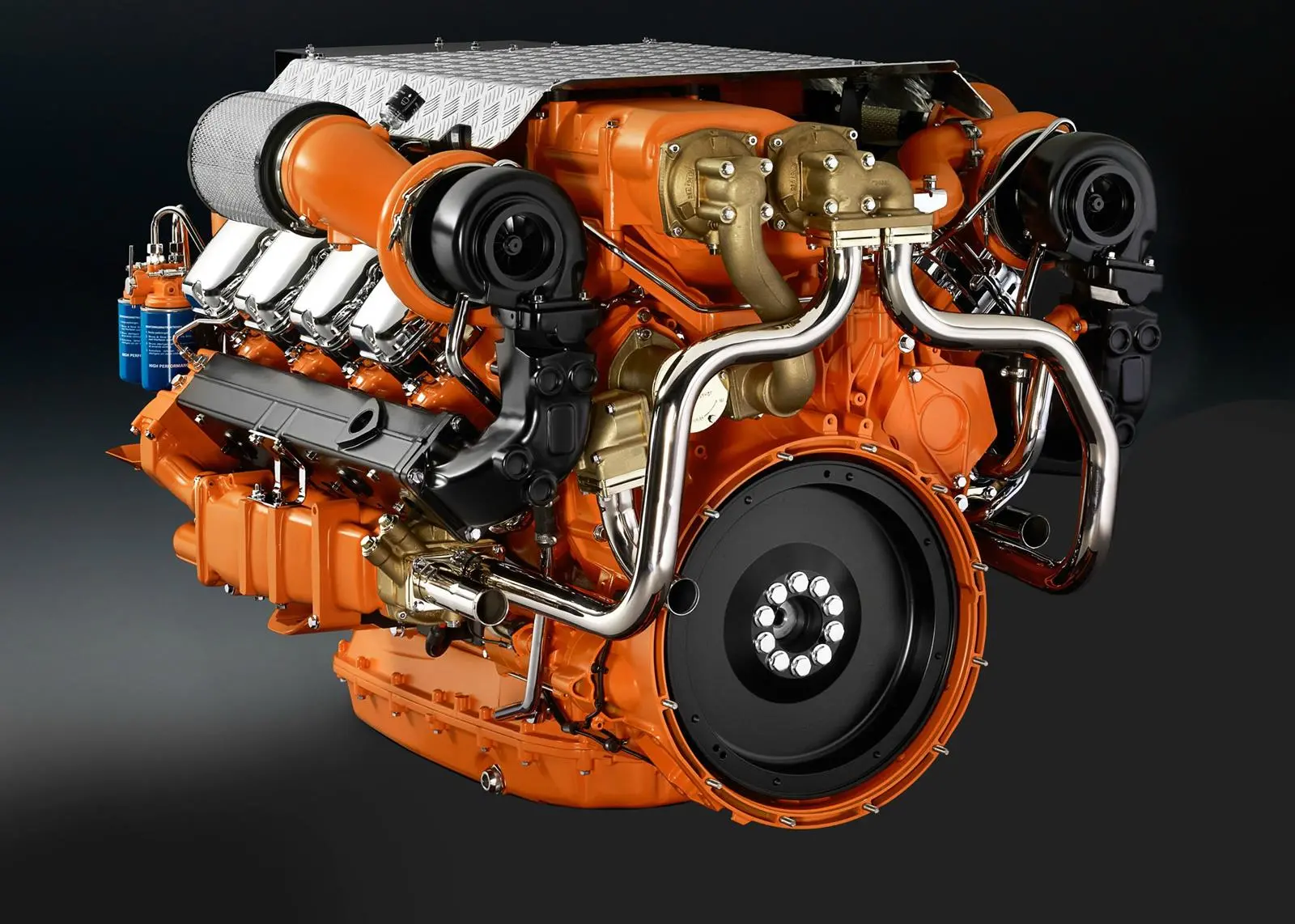
“While the IMO Tier III standard is already in force in the North American and United States Caribbean Sea areas, all new ships constructed on or after 1 January 2021 destined to operate in European waters will also require IMO Tier III-compliant engines,” says David Bamber, General Manager – Scania Engines for Scania (Great Britain) Limited. “The same holds true for any ships replacing an engine with a non-identical engine or installing an additional engine. In bringing its IMO Tier III engines to market two years ahead of the standard becoming mandatory, Scania is helping the industry plan and prepare for the transition as operators focus more and more on sustainability.”
All Scania engines are based on a robust design with a strength-optimised cylinder block containing wet cylinder liners that can easily be exchanged. Individual cylinder heads with four valves per cylinder promotes fuel economy and ease of maintenance. The engine features Scania’s fuel-efficient XPI injection system and utilises selective catalytic reduction (SCR) to meet the IMO Tier III standard, reducing NOx emissions by more than 70 percent. The engines can also be run on HVO (hydrotreated vegetable oil), a biodiesel which delivers reductions of carbon dioxide emissions compared to conventional diesel.
The engines are also designed for powering generator sets on commercial shipping and here the output can range from 199kW to 640kW. The engines are available with either built-in heat exchangers or to operate with single or dual keel cooling systems, and a limited range of emergency/harbour (fan drive) models/ratings. The 16-valve gensets are available in 1,500 rpm or 1,800rpm variants.
Scania produces marine engines in the power range 162-846kW (220 – 1,150hp). The company’s products combine low revs with high torque and are ideally suited to a wide range of propulsion and ancillary applications, including fishing vessels, ferries, fast patrol boats and survey ships.
|
16-litre DI16M |
Engine speed (rpm) |
||||
|
1,200 |
1,500 |
1,800 |
2,000 |
2,300 |
|
|
Gross power, full load (kW) |
348 |
597 |
769 |
822 |
846 |
|
Gross power, full load (hp, metric) |
473 |
812 |
1,046 |
1,118 |
1,150 |
|
Gross power, propeller curve (kW) |
166 |
291 |
458 |
597 |
846 |
|
Gross power, propeller curve (hp, metric) |
226 |
395 |
623 |
811 |
1,151 |
|
Gross torque (Nm) |
2,769 |
3,799 |
4,079 |
3,924 |
3,512 |
|
Fuel consumption at full load (g/kWh) |
217 |
205 |
201 |
206 |
217 |
|
Fuel consumption. 3/4 load (g/kWh) |
206 |
203 |
199 |
204 |
211 |
|
Fuel consumption. 1/2 load (g/kWh) |
201 |
204 |
203 |
207 |
214 |
|
Fuel consumption, propeller curve (l/h) |
40 |
71 |
110 |
145 |
219 |
|
Optimum fuel consumption (g/kWh) |
199 |
||||
|
Heat rejection to coolant (kW) |
333 |
506 |
612 |
685 |
767 |
Related Articles
 2-STROKE & 4-STROKE
 2-STROKE & 4-STROKE
 2-STROKE & 4-STROKE