



Self-powered ammonia leakage monitoring system developed
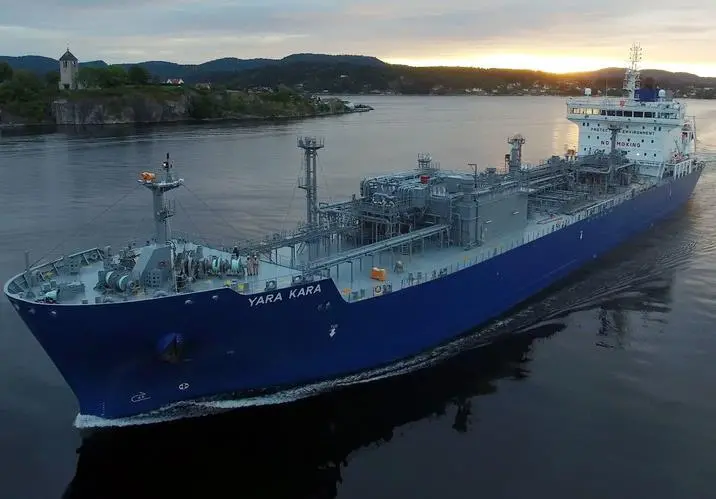
Ammonia is a promising marine fuel of the future due to its zero carbon content, safe storage, and high energy density, but it is also a toxic gas that can cause irritation to the mucous membranes and respiratory system. Therefore, it’s necessary to develop a real-time and accurate ammonia monitoring method for long-distance sea voyages.
The system developed by the researchers includes a honeycomb triboelectric nanogenerator (TENG)-based power generation system, a carbon nanotube doped polypyrrole (CNTs-PPy)-based ammonia detection system, and a signal collecting and transmitting system (bluetooth).
The researchers improved the electronic conduction efficiency via the synergistic effect between the carbon nanotubes and conductive polymers, which enhanced the sensing performance at room temperature. The sensor exhibited good performance with a low detection limit, short response time (about 90 seconds), high selectivity, good stability, and low cost. Wireless transmission from the detection module to the computer terminal was achieved using bluetooth.
The system could collect and covert the mechanical energy generated by the vibration of the ship’s engine into electrical energy, to achieve self-powering of the entire sensing system.
The system has been tested on an expedition ship where it worked smoothly in the low-level cabin of the ship with high temperature and high humidity, confirming its potential in practical applications.
“The self-powered wireless detection system can realize long-term maintenance-free monitoring of ammonia leakage during ocean voyages,” said Feng. “It is expected to play an important role in the further application and promotion of ammonia energy.”
The research was published in Nano Energy.
Related Articles
 ALTERNATIVE FUELS & LUBRICANTS
 ALTERNATIVE FUELS & LUBRICANTS
 ALTERNATIVE FUELS & LUBRICANTS