



Shaped by ice
Capt Duke Snider explains: “One of the fallacies is that ice is just ice, the only difference being the thickness – but Baltic is mostly first year ice, while polar ice is multi-year, heavier and far more dense.”
Likewise, explains Gisbert de Jong, this means that taking local effects into account opens up unexpected ways to shape a support vessel’s build to its particular environment.
“While rules and regulations take design parameters as a given, those profiles are quite broad, not site-specific,” says Mr de Jong. “For example, salinity, along with temperature, differs. If you take off the salinity, the ice becomes weaker.” He adds, each geographical area is characterised by its own ice types, ice conditions and, consequently, ice collision scenarios.
Bureau Veritas has been involved for a while in the development of first principle strength assessment methods for ice-hull interaction, allowing novel designs to be analysed, as well as stern-first ice operations.
So, for offshore support boat builds destined for the Baltic, Bureau Veritas firstly enacted tank-replicated ice destruction tests on different thicknesses.
“This not only gave us the strengthening needed on the hulls, it also gave a way to put figures to the power – after all, one thing is withstanding the ice – another is being able to move through it.”
He adds: “If you take a closer look at exactly what kind of ice you are dealing with you can decide on operational parameters for the power onboard and even calculate the specific speeds.”
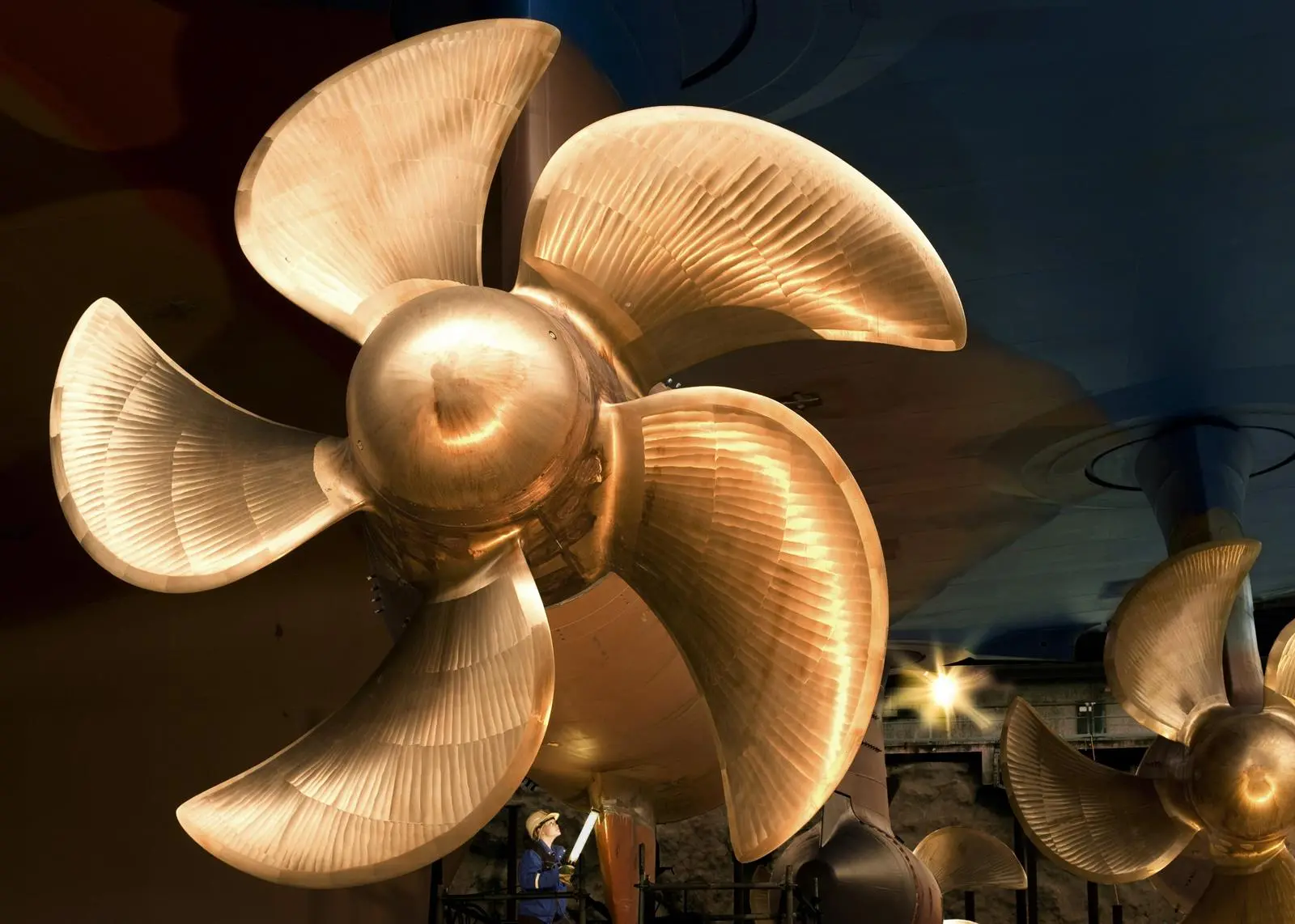
This leads neatly to the subject of propulsion systems. Capt Duke Snider explains that podded drives have proven themselves incredibly valuable in the Baltic and Caspian seas, yielding high manoeuvrability and, more importantly, breaking open paths in the ice much wider than the breadth of the ship.
However, the Arctic is a very different game, and he describes himself this minute as “still being one of the sceptics”, adding that as yet, there are “still some unknowns” to deal with.
“There hasn’t yet been so much experience of using podded propulsion on heavy, multiyear ice – or the survivability of these systems on being struck by a 10 tonne piece of multi-year or glacial ice,” he says.
Despite this, he thinks that time will tell: “There are indications that when podded propulsion has proven its resilience to impact, we will see a new generation of polar ships utilising the pods ability to turn around and drive the vessel stern first into the ice.”
He concludes, “I think we will be seeing more ships where the bow is optimised for open water while the stern is used for icebreaking, not least because most icebreaking designs are really inefficient in normal seas.”
By Stevie Knight
Related Articles
 PROPULSION
 GENERAL NEWS
 HYDROGEN