



Shipowner interest in LPG-burning engines mounts
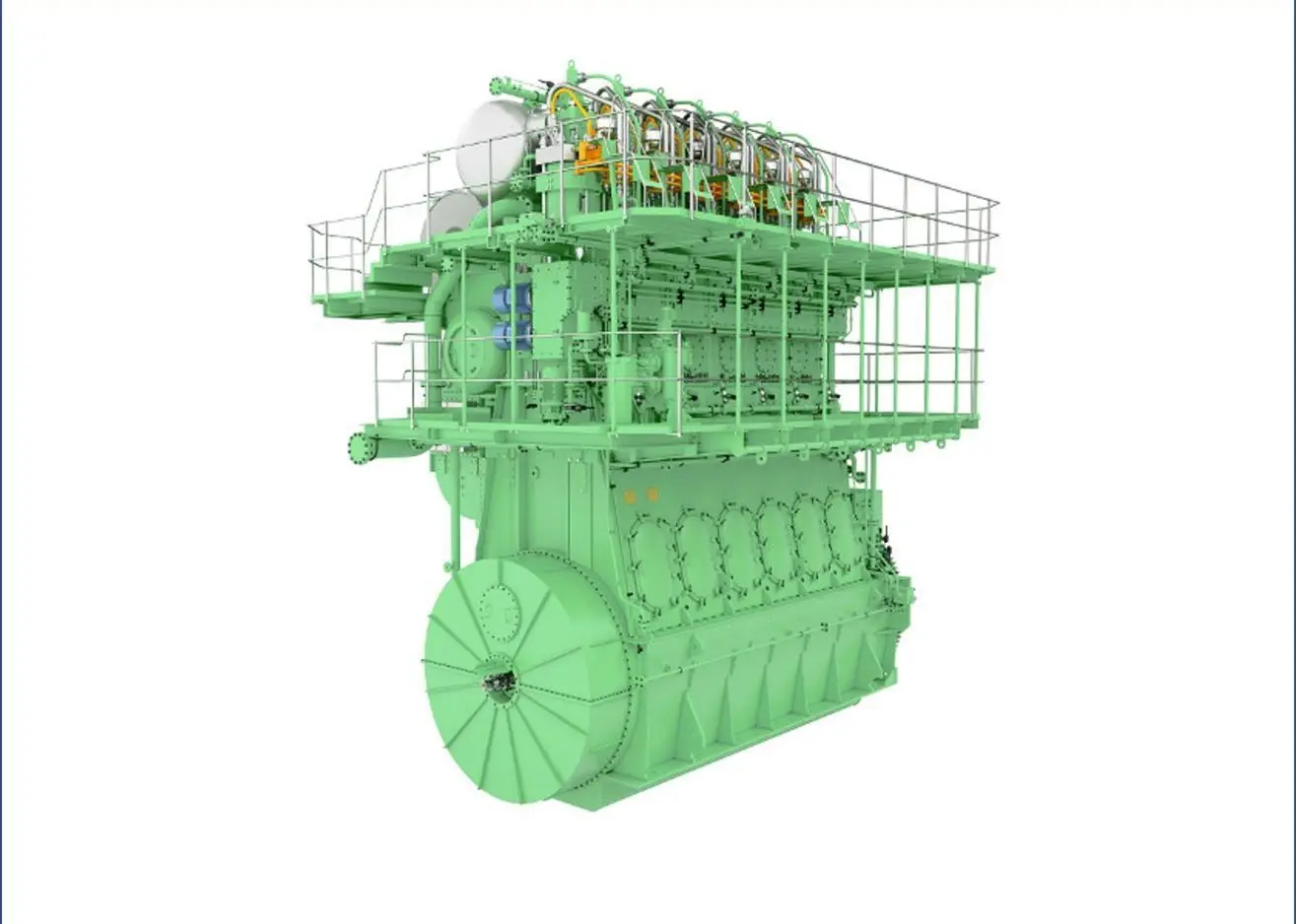
Jiangnan Shipyard has ordered an LPG-burning MAN B&W 6G60ME-LGIP engine in connection with an 86,000-m3 VLGC (Very Large Gas Carrier) newbuilding for Tianjin Southwest Maritime (TSM), the Chinese shipping company.
Bjarne Foldager – Senior Vice President, Head of Two-Stroke Business at MAN Energy Solutions – said: “With 2020 and the new IMO emissions fast approaching, interest in using LPG as a fuel – within and outside of the LPG carrier segment – is growing due to its sulphur-free character, widespread availability, price competitivity, and ease of bunkering. At MAN Energy Solutions, we feel that the introduction of the ME-LGIP is proving timely.”
MAN Energy Solutions won its first orders for the new engine in 2018 when Hanjin Heavy Industries announced that it would construct 2 × VLGCs (Very Large Gas Carriers) in their Philippines Facilities for Exmar, the Belgian integrated gas-shipping company. The 86,000 m3 newbuildings will each be powered by an individual MAN B&W 6G60ME-LGIP Mk9.5 engine.
The company’s first retrofit orders arrived in September 2018 when Oslo-listed BW LPG order the retrofitting of four MAN B&W 6G60ME-C9.2 HFO-burning engines to 6G60ME-C9.5-LGIP LPG-propelled dual-fuel engines. The order includes options for further retrofits in the future with work expected to begin during 2020.
Foldager added: “In gas mode, the ME-LGIP engine operates on just 3% pilot oil and down to 10% load. Ultimately, we expect the engine to operate without the need for pilot oil.”
LPG as fuel
The ME-LGIP engine is also performing strongly in terms of environmental performance, with reported reductions of up to 18% in CO2 and circa 90% in particulate matter when running on LPG, compared with HFO. The ME-LGIP is also well positioned to meet future environmental regulatory changes.
Foldager noted: “The ME-LGIP can also burn liquid volatile organic compounds, a deliberate move on our part since the IMO will inevitably turn its focus towards the reduction of volatile organic compounds in the future. Accordingly, we view the ME-LGIP as also ideally suited to the propulsion of shuttle tankers and very large crude carriers.”
The Motorship previously reported that a 2016 study by DNV GL and MAN Energy Solutions found LPG could be the most financially viable sulphur compliant fuel for a long-range tanker sailing in a post-2020 global regime, with LPG comparing favourably with LNG owing to lower upfront investment requirements.
LPG’s future as a viable fuel for general marine transportation looks promising as it will not require as large an investment in infrastructure – such as bunkering facilities – in contrast to other, gaseous fuels. As a widespread energy source, availability is high and LPG is easier to store and handle, compared with cryogenic gaseous fuels.
Related Articles
 PROPULSION
 GENERAL NEWS
 HYDROGEN