Shipowners need to be in possession of the facts to face up to the 2015 challenge
‘Are you ready for 2015?’ is the theme of the event. In less than 33 months 2015 will have arrived, and with it the tighter emission control area (ECA) limits, particularly the sulphur cap. Shipowners only have this time to ensure that they will be able to meet these new regulations, which unlike changes to IMO Conventions like SOLAS and MARPOL which have gone before, will apply to all ships, of whatever age, from the outset, with no period of grace as far as we can ascertain. So it’s actually a pretty big deal for all vessel owners and operators.
Of course, the simple answer is to use fuel with a sulphur content below the mandatory 0.1%. But do all owners realise that it’s nowhere near as simple as that? The new rules will effectively outlaw the use of heavy fuel oils (HFO) within ECA boundaries. Just changing to distillate fuel is not that simple. Currently available fuel quality data suggest that even marine diesel oil (MDO) can have a higher sulphur content than permitted under the new rules, and the only sure solution looks like ultra low sulphur marine gas oil (MGO).
But these fuels bring their own problems. There are the practical difficulties; the viscosity of these fuels is considerably lower than the type of fuels that ship engines and fuel systems are designed to burn, so modifications are needed there. The reduced sulphur content brings about lower lubricity, so items such as fuel pumps may need to be changed or modified for reliable operation. There will undoubtedly be engine lubrication issues as a result of the different fuel – different engine lube oils will be needed, and these may need to be changed over when ships burn different fuels inside and outside ECAs. There may be adverse effects on auxiliary systems such as boilers – it’s not only the engines that will be prevented from burning HFO.
On the operational side there are questions as well. Distillate fuels are, naturally enough, more expensive than residual fuels. After all, they are a carefully manufactured product, while HFO is, effectively, a waste product with much lower value. Ships burn a lot of fuel, so the switch to distillates in ECAs cannot fail to affect the supply and demand situation. The price differential will become even greater, and a rise in costs of distillate fuel will have an influence far beyond the shipping community. And is there sufficient refining capacity to meet the demand? Will the current logistics and supply chain be able to ensure that distillate fuel is available where it is needed?
Then of course there are the alternatives to distillate fuels that need to be considered. One much-touted solution is to use liquefied natural gas (LNG) as a fuel, but the amount of work involved in converting ships and their propulsion and auxiliary plant to use gas as a fuel rules out this solution for all but newbuilds, and then there is the question of the infrastructure to supply the fuel. The other is the use of exhaust gas cleaning, i.e. scrubbers. On the surface, this technology seems to have much to commend it. It will allow ships to carry on using the same fuel, with the same systems, and be far less troubled by potential supply problems and price differentials. But scrubbers are bulky, heavy and costly. Do scrubbers work as well as claimed? Does the technology lend itself to shipboard installation? Do ships have space available for the equipment? Is type-approved equipment actually available in the marketplace and can it be delivered, fitted, tested and commissioned in time for 2015?
These questions only scratch the surface of a very real dilemma facing ship operators. One innovation brought in by Mercator Media’s conference organising team for 2012 was the appointment of a steering group, comprising representatives of shipowners, engine and equipment manufacturers, fuel and oil suppliers, classification societies and financiers. At the group’s initial meeting, and in subsequent discussions, it became all too apparent that there are so many unanswered questions about 2015. In fact the more the discussions progressed the more potential issues came to light – hence the slant taken by our 2012 (and 34th) event.
The larger, and more informed, shipowners no doubt have things well under control and are confident of being able to deal with the new emissions limits. But many medium-sized and smaller owners seem to remain, like us, unsure of the practicalities about how the limits will be applied and enforced, and what must be done to ensure compliance.
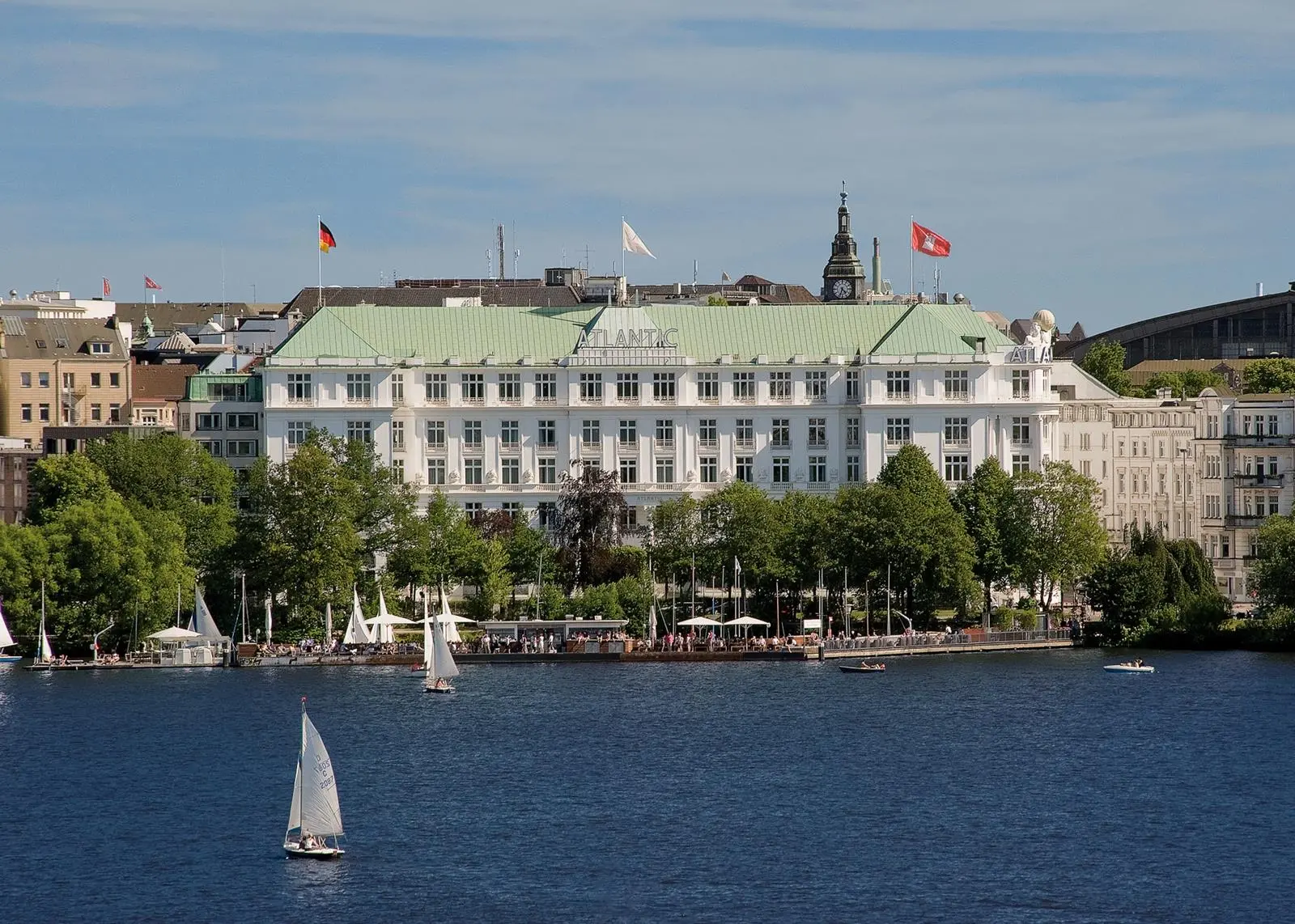
As well as being one of the premier maritime cities, and a popular venue for Motorship conferences, Hamburg is ‘home port’ for one of the major classification societies, namely Germanischer Lloyd.The conference will be chaired by GL’s vice-president for machinery and electrical systems, Olaf Drews.
After the chairman’s opening remarks on 23 May, delegates will be welcomed by the German Federal Minstry of Transport’s director of shipping, Achim Wehrmann. The keynote presentations – and there are three planned keynote addresses rather than just one – will set the scene for 2015. Three organisations, each concerned with emissions and environmental regulations for shipping, and each with their own views on the subject, are represented. These are, primarily, the IMO’s Marine Environment Protection Committee (MEPC) and we are privileged to welcome current MEPC chairman Andreas Chrysostomou. The European Commission is very keen to see effective limitation and control of emissions from ships, and has already introduced its own 0.1% fuel sulphur cap for ships at berth in EU ports. The European viewpoint will be given by Maximilian Strotmann, who is a member of the cabinet of the European Commission’s Transport Commissioner Slim Kallas. Another region which has introduced its own emissions controls is the USA, and a speaker from the US Coast Guard has been invited.
The first session is given over to ship owners and operators to give their perspective of how the new ECA rules will affect them, and how they are preparing for the changes. Three sectors from the shipping industry are represented by Capt Stefan Bülow of Ernst Russ, representing container shipping, and looking at short-sea operations trading mostly within ECAs, which will be the most affected sector, but also considering the implications for ships on world-wide trade that need to enter ECAs, and planning to meet future challenges on new vessels. Gerry Docherty, technical superintendent at Ardmore Shipping, will look at optimising vessel operations from a tanker/bulk operator’s viewpoint, while Kasper Moos, technical vice-president at DFDS will look at solutions to the technical and economic problems facing passenger vessel operators.
It would not be a Motorship conference without at least one session devoted to engine technology, and in the second session, looking at engine technical solutions, the implications of running on both HFO and MDO, and the challenges involved in switching between the two different and basically incompatible fuels will be examined by Torben Wik of MAN Primeserv, from the low speed engine point of view, and Tomas Aminoff of Wärtsilä Ship Power, for the four-stroke sector. The general issues in changeover and blending of residual and distillate fuels will be addressed by the third presentation, from Jan Paulnitz of Jowa Technology.
The focus moves on in the next session to propeller technology; a more efficient propulsion system cuts energy consumption, reducing both fuel costs and emissions. ABB Marin’s Tom Sand will look at the example of a container feeder vessel developed jointly with naval architecture firm Knud E Hansen and designed around the contra-rotating Azipod units, while a combined Kappel propeller and rudder bulb is MAN Diesel & Turbo’s preferred system for improving ship efficiency, resulting in a more favourable energy efficiency design index (EEDI) – this option will be presented by the company’s head of propulsion R&D Jens Ring Nielsen.
Session 4 will be of particular relevance to 2015, and this importance is reflected in the fact that it contains five presentations. Fuel quality is a particular issue, and DNV Petroleum Services’ Dag Olav Hale will investigate the implications for large bore engines running on MGO. Wärtsilä Ship Design’s Willy Wang will explain the consequences of the expected dominance of distillate fuels in the shipping market, while a joint study by Germanischer Lloyd and MAN Diesel & Turbo examined two technical solutions for container vessels, namely using LNG as ship fuel and the use of exhaust gas treatment. The results will be presented by GL’s Dr Pierre Sames and MAN’s Niels B Clausen. The supply and availability of LNG as ship fuel, and how the economics of gas compare with MGO and HFO will be dealt with by Aksel Skjervheim of Gasnor. Fuel quality is always a contentious issue, according to Michael Green of testing laboratory Lintec, and it will, as he will explain, increasingly become a key issue for all purchasers of low sulphur fuels.
The fuel discussions which round off the first days should provide plenty of talking points at the conference networking dinner, being held at Hamburg’s famous Gröninger Restaurant and brewery, where delegates can sample not only traditional German food but see the operation of the Gröninger’s own brewhouse.
The second day will start with another hot topic, namely exhaust gas cleaning. The Alfa Laval Aalborg scrubber system on the DFDS ro-ro ship Ficaria Seaways will be described by project manager Jens Peter Hansen, who has promised some interesting observations and important conclusions from the experience so far. Chris Daw of Kittiwake Procal looks at how the effectiveness – or otherwise – of scrubber systems can be established and measured, suggesting that ‘scheme B’ is the only acceptable method. Shipowner Wilh. Wilhelmsen has decided to retrofit a full-size hybrid scrubber system to a large ro-ro ship, and the company’s technical vice-president Per A Brinchmann will explain the project from the shipowner perspective.
Lubricants are a vital aspect of engine operation, as well as a major expense for operators, and the current trend for slow steaming, as well as the change to low-sulphur fuel, will pose significant challenges for lube oils and lubrication systems. Total Lubmarine has developed a single cylinder oil that the company says can handle a wide variety of fuel sulphur content; the benefits will be explained by technical director Jean-Philippe Roman. The slow steaming challenge will be examined by Steve Walker of ExxonMobil, who believes that with regular monitoring, feed rates can be optimised to significantly reduce operating costs and maintain engine performance. Shell’s Alexia S4 is a new lubricant developed for high performance in latest-generation two-stroke engines under current and future operating conditions, and development manager José Luis Garcia will give an insight into the development of a new lubricant.
Alternative solutions to traditional ship propulsion continue to attract interest, particularly in specialised applications where there are considerable gains to be made in optimising efficiency over a wide operating power range. Corvus Energy is working on battery technology for higher efficiency and reduced emissions, as will be explained by CEO Brent Perry. Although diesel-electric propulsion is now a well-established technology, there is still plenty of scope for new methods of speed and power control of AC motors, such as the solution developed by Stadt and explained by director Hallvard Slettevoll. Most LNG-powered solutions presented so far rely on dual-fuel technology, with engines capable of running on both oil-based and gaseous fuels, but Sindre-Holmelid Håberg of Rolls-Royce will outline why his company favours the pure gas, single-fuel solution. In response, the case for dual-fuel LNG-powered vessels will be presented by Patrick Baan of Wärtsilä.
The final actual conference session will concentrate on the forthcoming regulatory issues, particularly ensuring compliance and how the regulations can be managed and enforced. Whether the new ECA regulations which will impact first in the North Sea, English Channel and Baltic Sea ECAs are a risk or an opportunity for shipping will be discussed from a technological viewpoint by Jan Tellkamp, project manager at DNV. The next area to come under ECA regulation will be various North American waters, some of which are already subject to regional legislation. The current situation and future outlook is the subject of the presentation by Sean Bond of ABS. Effective shipboard monitoring is seen by many to be the key to compliance, and this issue will be discussed by Dale Neef of DNA Maritime, while Carsten Fahrenkrug of Hamburg Waterways Police will bring the discussion back home with a presentation on how Hamburg Port sees the practicality of ensuring compliance with emissions regulations.
The conference will end with a presentation from a subsidiary of one of the world’s major shipowners, Maersk Maritime Technology, whose Bo Cerup-Simonsen will look at the 2015 limits as seen by Maersk, and what the group intends to do to meet the limits.
Each session will include a question and answer session, which we expect to provide some lively and useful debate on these crucial issues, many of which still have no single clear solution.
All in all, attendance at this event is a ‘must’ for technical personnel from all ship owners and operators, more so even than our previous events. Several major shipowners have already booked their delegate places, including an operator of over 150 ships and another owner of nearly 100 chemical tankers.
The event could not take place without the sponsors; the fact that more sponsors than ever before are involved reflecting the importance and high regard held in the industry for the Motorship conferences themselves and the important theme of this year’s event. Most of the names will need no introduction, including Rolls-Royce, DNV, GEA Westfalia Separator, Total Lubmarine, ExxonMobil, Germanischer Lloyd, Wärtsilä and ABS. Other less familiar, but still important, names include marine energy management consultant TecnoVeritas, instrumentation and measurement company Kistler, monitoring, analysis and research company Kittiwake, exhaust gas cleaning specialist Couple Systems, pump specialist Kral, HVAC supplier Novenco, and engine instrumentation company Leutert. Supporters number BIMCO, VDR, Danish Maritime, InterManager, IBIA, SEAaT and the SSA.
[BOXOUT]
LATEST MARPOL REVISIONS
IMO Tier III NOx limits
- 2016, Tier III will apply to ships in ECAs (Tier II limits apply outside ECAs)
- Low speed engines (up to 130rpm) 3.4g/kWh
- Medium speed engines – calculated from max operating speed
- High speed engines (2,000rpm plus) 1.96g/kWh
IMO Fuel maximum sulphur content
- Current: 3.5%
- 2015: Within ECAs 0.1%; elsewhere 3.5%
- 2020: Within ECAs 0.1%; elsewhere 0.5%
(2020 deadline subject to revision in 2018, may be extended to 2025)