



Shipyard inertia preventing wider adoption of water-based lubrication
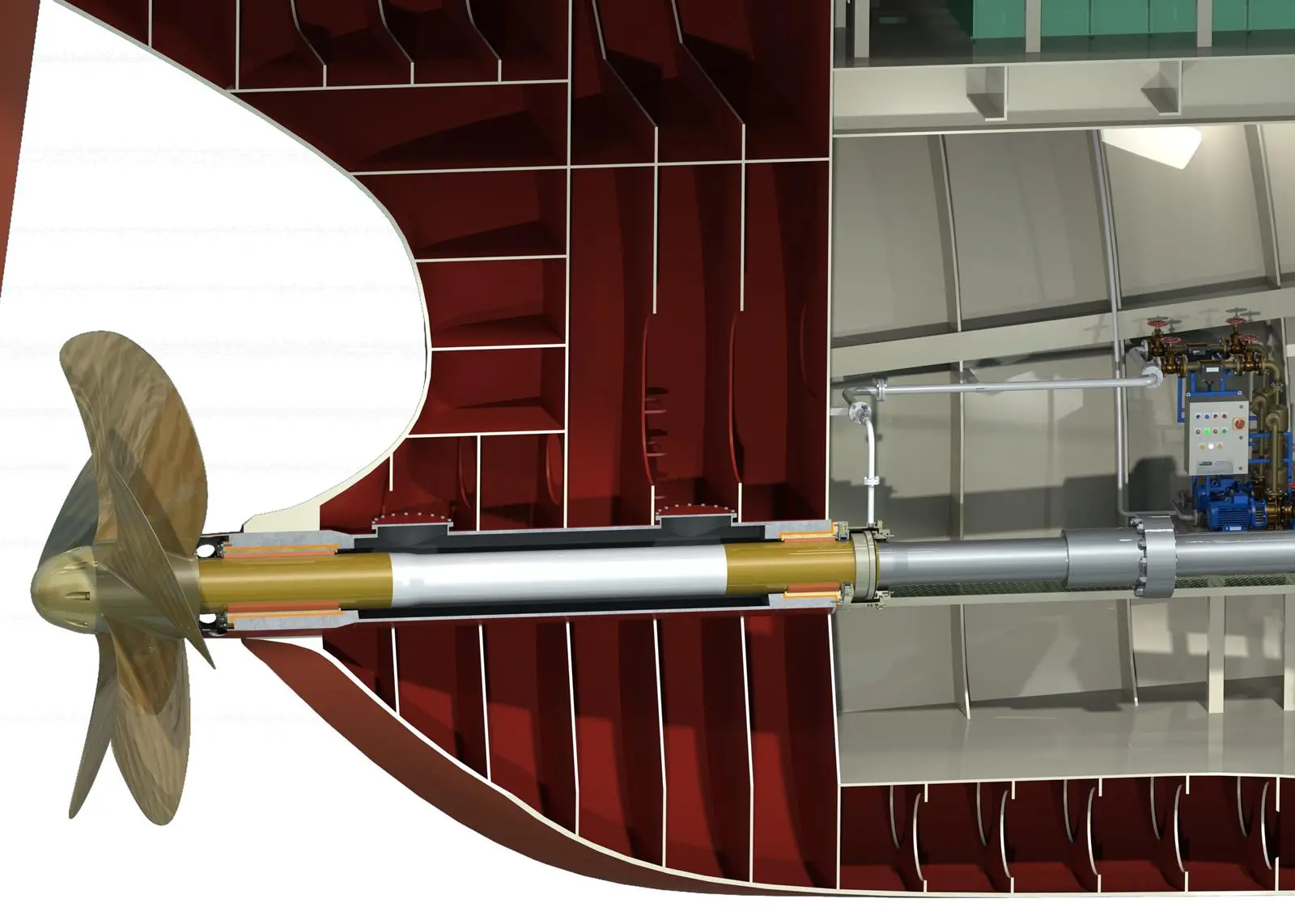
That was the opinion of some of the panellists speaking at an online webinar hosted in late February in which representatives from oil supplier Gulf Marine Oil, polymer bearings pioneer Thordon Bearings and shipmanager Delta Corp Shipping discussed the merits of oil lubricated and water lubricated propeller shaft.
All three representatives appeared to agree that the water lubricated approach represented a better solution, although there were differences of opinion when it came to technical performance and pollution data.
Gulf Marine Oil’s technical director Don Gregory, for instance, was sceptical of the statistics, dismissing data compiled by New York-based Environmental Research Consulting that found 240 million litres of operational oil escape from ships annually.
Gregory offered a lower estimate of the amount leaked: 10 litres per month per ship, he claimed. Clearly, more research into sterntube oil consumption and pollution is needed. But even based on Gregory’s trickle, it amounts to yearly 6 million litres of oil spilling into the marine environment, based on 50,000 ships in the commercial shipping fleet.
Quantity aside and admitting that oil losses do occur from stern seals with the “flexing of the shafts”, Gregory, said water lubricated propulsion is gaining ground. “Costs seem to be driving the sterntube more to water lubrication. It appears water lubrication is turning back history,” he admitted.
All parties agreed there are technical merits to both solutions, largely dependent on the type of vessel and the operational profile – whether it is slow steaming, for instance.
Caroline Hout, Senior VP Shipmanagement, Delta Corp Shipping – a company with more than 50 vessels under its charge – acknowledged the possible long-term operational cost benefits of water lubricated propulsion but asked about the technical complexity involved in the transition from oil to water.
“Until now I have only experienced an oil lubricated system [but] I am interested to know about the shipyards proposing this technology. The question is when you look at water lubricated shafts, are the guarantees sufficient?” she asked.
While Chinese yards are successfully delivering water lubricated newbuilds, George Morrison regional manager, Thordon Bearings, suggested that on the whole shipbuilders are blocking the wider return to water lubricated propulsion – a solution common to most ships until the 1950s.
“You touched on the relationship with the shipyard. That is one of the biggest challenges we have, because shipyards are used to producing standard ships, with oil lubricated systems.
“The shipyard, as a business entity, largely speaking, doesn’t care about the environment or the through life costs of the vessel.”
Morrison referred to what he called “the unholy alliance” between the shipyards and oil-lubricated bearing manufacturers, of which the latter, he suggested, supplies bearings to the yards at cost, happy to squeeze the shipowner later on through frequent maintenance, repair work, after sales and spares.
Morrison said when shipowners approach yards for water lubrication, some shipyards respond by lifting the price above the cost of the installation. “They say, okay, you can have it for an extra US$250,000. In reality, the difference in the build cost is pretty much zero. I would argue it is even lower. A lot depends on the balance of power between shipowner and shipyard.”
The scales of power currently tip in favour of the yard, according to Morrison. “The shipyards are saying to their customers here is a standard vessel filled entirely with local equipment. Here’s the price. Take it or leave it. That’s essentially what’s going on.”
Morrison intimated that substantially more ships would be operating water lubricated shaft lines today if shipbuilders took a more pragmatic approach to not only protecting the marine environment but also their customers’ bottom line.
“Shipowners are concerned about the environment, but also cradle to grave costs of the ship right through to the disposal. And they are the other ones that are more interested in trying to push forward with this technology.”
There’s also the cost of the lubricant itself. A typical “sealed” oil lubricated sterntube system is filled with about 1500 litres of mineral or synthetic oil. Despite this being considered a closed system, frequent propeller shaft seal oil leakage and topping up of the head tank is viewed as normal operational consumption and acceptable.
Questioning the technical differences between oil and water as a lubricating medium, Caroline Hout asked how the condition of water lubricated shaft is monitored, “considering the shaft is one of the most important elements for safe navigation?”
“If you’re measuring a high temperature, it’s probably already too late,” said Morrison. “The reason is these materials are largely insulators. The basic principle is that you measure the quality of the inputs, so if you’re supplying appropriate water at appropriate temperatures and appropriate flow rates, then you can have absolute confidence that the system is operating correctly. Through life measurements of bearing wear rates also provides information on what the bearing is doing.”
Another point raised was that water is better than oil in terms of removing heat. And when a water lubricated sterntube is operating within its design parameters, at full power and speed and at lower RPM, the system “operates hydrodynamically,” the same way as an oil lubricating system.
Morrison then alluded to something called the “Thomson Stern Space” – a concept that could create a cavity in the sterntube so that bearings can be inspected and changed from within the vessel.
“One of the problems with a sterntube is that it is inaccessible, so this is a brilliant idea,” said Gregory. “As soon as you have access, you have a totally different scenario and you can water lubricate, you can oil lubricate, you’ve got choices.”
Despite some differences, the speakers believed the industry has to take collective responsibility in dealing with marine pollution no matter the source.
“We need to think about who is accountable,” said Gregory. “We have been going through 30 to 40 years of shipbuilding and optimising costs and you buy something off the rack, and you trade it, and that’s that, but we’re into a future now, where, as George says, we don’t want to be discharging oil or we don’t want to be increasing CO2 emissions. There’s a number of different questions that we need to answer. And who’s going to take responsibility for that. The shipowner? The shipyard? Somebody’s got to take responsibility, otherwise, we’re going to come to a dead stop.
“We really need to start thinking about what the problems are we are trying to solve. And if we take a singularity view on it, say, we just try to solve oil leakage, I think we miss a lot. The shipping industry doesn’t seem to be moving along in that direction whatsoever. It all seems to be driven by cost and I think this needs to change, if we are going to advance,” he said.
Related Articles
 ALTERNATIVE FUELS & LUBRICANTS
 FUELS & LUBRICANTS