



Simulation demonstrates potential of 8-stroke engine

Typically, around 25% of the combustion energy from an engine is wasted via heat transfer. This heat is dissipated to a cooling system prevent overheating and damage. This hinders expansion in the cylinder and can lead to incomplete combustion.
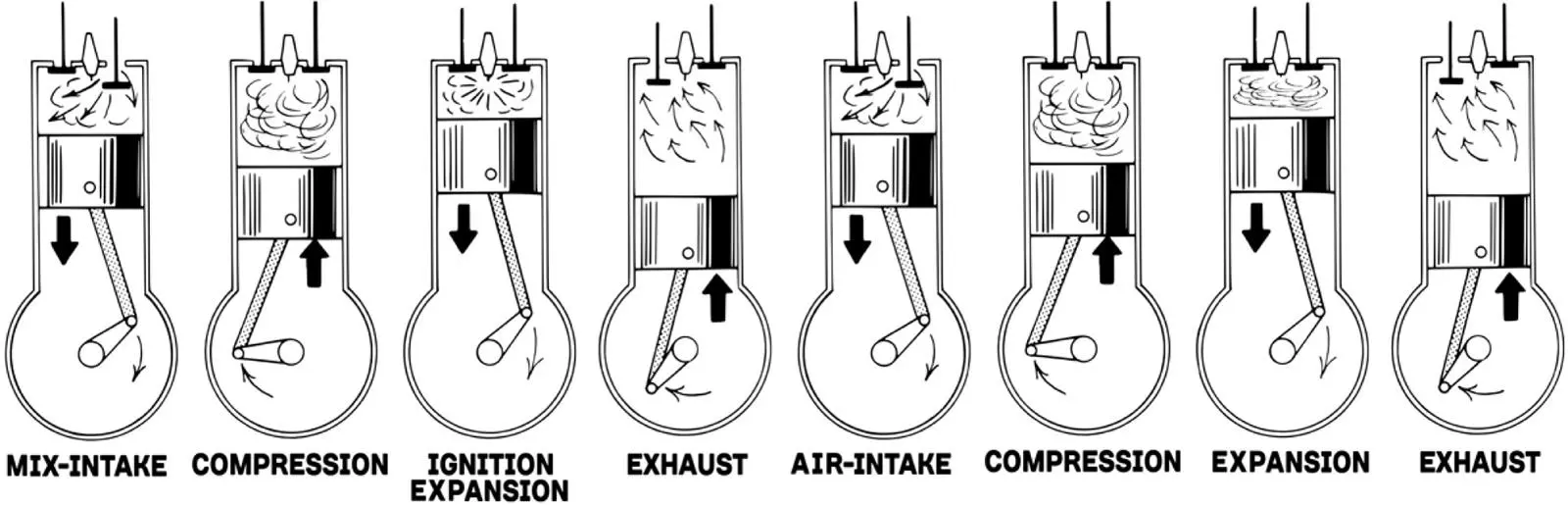
To reduce the loss of heat and mitigate its consequences, the researchers propose an 8-stroke engine design. The engine is based on a 4-stroke Otto cycle design and reduces engine heat loss by extracting the heat absorbed by the cylinder walls during combustion, thereby reducing the amount of heat transferred to the cooling system, typically around 25% of the combustion energy. The retained heat improves combustion and reduces emissions.
The operation of the 8-stroke engine proposed consists of a typical 4-stroke cycle followed by a second phase of the four strokes. This time, rather than admitting fuel in the admission stroke, it only admits air. This lowers the temperature of the cylinder walls and increases the temperature of the air and therefore its pressure, contributing to the efficiency of the second expansion.
The report is available here.
Related Articles
 2-STROKE & 4-STROKE
 2-STROKE & 4-STROKE
 2-STROKE & 4-STROKE