



Slow-running PM motors to become ‘widespread’
He was reflecting on the successful entry into service of the 26,000dwt bulk carrier Nukumi, which is operated on the Great Lakes by Canada Steamship Lines (CSL) to carry de-icing salt for use in Quebec and Newfoundland.
As The Motorship reported on 18 May, the ship arrived at Halifax, Nova Scotia, on 27 March direct from its Chinese builder, CSSC Chengxi Shipyard, and went into service in late April.
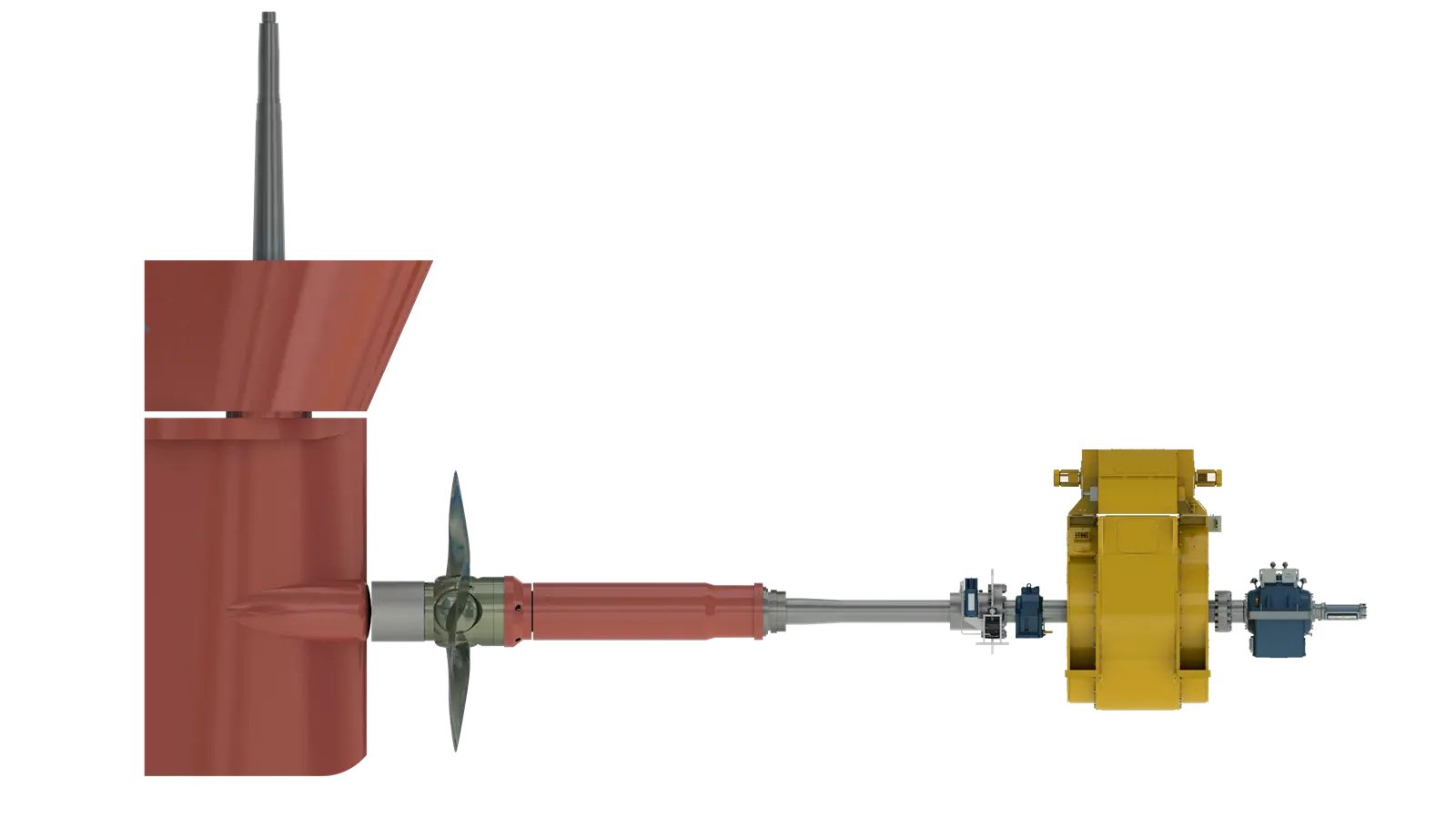
It features Berg Propulsion’s patented PM drive train, which was developed jointly with motor supplier The Switch to eliminate bearings in the motor itself, relying only on the propeller shaft’s own bearings for support, alignment and thrust transfer. More details of this innovation were published in The Motorship in June 2021.
For this application, electric power is supplied by gensets powered by one MaK 6M20C and three MaK 8M25E engines, but a PM motor-powered installation is a flexible concept, Mr Cerdier indicated. “You can use whatever power source you want for that electric motor: gen sets, batteries, fuel cells or whatever energy source you have”, he said. And with no gearing losses, “all the power that the motor produces goes straight into the propeller”.
That saves a few percent in losses compared with a geared power train, but PM motors deliver further benefits when they run at low speeds. “Standard electric motors have fairly good efficiency at full power but PM motors are more consistent” across the power range, he said.
Fitting large propellers also improves efficiency and on Nukumi this is made possible thanks to another patented device developed by Berg Propulsion, called Twin Fin. Each motor and its propeller shaft is housed in a fin-shaped hull appendage that is angled away from the centre line, which allows a larger and deeper screw to be fitted than with a conventional propeller shaft leading directly aft from the engine. The arrangement also reduces the space needed for machinery inside the hull.
“In most projects, the key is how to fit the largest possible propeller and run it at its optimum condition”, Mr Cerdier said, and Berg Propulsion sees its role becoming a ‘solutions’ provider rather than a ‘product’ provider, he explained. “We want to get in early in projects, together with the designer and shipowner, to optimise the entire scope of supply, instead of sub-optimising parts and pieces of equipment”, he said. That would bring its expertise to bear on, for example, a ship’s aft design, its power generation, its propulsion and controls, he added.
This approach is becoming essential as vessels become “more capable, using various energy sources and using them in the most efficient combinations”. Their designs can no longer be based around one operating condition but instead must be flexible to cover their entire operational profile, he said.
Related Articles
 LNG
LNG
 LNG
LNG
 SHAFTS AND PROPELLERS