



Smoothing out the steps
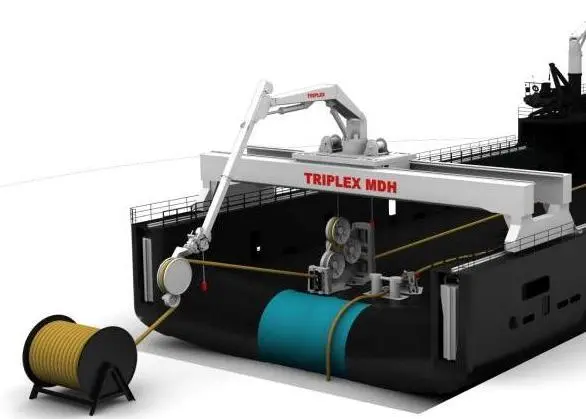
Dr Friedrich Wirz of Hatlapa explains that while many winches have traditionally been hydraulic there is a general move toward electric units, especially since these eliminate the energy losses that occur in pump units, control valves and hydraulic motors. “These energy losses do impact on fuel consumption when mooring up, especially for vessels under autotension where the lines are continually compensating for tide and draft,” he explains.
However, electric winches have had an issue. The more usual Pole Changing Drives (PCDs) can only be operated at two or three discrete, separate speeds, ‘stepping’ up and down.
Variable Speed Drives (VSDs) on the other hand give you the full range which results in quite an operational advantage, as you can adjust the speed and therefore power output of the motor. Despite the fact that they are still a little more expensive, the benefit, as Dr Wirz points out, is that it does what it says, varying smoothly and without requiring hard step changes.
From the point of view of the operator, a huge step up in speed resulting from Pole Changing Drive operation isn’t desirable or particularly safe, and it means that operators might be left trying to micro-adjust by alternating quickly between the rpm points.
Dr Wirz also points to an additional advantage to the variable speed variety: you can more easily boost the motor input frequency higher than the standard 60hz, resulting in the drive running at 180Hz ‘overspeed’ and raising the rpm by a factor of up to three. While this is obviously constrained by the mechanical strengths of the system and the electric motor, electric drives bring this capability into its own.
Besides reducing the danger of catching the rope with propeller or thrusters, all of this helps when the clock is being watched. “Winch operation at very high slack speeds, that is, when the line is brought out or hauled in without tension, can save valuable time, and consequently vessel speed, fuel, operating cost and CO2,” he concludes.
Related Articles
 PROPULSION
 GENERAL NEWS
 HYDROGEN