



Socatra to retrofit Norsepower Rotor Sails on MR tanker
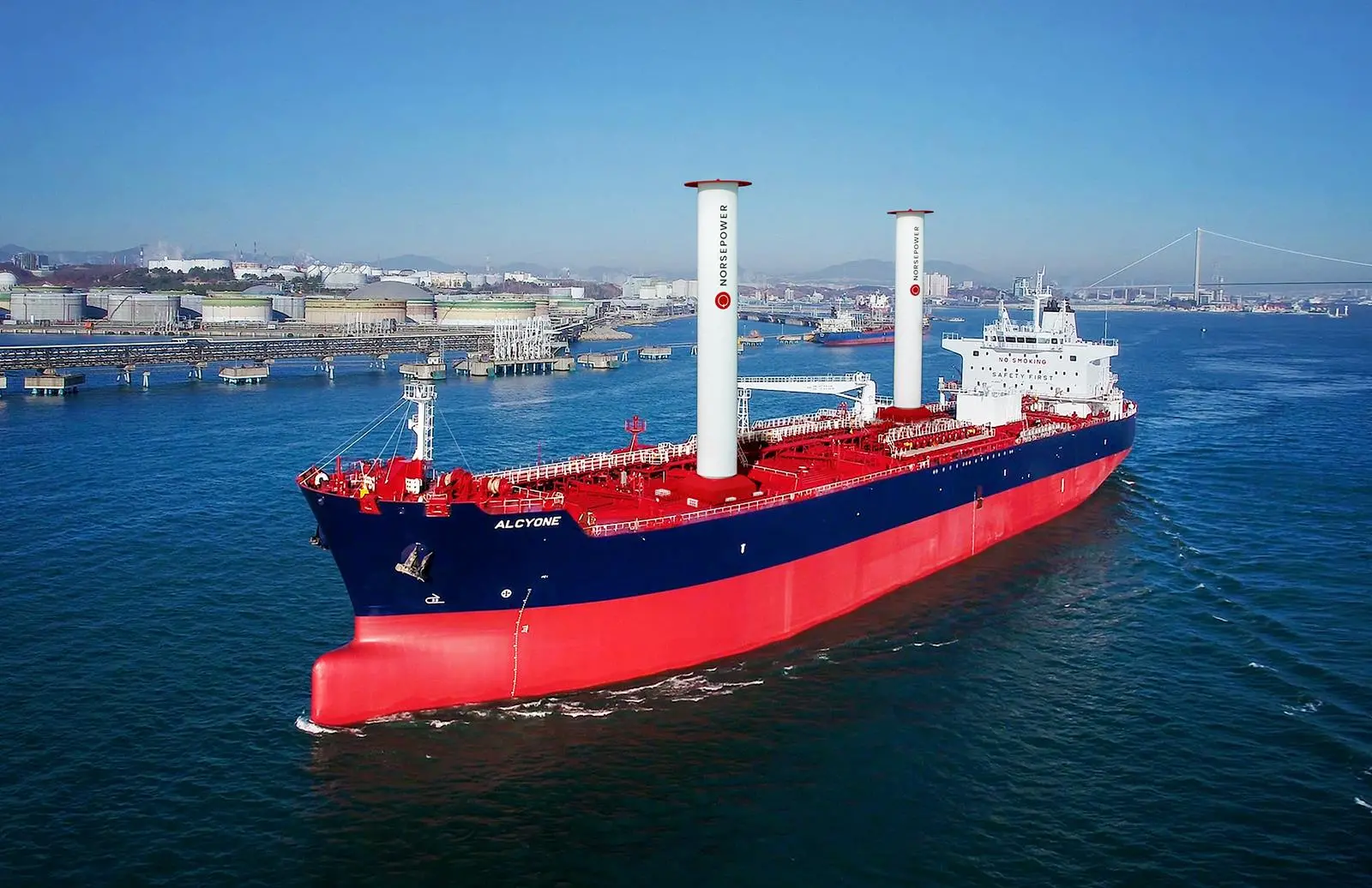
Preparations for the retrofit will take place in late 2023 with the installation scheduled for Q4 2023 or Q1 2024. Alcyone is set to be retrofitted with two large-sized Norsepower Rotor Sail unit that are 35m in height and 5m in diameter.
The units will be delivered in December 2023 from Norsepower’s new production hub in China.
Recent calculations indicate that the average fuel and carbon emission reductions will be 8% for the ship as it transits between South Korea and French Polynesia, with the potential for further savings using voyage optimisation reaching up to 2,000 tons of CO2 per annum. Taking a holistic approach to decarbonisation and combining clean technology solutions enables key progress towards emissions reduction goals, minimising fuel costs, enabling carbon regulatory compliance, and improving IMO Carbon Intensity Indicator (CII) ratings.
Tuomas Riski, CEO of Norsepower, commented: “It is fantastic to see that the Norsepower Rotor Sail has been embraced by a leading company like Socatra. We are proud to be working with the team to support them in making critical sustainability progress in their operations.
“The Norsepower Rotor Sail is particularly well-suited to tankers, with a strong track record of proven performance. This is why we are confident that we can achieve at least 8% fuel consumption saving, based on existing data and projections, ensuring Socatra lead the way for more planet-positive operations for others in the oil industry.”
Jérome Cousin, Senior Vice President Shipping at TotalEnergies said: “The installation of two Norsepower Rotor Sails on Alcyone contributes to TotalEnergies’ Net Zero ambition by providing an immediate reduction of the carbon footprint of our shipping activities. We reaffirm our commitment to promoting innovative solutions for more sustainable shipping and actively support the deployment of the most promising technologies. The success of this project could pave the way for a broader adoption of wind- assisted propulsion for TotalEnergies’ fleet.”
Related Articles
 ENERGY SAVING DEVICES
 ENERGY SAVING DEVICES
 AMMONIA