



Solvent choices will await on board CCS trials: Wärtsilä
Kashif Javaid confirmed that the initial results of trials of the stationary installation at Wärtsilä’s Moss test facility in Norway had produced encouraging carbon capture rates of “60-70%”. Testing has been underway at the Moss test facility since December 2021.
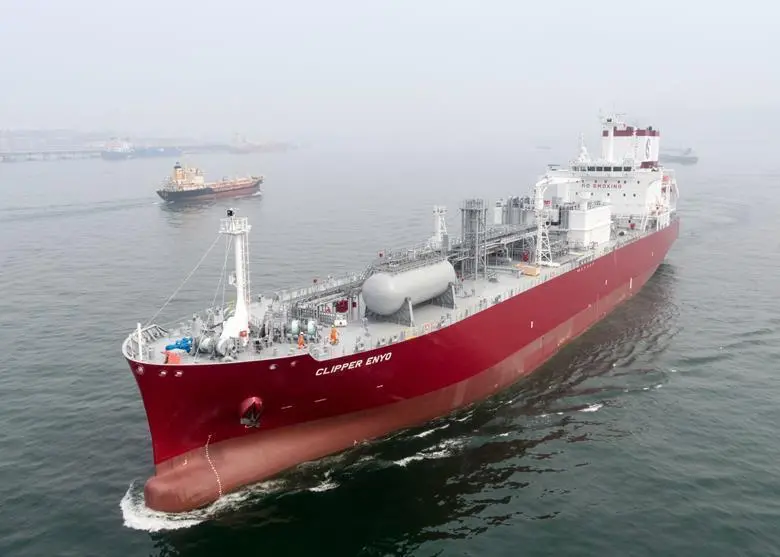
As previously reported, Wartsila plans to conduct an onboard trial of a carbon capture and storage system on a Solvang vessel, the 21,000cbm ethylene carrier Clipper Eos. The installation is expected to take place by Q4 2023.
As Wärtsilä is marinizing a mature solvent-based carbon capture system, which has been successfully deployed in stationary applications for many years, the focus is on addressing operational differences between stationary and maritime operations.
One of the key differences between stationary and maritime installations is the need to minimise space requirements in marine systems, as this impacts the economics of carbon capture and storage systems.
The regeneration capability of the final solvent is likely to impact the volume of consumables required for the operation of the system. “We are assessing different solvents to find the right balance between efficiency and optimisation,” Javaid told The Motorship, although the final decision between the shortlisted solvents is likely to be made after the onboard trial.
The onboard storage options for the captured CO2 is another area where Wartsila is examining different options. Initially, it appears likely that Wartsila will liquefy the CO2 to store the gas on board the vessel, although “the temperature and pressure is still being discussed”.
Kashif added that Wärtsilä’s engineers were already looking at potential product level solutions to allow a CCS option to be added to existing Wartsila scrubber systems.
“We expect the unit to be attached as an additional unit… [which is consistent with] our modular approach which allows us to add on additional technologies to tackle pollutants in exhaust gases.” Javaid noted that there were also likely to be different challenges for different ship types, with container vessel installations likely to have some impact on container capacity, while the installation configuration was likely to be a greater challenge for bulker and tanker vessels.
Related Articles
 CARBON CAPTURE
 CARBON CAPTURE
 ALTERNATIVE FUELS & LUBRICANTS