



Stena and Proman offer methanol supply and retrofit solution
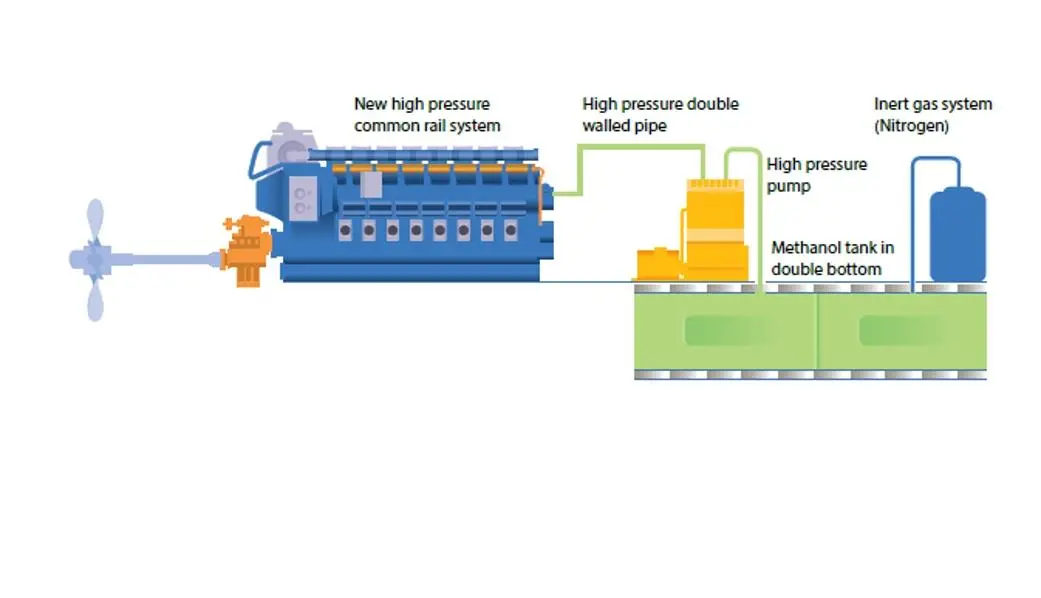
The company, a joint venture between Stena and methanol producer Proman, will offer a complete analysis of how methanol can benefit a shipowner’s environmental goals as well as regulatory requirements such as the IMO’s Energy Efficiency Existing Ship Index (EEXI) and Carbon Intensity Indicator (CII). The result will be a report highlighting what needs to be considered from a regulatory, fleet and bunkering perspective as well as ship-specific reports where the design of the engine conversion and associated systems for a particular ship will be described more in detail.
“We believe that methanol is a clear frontrunner in shipping’s search for fuels beyond the fossil default,” said Per Westling, CEO of Stena RoRo. “We converted Stena Germanica to methanol power in 2015, and that gives us valuable experience both from a conversion and operational perspective.”
Stena and Proman will cooperate with 2- and 4-stroke engine designers and original equipment manufacturers for all engine related work, and Danish ship designer Knud E. Hansen will provide the concept and detailed design work. “This will enable us to assist our clients in the best possible way, including delivering turnkey solutions,” says Westling.
He anticipates that a turnkey conversion would involve having the vessel in drydock for at most two weeks. During this time, the steelwork for the fuel storage tanks would be the main task undertaken. In many cases, this would involve the addition of cofferdams to create tanks within existing ballast tank or void spaces.
Methanol is relatively simple to store. There is no need for the cryogenic containment required for LNG, and no need for stainless steel tanks. The methanol storage tank on the Stena Germanica received standard shot blasting treatment before a standard zink silicate painting system was applied. “This is a very economical way of doing it, but it is work that needs to be done in drydock,” Westling says.
Other work, such as the installation of pumps, fuel lines, engine control systems, new high or low pressure injectors and engine cylinder modifications, could be completed alongside or even during operation if the ship is operating multiple engines.
He says StenaProman will work with yards on a project-by-project basis, operating globally, rather than tying its turnkey conversion solution to specific yards.
Fuel supply partnership
The new proposition includes the supply of methanol under short or long-term contracts. Proman is the world’s second largest methanol producer. It produces 6.9 million tonnes of methanol a year and is investing in blue and green methanol production to satisfy future demand. In Canada, for example, Proman have partnered with Enerkem, Shell and Suncor, as well as the Government of Quebec, on the Varennes Carbon Recycling project, which will include one of the world’s largest waste-to-methanol plants. This project is set to reduce the carbon intensity of methanol production by over 90% and achieve the equivalent in greenhouse gas reduction of taking 50,000 cars off the road each year.
In addition to this, in August 2021, Proman entered into an agreement with UK port operator, Global Energy Group to develop a renewable power to methanol plant utilising local sources of captured CO2 to be located at the Nigg Oil Terminal in the Highlands of Scotland.
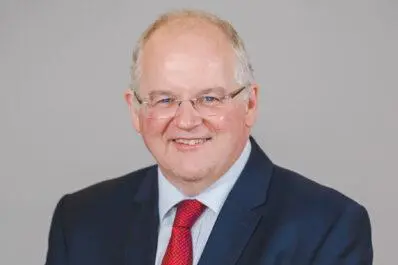
“Methanol is the only available alternative marine fuel that offers immediate emissions reductions, dramatically improving air quality and delivering a clear shipping decarbonisation pathway for 2050 and beyond,” says David Cassidy, Chief Executive of Proman. “Our combined vision is to dramatically accelerate the energy transition in shipping and not only talk about changing our environment but to actually make it happen.”
Benefits of methanol
Methanol eliminates sulphur oxides (SOx) and particulate matter emissions and cuts nitrogen oxides (NOx) by approximately 60%. It remains liquid at ambient temperatures, making it easy to handle, and safety procedures for handling methanol are well known and practiced all over the world. It quickly dissolves in water and biodegrades rapidly, making a methanol spill far less environmentally damaging than ones involving fossil fuels such as MGO, VLSFO and HFO.
Methanol is a widely traded commodity available at over 122 ports worldwide. Unlike alternative fuels like LNG, methanol only requires minor modifications to existing terminal infrastructure, bunkering and fuel storage facilities to support shipping operation. On board, methanol behaves like established fuels and is easy to store and pump for direct injection into the engine. Classification societies and the IMO have already developed standards and guidelines for methanol as a marine fuel, with regulatory acceptance under the IMO IGF Code.
As an added incentive for its use, Greg Dolan, CEO of the Methanol Institute, has noted that a move to methanol would help shipowners avoid the proposed carbon tax on diesel which could be USD250-450/t of CO2.
The growing methanol fleet
Operating on methanol is already economical, especially in Emission Control Areas, and Westling believes that methanol is an excellent transition fuel for many cargo ships, as well as ferries and RoPax vessels, as it supports net-zero operation through the shift from grey to blue to green methanol production. He says the industry has seen increasing interest in methanol since the pioneering conversion of Stena Germanica. This has been most recently demonstrated by an order from A.P. Moller – Maersk for a series of eight 16,000 TEU ocean-going container vessels capable of being operated on carbon neutral methanol. The first vessel will be delivered by Hyundai Heavy Industries in 2024, and Maersk has an option for four additional vessels in 2025.
Additionally, Singapore-based carrier X-Press Feeders has placed an order for eight 1,170 TEU dual-fuel container feeder vessels capable of sailing on green methanol. The vessels are expected to be delivered in 2023 and 2024 and will operate in the company’s Europe and America trade routes.
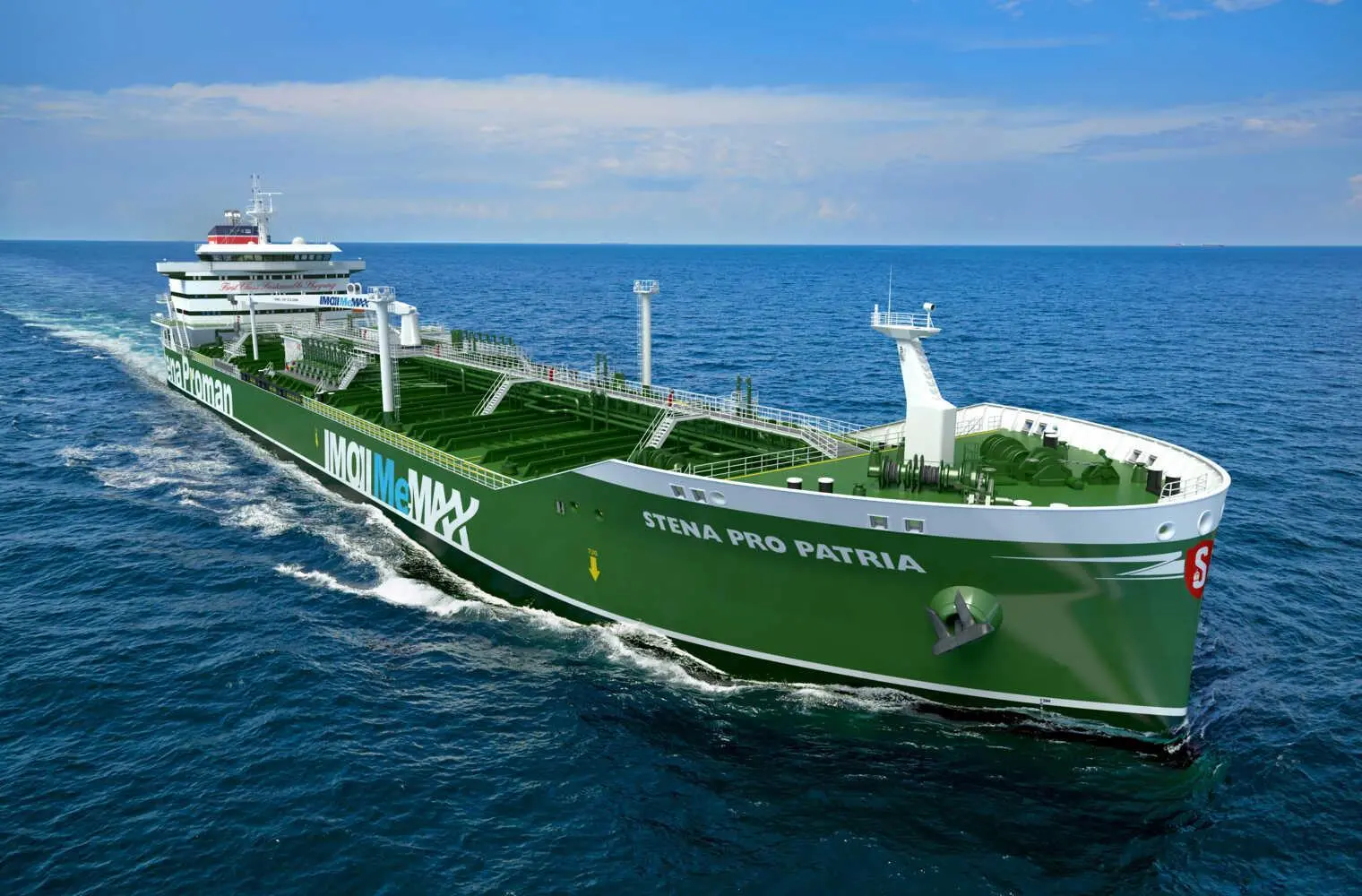
Stena Bulk and Proman are also adding to their joint methanol-fuelled fleet with an order for three 49,900dwt methanol-ready MR tankers. The first, Stena Pro Patria, was launched in November 2021 at Guangzhou Shipyard International, the first Chinese shipyard to build a methanol dual-fuel vessel. Delivery to Proman Stena Bulk is expected in Q1 2022.
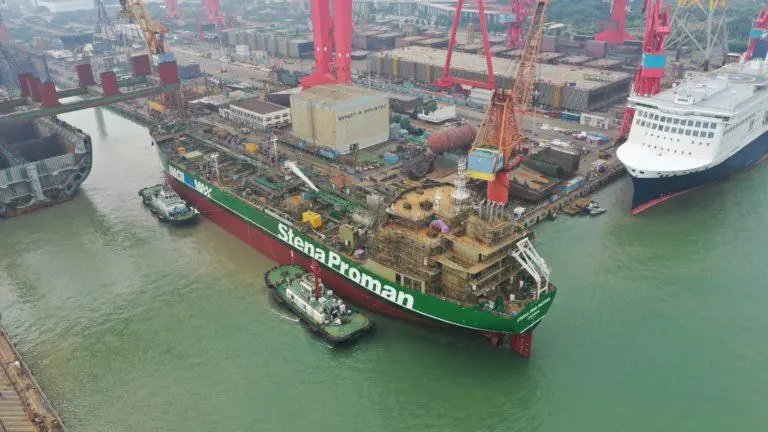
Over the next two years, another five methanol-powered newbuilds will be delivered: Stena Pro Marine and Stena Prosperous, which will be Proman Stena Bulk JV vessels, and the Proman-owned Provident, Progressive and Promise. All vessels will be constructed at Guangzhou Shipyard International and delivered by the end of 2023. The Provident and Progressive will be traded globally for shipping chemicals and clean petroleum products.
All Proman and Proman Stena Bulk JV vessels will have the same vessel design based on MAN B&W 6G50ME-C9.6 MW Tier III engines. The vessels will also be equipped with the latest energy efficiency technology, including continually controlled combustion, optimised tuning, redesigned and aerodynamic hull lines, and a shaft generator. Each vessel will use approximately 12,500 tonnes per annum of methanol as a marine fuel.
Two pioneering projects
The 240-meter Stena Germanica became the world’s first methanol powered RoPax ferry in 2015, with the conversion work undertaken at Remontowa Shipyard in Poland. The project was a co-operation between Methanex Corporation, Stena Line, Wärtsilä, the Port of Gothenburg, and the Port of Kiel. It was co-financed by the European Union and the classification of the conversion to methanol was conducted by Lloyd’s Register.
Since then, the vessel’s Wärtsilä ZA40S 4-stroke engine has run primarily on methanol, and in June 2021, it was bunkered with recycled methanol from residual steel gases for the first time. The steel industry and maritime sector are two of the world’s biggest emitters of CO2, and the EU-funded FReSMe project is exploring the possibility of converting CO2 to methanol via steel production to power marine transport. Stena is one of many partners in the project, which also includes the Swedish steel production company SSAB and the Swedish metals research institute (Swerim).
Methanol as a future fuel
Methanol can be produced from natural gas, coal, biomass, by-product streams or from CO2 captured from industrial flue gases or direct from air. Grey methanol produced from natural gas represents a 10-15% Tank to Wake reduction in carbon dioxide emissions compared to traditional marine fuels.
Green methanol is produced from recycled carbon dioxide and hydrogen produced from renewable electricity using proven technologies such as electrolysis. Production of green methanol from sustainable sources is growing and highly scalable, and when used as a marine fuel reduces CO2 emissions by over 90%.
According to the 2021 Innovation Outlook Renewable Methanol report published by IRENA and the Methanol Institute, global methanol consumption reached 98.3 Mt in 2019 and is expected to exceed 120Mt by 2025. Production is then anticipated to rise to 500Mt per year by 2050.
Currently, less than 0.2Mt of renewable methanol is produced annually. The main barrier to renewable methanol uptake is its higher cost compared to fossil fuel-based alternatives, but IRENA estimates that with the right policies it could be cost competitive by 2050 or earlier.
Related Articles
 ALTERNATIVE FUELS & LUBRICANTS
 ALTERNATIVE FUELS & LUBRICANTS
 ALTERNATIVE FUELS & LUBRICANTS