



Stena leads the way with Eco Suezmax newbuilding
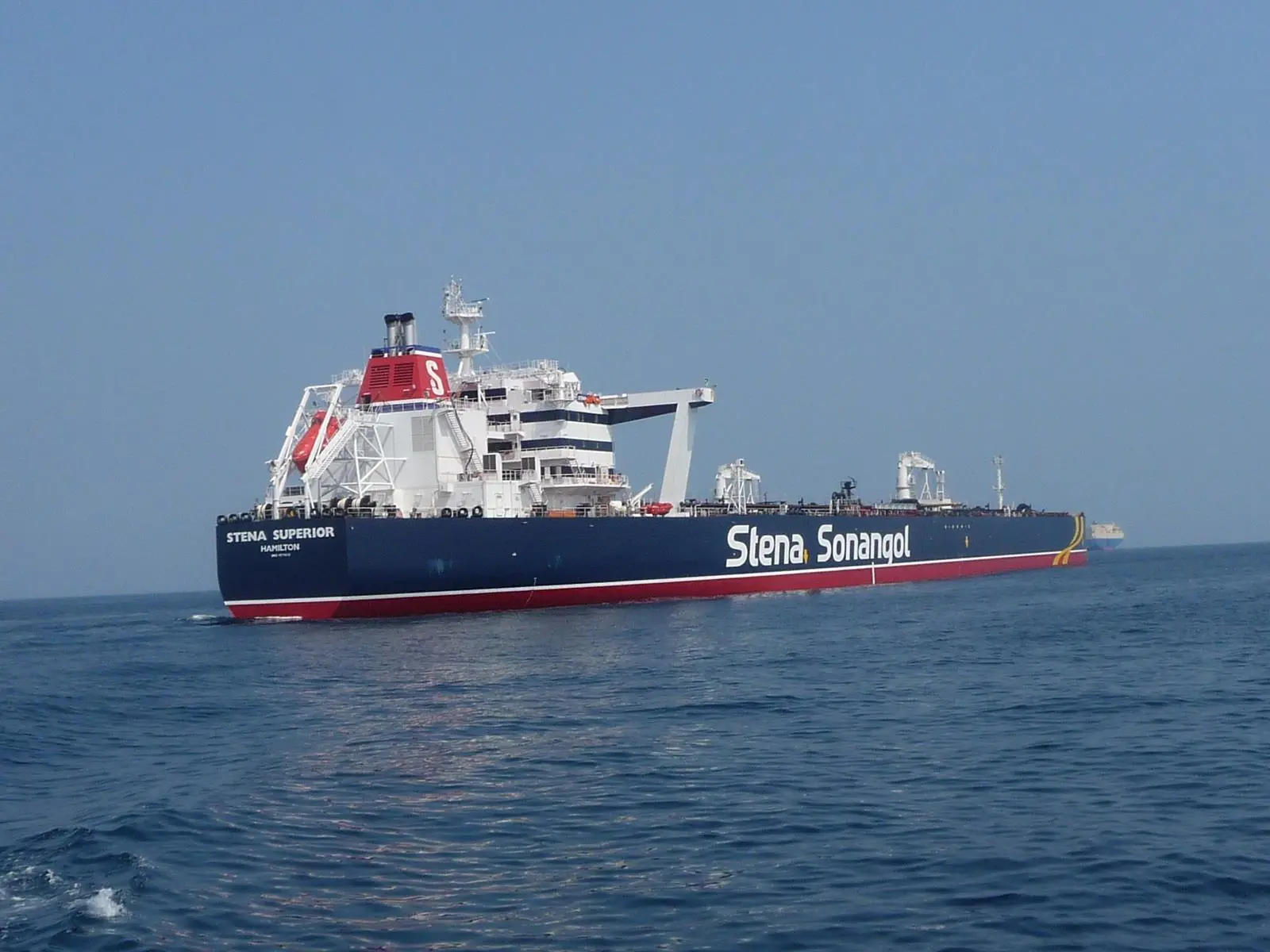
Claiming to be one of the leading exponents of cutting-edge environmentally-efficient ship designs, the Gothenburg-based Stena Bulk has recently introduced its latest tanker newbuilding into service which incorporates a range of energy-saving devices.
Built at Samsung Heavy Industries in South Korea, the Stena Superior is the first Suezmax tanker in a series of seven 158,700dwt vessels which have dramatically improved energy efficiency. The fuel-saving technology includes optimised hull lines, increased diameter propeller, a bulb rudder, electronically-controlled de-rated main engine and energy-saving fins on the hull. These devices are claimed to achieve a minimum of 15% lower bunker consumption compared with the most efficient, conventional Suezmax tankers currently in service.
With a length of 274.23m and a beam of 48m, the newbuilding is the largest tanker in Stena Bulk’s fleet. The newbuilding cost is quoted at $67.4 million which includes Stena upgrades of about $4.5 million for 40 years fatigue life, and fuel saving and environmental equipment worth about $2.5 million.
The prime mover is a single Doosan-built MAN B&W 6S70ME-C8 low speed diesel engine with a rated output of 15,720kW at 81.4 rpm although it has been de-rated to 12,420kW at 75rpm. This mechanically controlled diesel unit drives a Ni-Al bronze, fixed pitch 8.45m diameter four-bladed Samsung tip advanced rake (STAR) propeller which is based on the aircraft winglet concept, increasing the lift-drag ratio by reduction of induced drag. The service speed of 14.5 knots is achieved with a claimed 1%-2% improvement in propeller efficiency, a 30% reduction in vibration and an operational range of 21,000 naut mile. To date 14 container vessels and seven tankers have been fitted with this propeller.
To enhance the propulsion efficiency, the vessel has two sets of Samsung vibration and energy reducing (SAVER) fins fitted on the hull forward of the propeller for optimised flow while also reducing hull vibration. Propeller efficiency is further improved by reducing hub vortex effects through use of a Samsung rudder bulb, mounted close to the propeller boss.
Auxiliary gensets consist of three Yanmar 6N21AL-GV diesel engines each with an output of 1,020kW at 900rpm. The vessel is equipped with additional bunker tanks to carry various qualities of fuel and all engines are prepared for 0.1% sulphur fuel. The newbuilding is fitted with a CCTV ship performance monitoring system and an oil mist detection system. Cu-Ni (copper nickel) alloy seawater cooling piping has been installed for resistance to seawater corrosion, high inherent resistance to bio fouling and ease of fabrication.
The 12 cargo tanks and the two slop tanks, which are divided into three segregated sections, are served by three 3,800m3/h Hyundai Heavy Industries HCP 450 cargo pumps. In addition, there are two 2,500m3/h Hyundai Heavy Industries HBP 400 water pumps to handle the 52,000m3 ballast water capacity. The vessel has an integrated bilge water treatment system and, although Stena has decided not to install a ballast water management system until the relevant legislation has been clarified, electrical power and space for a future system have been allocated in the design.
The vessel is fitted with a VOC (volatile organic compound) reduction system, based on Knutsen VOC technology, which reduces VOC emissions by up to 90% during loading and transportation of cargoes along with a reduction in H2S (hydrogen sulphide) release from cargo.
Stena Superior is classed by Bureau Veritas and has a hull fatigue analysis that exceeds CSR (common structural rules) requirements for double hull tankers. She has also an additional one-man bridge class notation of SYS-NEQ-1. This is assigned when the centralised navigation control system is so laid out and arranged that it enables normal navigation and manoeuvring operation of the ship by one person for periodical one-man watch. The notation includes specific requirements to protect the ship should the operator become unfit for any reason.
The Furuno integrated navigation system includes two ECDIS (FEA-2807) consoles, three radars (one FAR 2837S and two FAR 2827 types) and an autopilot, to facilitate a track control system for improved safety of navigation and higher sea transport efficiency. All INS components comply with the latest standards and regulations set by IMO and IEC.
A 32 person capacity Fassmer-Marland free-fall type CFL-T72E lifeboat is fitted together with a rigid Fassmer-Marland rescue boat with seating capacity for six persons. Increased accommodation insulation has been installed to provide improved comfort levels for the crew.
The next Stena Bulk Suezmax in the series is the Stena Suede which will be delivered at the end of November 2011, and will enter in a long term time-charter with the French oil company Total.
Delivery dates of the remaining sister vessels are: Montesperanza, 31 January 2012; MonteStena, 31 March 2012; Stena Supreme, 30 June 2012; AST Sunshine, 30 November 2012; and Stena Sunrise, 31 January 2013.
Principal dimensions:
Length oa 274.23m
Length bp 264.00m
Beam 48.00m
Draught (summer scantling) 17.02m
Depth 23.2 m
Gross tonnage 81,187 tons
Deadweight (summer scantling) 159,236 tonnes
Main engine Doosan MAN B&W 6S70ME-C8 low-speed diesel engine de-rated for output of 15,720kW @ 81.4 rpm
Auxiliary engines 3 x Yanmar 6N21AL-GV gensets with output 1,020kW @ 900 rpm
Related Articles
 PROPULSION
 GENERAL NEWS
 HYDROGEN