



Strategic clarity in a time of uncertainty
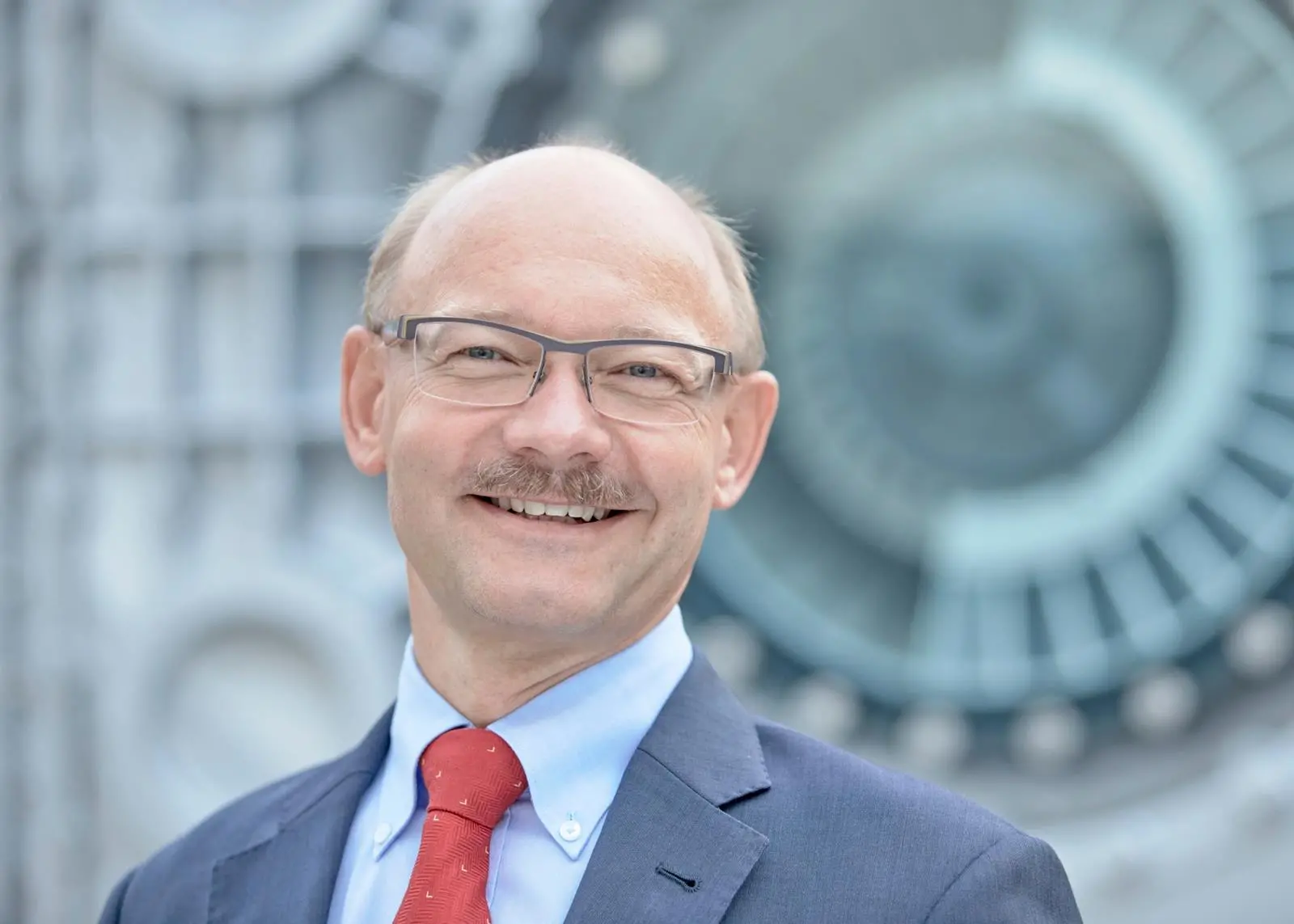
Speaking at the end of February, Oliver Riemenschneider, President of ABB Turbocharging offered his perspective on the broader energy transition, and the impact of the changing maritime regulatory environment on ABB Turbocharging’s business.
Before turning to the maritime market directly, Mr. Riemenschneider placed the evolving market in the context of broader changes.
“Looking at the energy markets, there is a lot of focus on decarbonisation at the moment. The focus on renewable energy sources is driving interest in solar and hydro, but we are also seeing the emergence of interest in new technologies like carbon capture, and energy storage and handling. There are a lot of good initiatives, including the first engine in operation in a power plant in Germany running on LNG and hydrogen.”
ABB Turbocharging’s involvement in the stationary hydrogen combustion engine project had given the company experience in the engineering and design of combustion systems using such fuels.
Mr. Riemenschneider cited A.P Moller Maersk’s interest in introducing a methanol-fuelled vessel into its fleet by 2023, and the introduction of ammonia into the fuel mix for the maritime industry in 2024 as examples of technological developments in the maritime industry.
However, Mr. Riemenschneider noted that the development of technical solutions formed only one part of the energy transition. “The equation is much bigger.” Beyond technical questions about combustibility or the cost of production, there are questions about making fuels available globally, as well as considerations about the CO2 footprint of the fuel.
The issue of CO2 footprints was a key issue in decarbonisation, Mr. Riemenschneider said. He gave the example of electrification in the maritime market as an area where regulatory choices risked leading the market in a “sub-optimal” direction.
Electrification in the maritime sector
At present, the emissions emitted during the generation of electricity supplied from a shore power connection are not compared with emissions produced by energy generated onboard a vessel.
In some European countries, the CO2 intensity of electricity supplied from the local grid exceeds that of energy produced onboard a vessel running a diesel genset. Mr. Riemenschneider challenged the view that electrification is the answer to decarbonisation in Europe – without even looking at the energy generation mix in other parts of the world, such as south Asia or east Asia.
“This is one of the key shortcomings of the view about electrification,” “The answer would be to take a well to wake approach, rather than a tank to wake approach – otherwise, there is a risk that we might sub optimise or even move in the wrong direction in the long run,” Mr. Riemenschneider said.
Regulatory developments
Focusing on the maritime market, Mr. Riemenschneider noted that the IMO had a role to play in helping the industry come to terms with these wider considerations.
Mr. Riemenschneider noted that while clarity around the regulatory environment would help provide certainty for commercial decision making, a wider issue surrounded how regulations “rewarded” or incentivised low carbon fuels.
“That is not part of the equation yet. I think we would need the regulators to think about how to bring that into the total equation, and get stability, so that we can make the best decisions around fuel choices from a CO2 footprint, fuel availability and cost perspective.”
Certainty was also going to be welcomed by players outside the maritime industry. Because of the scale of the necessary investments required, the ability to encourage inward investment is one of key constraints.
“From a broad perspective, I think the real challenge is in attracting investments in renewables, as well as in the development of supplies of new fuels for decarbonisation.”
Mr. Riemenschneider noted that upcoming regulatory developments at the IMO were already driving customer interest. Although the industry was waiting for the exact effects of the CII (Carbon Intensity Index) rules to become clearer, the regulation was likely to affect the older installed base.
“CII is a tough regulation that will have an effect on less carbon efficient installations,” Mr. Riemenschneider said.
By contrast, the discussion about engine performance limitations would not affect a lot of ships that are already operating at slower speeds. But it would have an effect on some trades, such as tankers, which are typically running at over 50 or 60% maximum continuous rating (MCR).
“I would say this is a business challenge that will have an impact on the balance sheet of the owners.”
“We have received many more requests from owners and operators about upgrade possibilities. So that is already a direct impact on ABB Turbocharging.”
ABB Turbocharging has responded by developing solutions in conjunction with engine builders to meet the interest from customers for upgrades to improve the performance of older installed machinery.
“We have defined quite a number of packages with OEMs, where for example, we can include valve timing and some injection timing, and similar improvements. This can result in significant improvements: in one case we achieved improved efficiencies of 5%. Now that is a commercially interesting proposition,” Mr. Riemenschneider noted.
However, looking further ahead, with the ratchet effect of more stringent CII requirements every year, shipowners will need to look at a range of other solutions to reducing their CO2 footprint. This might include whether it would be economical to specify alternative fuels for new engines, or even potentially assessing the business case for converting existing engines to alternative fuels.
Advances in turbocharging technology
One of the challenges for the industry is the range of potential new fuel solutions under consideration. The choice of potential future fuels for the industry means that it is essential that ABB Turbocharging works collaboratively with engine OEMs to pursue a number of parallel R&D developments.
“The dice are rolling, but not yet resting.”
Expanding on the complexity of the technical solutions required, Mr. Riemenschneider compared the combustion characteristics of some of the current alternatives. While HSFO and LNG share a similar flame speed, ammonia has a much slower flame speed, while hydrogen, at the other extreme, has a flame speed that is six times faster.
This means that the whole combustion system will require a different control and management system compared with today. “Now I think that’s the challenge we are facing as an industry, we will be dealing with fuels which have very different combustion characteristics.” This is likely to result in different fuel injection concepts, with the possibility of more accurate valve timing and different valve actuation possibilities.
This will create opportunities for ABB Turbocharging to meet the requirements of engine designers, Mr. Riemenschneider added.
But it also means that ABB Turbocharging has a strong vantage point from which to offer its perspective, both from a technical point of view, and also from a longer-term perspective.
Mr. Riemenschneider noted that this went beyond acting as an interlocutor with academic, research institutes or as an industry representative with regulatory authorities. “We’d also like to act as a speaking partner to all those who are sitting in their boardrooms right now having to make decisions about how their next ship will look.”
“We want to keep the combustion engine as a part of the solution, rather than seeing it only as a part of the problem.”
Related Articles
 ALTERNATIVE FUELS & LUBRICANTS
 ALTERNATIVE FUELS & LUBRICANTS
 OPINION