



Strategy and conversion expertise central to decarb focus: Holm
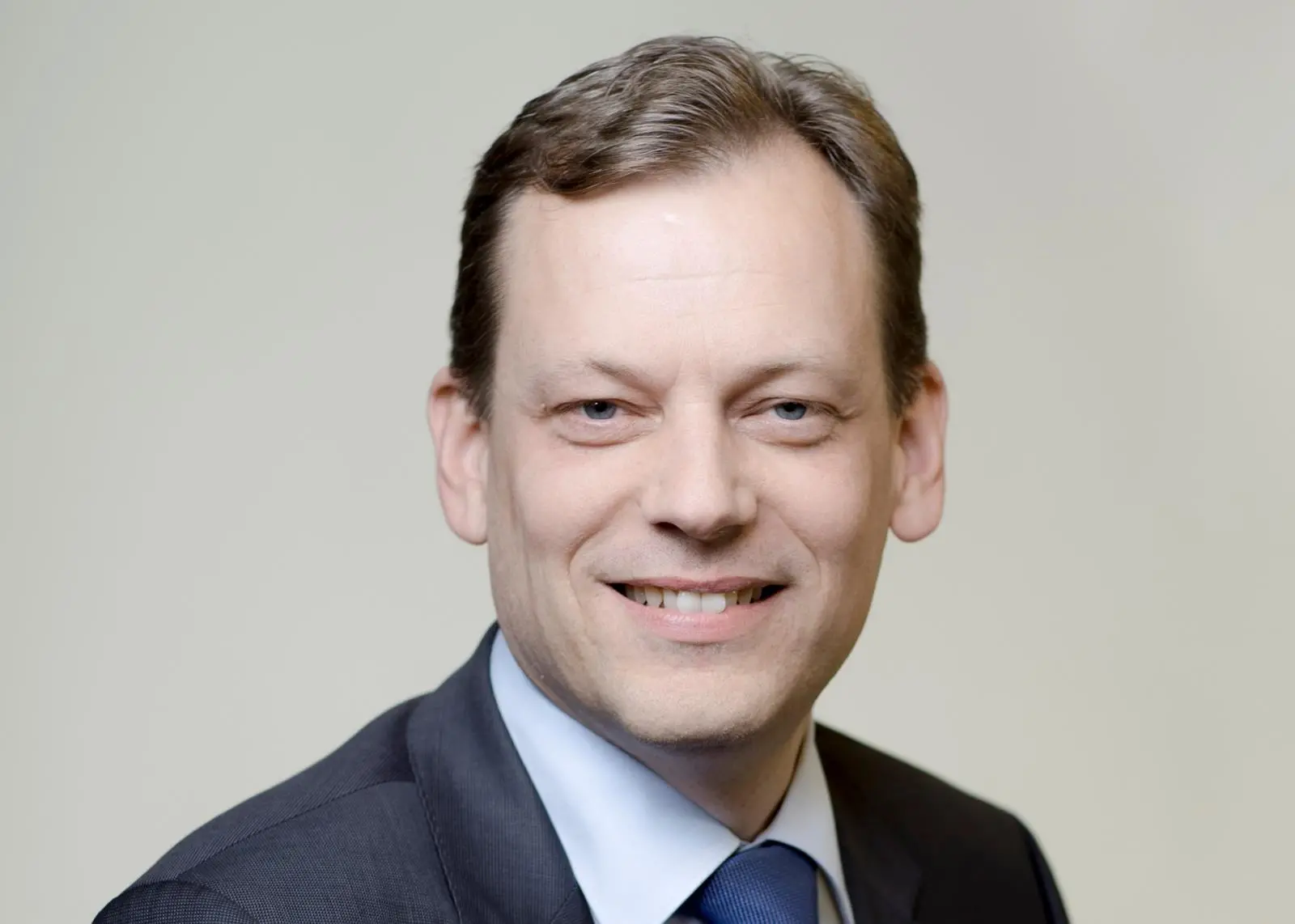
Roger Holm was in an ebullient mood when he was interviewed by The Motorship in Vaasa in May during a recent visit to the Finnish technology company’s R&D and manufacturing facilities on Finland’s west coast.
Strategic conversations
As shipping stands on the cusp of the largest maritime transformation that we have seen in our lives, Holm outlined how he expects this to affect the nature of Wärtsilä’s services.
For technical managers and ship owners managing the competing demands of commercial operations, regulatory compliance, and the increasing focus on energy efficiency, it will be challenging to factor in the likely entry of different fuels into the fuel mix, as well as ports.
Here, Holm sees an opportunity for Wärtsilä to become a strategic partner for customers looking at managing the decarbonisation of their fleets, as the decarbonisation agenda “positions us at the centre of our customers’ strategy discussions”.
The upcoming tightening of the CII curve introduces an additional variable for shipowners. “This makes [CII] business critical from an emissions point of view as well. You need to combine these to see what’s beneficial for your fleet to do.”
“We are now having discussions with customers about developing fleet-wide plans to ensure they maintain a certain position on a CII curve over time”. Such discussions also introduced considerations about the phasing of investments, balancing financial and decarbonisation considerations.
Engine conversions
One of the bases of Wärtsilä’s credibility is its ability to offer a range of digital, future fuel upgrade and battery-hybrid solutions, alongside other efficiency and emissions reductions technologies. This means that it can discuss solutions credibly without being accused of simply promoting its own services or “talking its book”.
Another support was Wärtsilä’s own expertise in engine conversions. This is an area that Wärtsilä is keen to promote, to establish itself as a leading as a provider of retrofit and conversion solutions.
“[Looking forward], our services will also change form in the sense that we will look at much more upgrading during the lifetime of the vessel.” Wärtsilä expects to benefit, both because of its familiarity with converting its own engines, as well as for its global service capacity.
Holm also noted that integrating digitalisation or battery-hybrid solutions with Wärtsilä’s marine engines was opening up new possibilities for solutions for customers.
“If you combine a hybrid system with our fourstroke engines, you will get more flexibility over the power cycle. [Looking forward] … you’ll get more flexibility also for future changes in the power system for different technologies.”
Holm expects to see greater possibilities for battery-hybrid configurations in the future, which are likely to become “more and more interesting the further we go along the decarbonisation path”.
“And we will [also] see a lot of interesting changes coming both from a digitalisation connectivity point of view, with all that that entails, but also from a future fuel point of view.”
Holm accepted that dual-fuel conversions or hybrid retrofits would add to the complexity of existing vessels, but noted that vessels were becoming more complex. The Motorship notes that advances in Wärtsilä’s engine control management system were designed to manage technology developments efficiently.
This additional complexity might not increase the workload for customers. Wärtsilä was able to offer long-term service agreements for customers who wanted to ensure peace of mind.
“We will see a lot of technology development, and it’s given that with more integrations, more data driven, more technology development, [demand will grow for us to] take care of that for you.”
Holm noted that one of the leading players in the LNG carrier segment, Maran Gas, had extended a service agreement covering 21 LNG carriers for an additional five years. “A first-time agreement is nice, an extension of an agreement is the proof point of the value.”
Technological developments
Holm confirmed that Wärtsilä was continuing to develop alternative fuel solutions in order to meet demand from customers. “We will deliver the first methanol new build next year. We will have our ammonia concept ready in the second half of next year… [and] we will have the first deliveries [some time] after that. There is a demand in the market for ammonia and so I’m not worried about that.”
While Holm did not distinguish between prime movers and auxiliary engines, he noted that the company was likely to benefit from a flight to quality effect as demand emerged for methanol-fuelled auxiliary engines and subsequently ammonia-fuelled auxiliary engines.
Related Articles
 2-STROKE & 4-STROKE
 2-STROKE & 4-STROKE
 2-STROKE & 4-STROKE