



Successful remote vessel operation trial in Port of Singapore
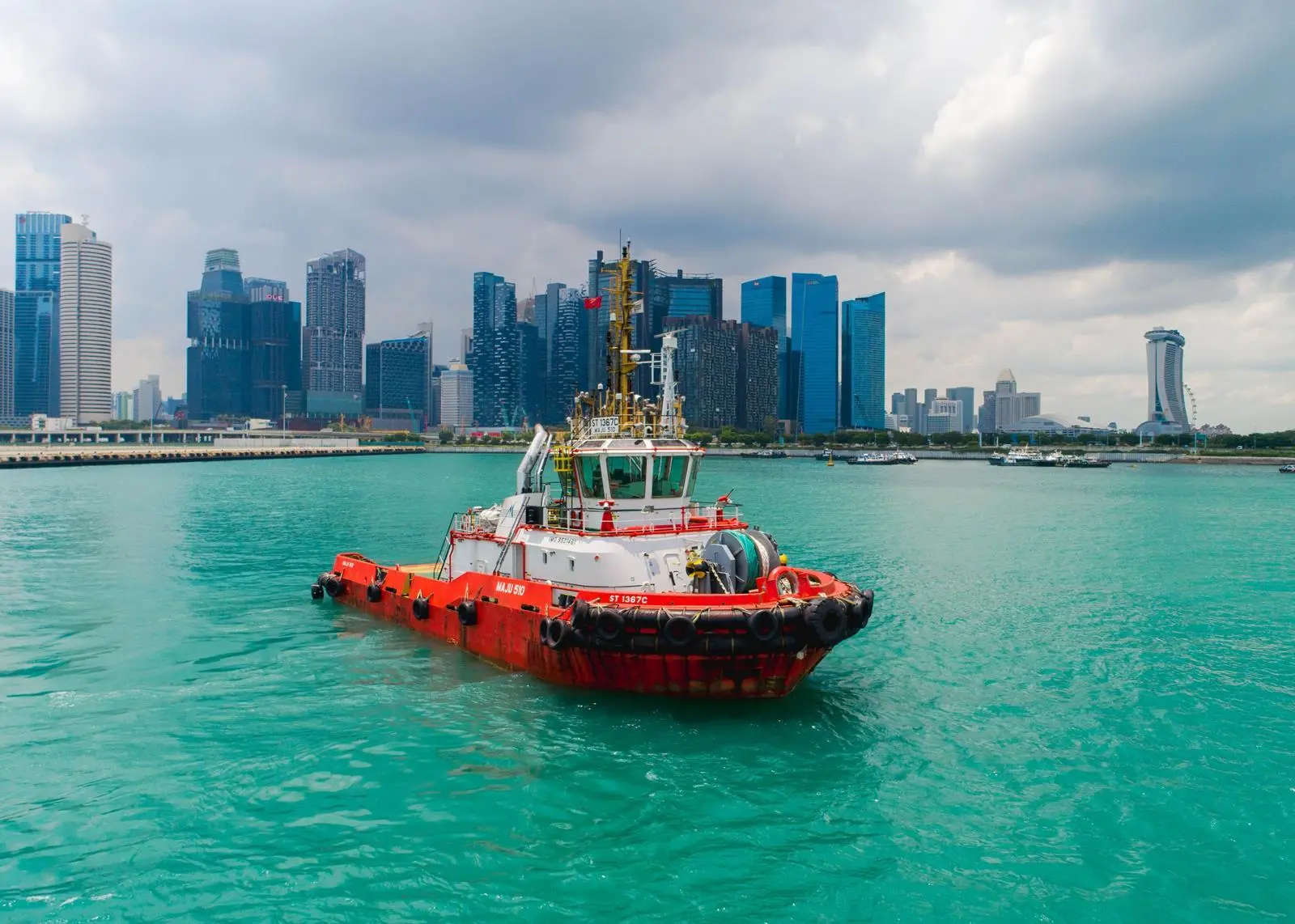
The trial of remotely operating the harbour tug was successfully performed from a shore command centre located at the Maritime and Port Authority of Singapore’s Maritime Innovation Lab. ABB delivered an integrated solution for the remote and autonomous control of the vessel based on the Ability Marine Pilot product family. The digital solution ABB Ability Marine Pilot Vision provided the sensor fusion from onboard systems to generate a digital situational awareness, while ABB Ability Marine Pilot Control system executed the necessary intelligent manoeuvring and control commands.
“We are proud to have reached another milestone representing a significant step towards autonomous shipping, in close collaboration with Keppel,” said Juha Koskela, Division President, ABB Marine & Ports. “The intent of this technology is to relieve the crew of tasks that can be automated, enabling them to perform at their best during critical periods and enhancing the overall safety and productivity of marine operations. This trial also confirms the possibility for application of remote and autonomous technology to other vessel types.”
ABB’s technology and Keppel O&M’s technology solutions were retrofitted on the 32-metre harbour tugboat Maju 510. The vessel is owned and operated by Keppel O&M’s joint-venture company Keppel Smit Towage.
“Remote control navigation is an important feature of autonomous vessels as it acts as a safeguard and is especially useful in certain complicated scenarios. As the overall system integrator, Keppel O&M is leveraging its in-depth offshore and marine expertise and collaborating with the Keppel ecosystem of companies, such as M1 with its connectivity solutions, as well as other partners such as ABB who supplied leading-edge technology, to incorporate the best-in-class systems and offer customizable autonomous solutions. This is in line with Keppel’s Vision 2030, which includes harnessing advanced technologies for growth,” said Mr. Tan Leong Peng, Managing Director (New Builds), Keppel O&M.
Tug operations, where a tugboat manoeuvres other vessels by pushing or towing them, often in crowded harbours, can be extremely demanding, requiring the full attention of the crew. Additionally, tugs often have to complete lengthy and monotonous transit legs to get to their place of operation. Performing the transit autonomously and under remote supervision would enable the onboard crew to rest and be alert when they are needed in the actual work of the tug. Station keeping with remote assistance may also provide opportunities for onboard crew to rest rather than performing routine tasks that can be managed as effectively or better by remote crew.
ABB has previously delivered technology for the groundbreaking trial of a remotely operated passenger ferry, Suomenlinna II, carried out in Helsinki harbour in November 2018, proving that human oversight of vessels from any location is achievable using currently available technology.
The harbour tug project is funded by the Maritime and Port Authority of Singapore as part of the Singapore Maritime R&D Roadmap 2030 which charts out the nation’s key focus areas for the development of the maritime industry, as well as research and technological capabilities. The second phase of the project, scheduled for late 2021, will see the vessel perform autonomous collision avoidance tasks while under remote supervision.
Related Articles
 ENERGY SAVING DEVICES
 LNG
LNG
 ALTERNATIVE FUELS & LUBRICANTS