



Sustainable fuels bunkering planned for Roenne by 2025
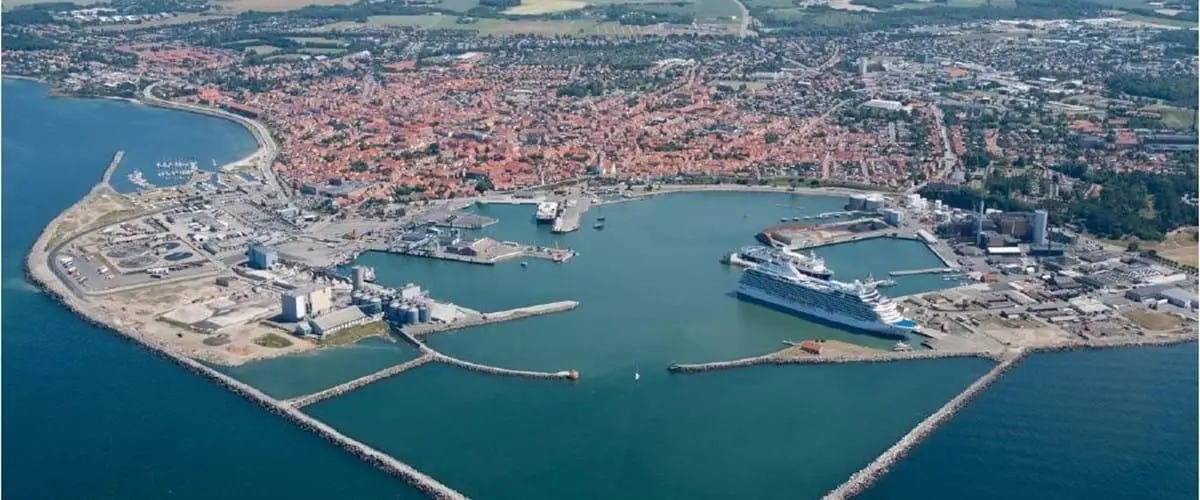
The Baltic Sea port is expected to be bunkering sustainable fuels by 2025. The plan for Bornholm Bunker Hub is to be able to supply green fuels, such as methanol and ammonia, to the more than 60,000 ships that pass by Bornholm every year.
Port of Roenne is Bornholm’s only commercial port and a hub for ferry routes to Sweden, Denmark, and Germany. The port was chosen as the installation port for Denmark’s largest offshore wind farm, Kriegers Flak, and the port is expected to play a key role in the realisation of the future energy island project off the coast of Bornholm, with electrical connections to Denmark, Poland, Germany, and Sweden.
Over the past year, Bornholm Bunker Hub has carried out a feasibility study of the financial potential of supplying sustainable fuels to the shipping industry in the Baltic Sea near Bornholm. Local production of Power-to-X fuels could be an important part of implementing a competitive bunker hub and will be achievable when the Energy Island at Bornholm is established around 2030 with at least 2GW of offshore wind energy.
The consortium will engage potential customers in the Baltic Sea to identify their expected demands for sustainable fuels – several major companies are already participating in the consortium.
The consortium behind Bornholm Bunker Hub comprises eight partners: Ørsted, Molslinjen, Topsoe, Bunker Holding Group, Wärtsilä, Ramboll, Bureau Veritas and Port of Roenne A/S.
Anders Christian Nordstrøm, COO, Ørsted Power2X: “The demand for green shipping fuels is rising rapidly, and Bornholm’s strategic location makes it a natural location for a bunkering hub for marine transport in the Baltic Sea.”
Gudmundur Langvik-Valdimarsson, General Manager, Sales, Wärtsilä Denmark: “The Bornholm Bunker Hub initiative will provide important lessons on how the industry can join forces to build future regional green-fuel supply chains for shipping. We see clean energy hubs like this as key enablers for the changeover to green shipping, and safe access to green fuel will be crucial for the implementation of our own clean-engine technology in future vessels. The project is a good example of how we, as an industry, can pool combine our various areas of expertise to take important steps towards transitioning to clean energy in maritime operations.”
Gijsbert de Jong, Marine Chief Executive, Nordics, Bureau Veritas: “During the initial phase, the Bornholm Bunker Hub consortium has demonstrated that collaboration between companies across the value chain can achieve real progress towards decarbonising shipping. In the second phase, we will be committed to supporting the practical realisation of the group’s ambition to supply alternative bunker fuel from Bornholm.”
A change in the energy source for national shipping can contribute directly to Denmark’s goal of reducing CO2-emissions by 70% by 2030. The vision of the Bornholm Bunker Hub can also be scaled and contribute significantly to reducing global CO2 emissions.
Related Articles
 ALTERNATIVE FUELS & LUBRICANTS
 ALTERNATIVE FUELS & LUBRICANTS
 ALTERNATIVE FUELS & LUBRICANTS