



Swedish gas carrier design for regional fuel supply chain
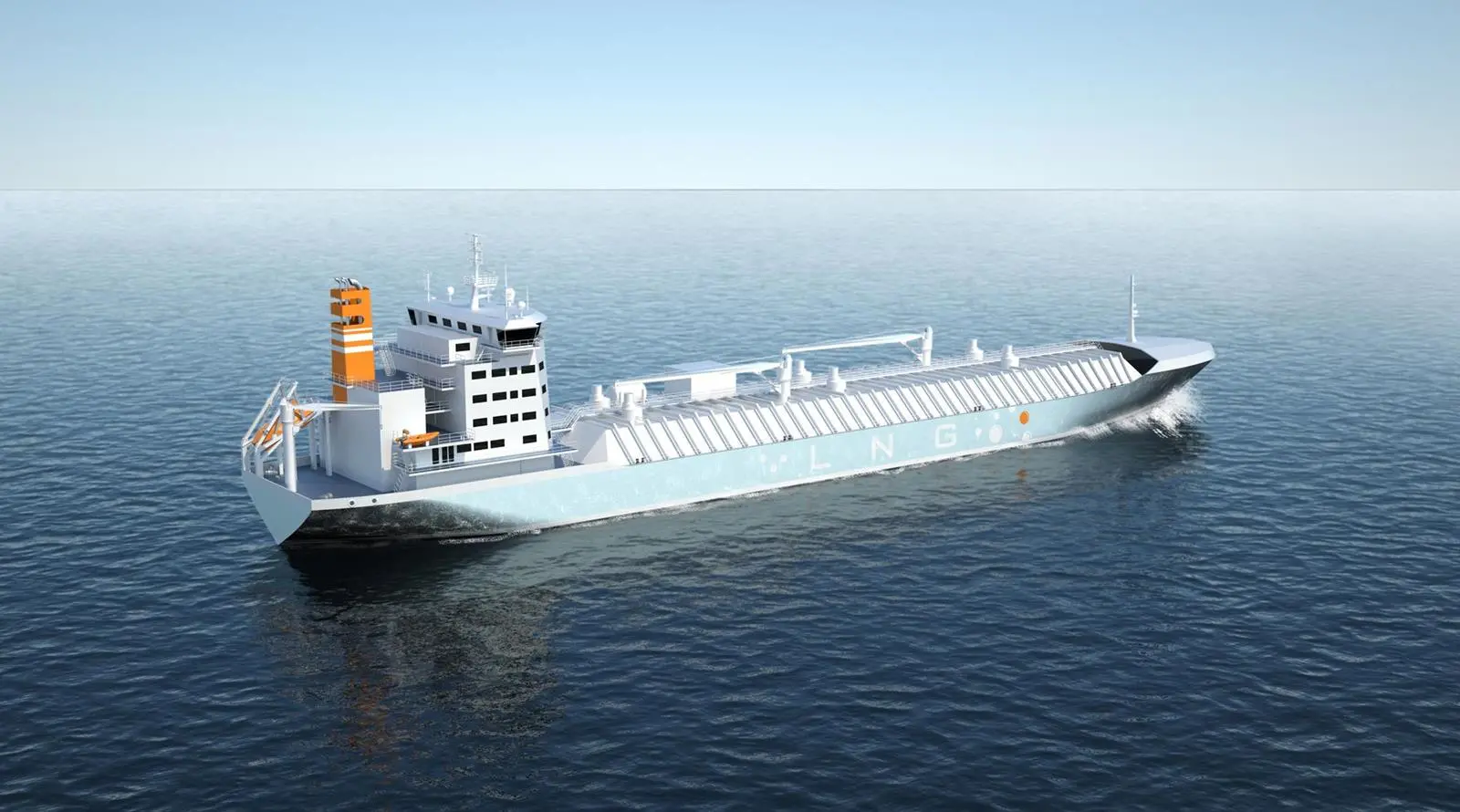
This follows on from an earlier design, the FKAB L1 presented in June 2009, to provide what the company describes as the development of an efficient and sustainable sea based regional and local distribution system for LNG.
In 2006 FKAB identified natural gas in liquefied form (LNG) as an interesting and realistic alternative to conventional fuels on ships. Since then FKAB has closely monitored the development and spent significant resources in the development of various designs using LNG as fuel as well as designs used in the supply chain of LNG for ships.
The FKAB L2-design is intended solely for regional distribution of LNG. The gas is stored in three insulated cargo tanks of bilobe type, classified by IMO as “Independent Type C”. The tanks have spherical heads and a design pressure of 4,1 bar. Each tank is equipped by two submerged deep well pumps for easy discharging. The discharge capacity is 6 x 300 m3/h.
The FKAB L2 main fuel is boil-off gas and regasified LNG from the cargo tanks. This will reduce fuel cost when operating the vessel. Despite this the L2 is designed to be as energy efficient as possible with amongst other a slender hull and a heat recovery system. These measures reduce costs further but will also reduce the environmental footprint of the vessel. To maintain flexibility and for emergency use the machinery is of dual fuel type and the vessel has capacity to carry 200m3 of MGO as alternative fuel.
The ship is 158.4m length oa, with 24m breadth. Design draught is 6.2m, with a corresponding deadweight of 7,300 tonnes, and gross tonnage of 11,800 gt. The ship is designed for a service speed of 15.2 knots, from a 5,250 kW main engine running at 85% MCR.
Related Articles
 PROPULSION
 GENERAL NEWS
 HYDROGEN