



Tankers pioneer waste heat recovery
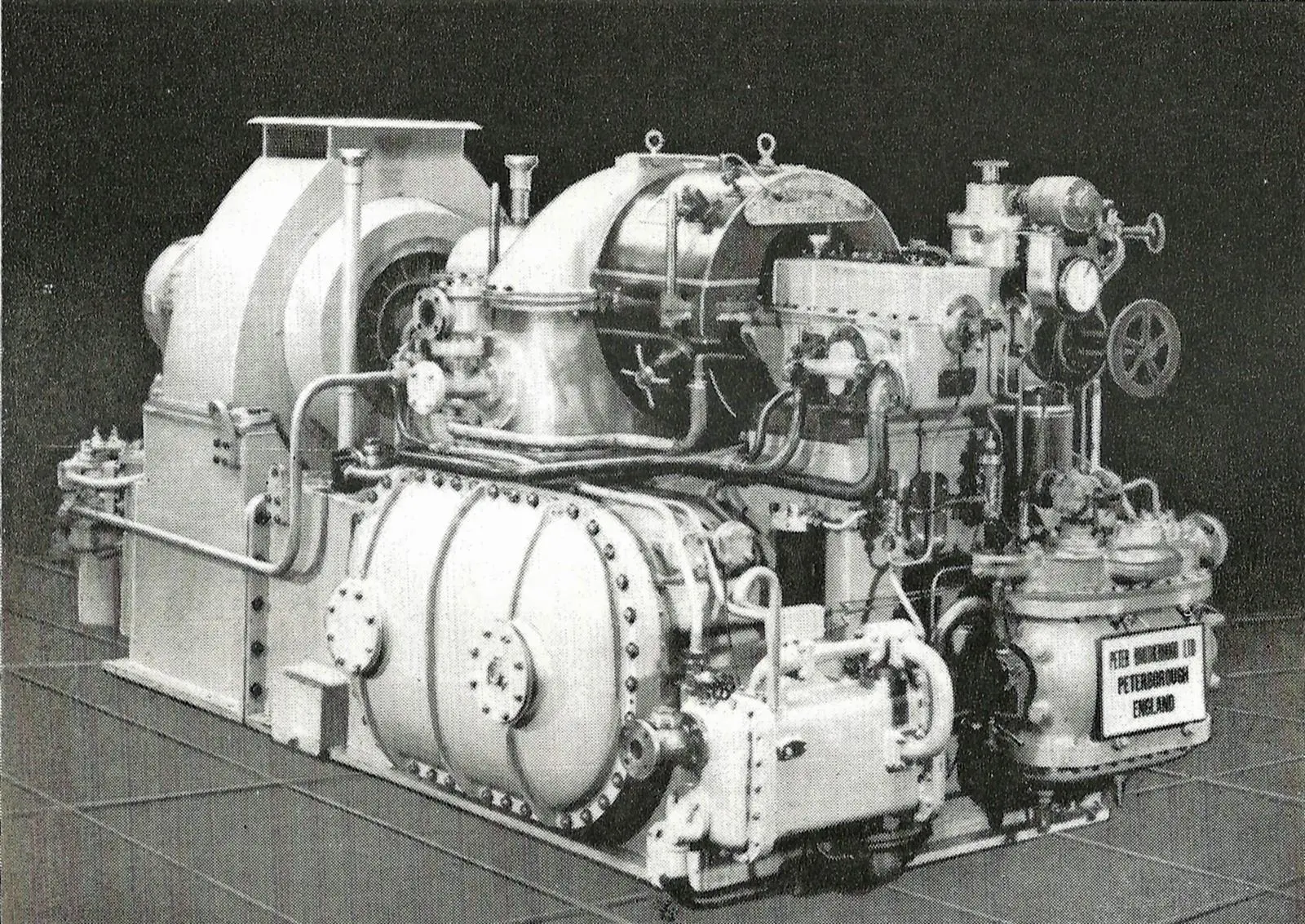
I was certainly surprised to see, in the April 1962 issue, two articles, one entitled The BP Tanker Co’s Maximum Waste Heat Recovery System, and another on a similar subject: Utilization of Exhaust Gas in Motor Ships. Looking at current discussions on EEDI one could be forgiven for thinking this was a comparatively recent innovation.
But first, a rather more expected subject for an article in April 1962 was the rise of Japanese shipbuilding. Although 50 years ago the United Kingdom and West Germany were still considered the leading shipbuilding nations, in terms of gross tonnage launched, Japan had been leading the field since 1956, with 1961 seeing 1,276,000gt launched, or nearly a quarter of the world’s newbuildngs. The figures had in fact been higher in previous years, but the market share was smaller. So in a shrinking market (5,763,000gt launched worldwide in 1961 compared with 9,270,000gt three years earlier), Japan had taken the lion’s share of new orders. The success was put down to the large-scale investment in expansion and modernisation of Japan’s shipyards since WWII, something which had been forced on the Japanese after the merchant fleet was virtually wiped out by the war, but which had paid dividends in the world export market. And it was a similar story with machinery production, most of which was under licence from European designers.
So, what of BP’s innovative waste heat recovery system? This was to be found on the 15,000dwt 7,600bhp tanker British Kestrel, the latest of BP Shipping’s Bird-class vessels, built by the Wm Hamilton yard. The system made use of a combined low pressure and high pressure steam generating plant in order to overcome the comparatively low exhaust gas pressures and temperatures encountered with a turbocharged Diesel engine, in this case a B&W two-stroke unit manufactured by Kincaid-Harland.
Water was taken from either of two Scotch-type boilers, heated by exhaust gas, and discharged through heaters and a low-pressure stem generator to a feed heating and stema generating economiser. The steam/water emulsion was returned to the boiler, from which the steam was separated and passed through a superheater, to drive a turbine alternator, supplying the ship with sufficient power (about 320kW) to provide heating to the main midships accommodation, with other heating supplied from the low pressure steam system. The waste heat recovery plant was supplemented by a 400kW Mirrlees genset for use in port. Although the system was expensive to install, annual savings of around £5,000 were anticipated, described as ‘substantial’ in 1960s terms.
The second article concerned another BP tanker, the 35,000dwt British Venture, which was to be fitted with a Brotherhood low-pressure turbo-generator set for operation on exhaust-generated steam. This was rated at 450/600kW, and was expected to offer similar levels of savings in operational and maintenance costs over conventional Diesel generating plant. The 450kW represented power generated at sea, purely from exhaust gas heat, while the 600kW rating took into account the supplementary oil-fired boilers for supplying additional steam, mainly for use in port.
Related Articles
 50 YEARS AGO
 50 YEARS AGO
 50 YEARS AGO