



TECHNOLOGY DRIVE FOR EU’s SMALLER YARDS
The overarching objective of the collaborative scheme is to improve manufacturing processes and reduce unit production costs among smaller shipbuilders facing intensifying pressures from overseas counterparts. It is recognised that technology globalisation, the ready transfer of technology, has strengthened the capabilities of competitors in regions that already have a fundamental advantage in low labour costs.
Comprised of 18 partners located in nine European countries, the Mari4_YARD project was implemented just before the close of 2020 and is scheduled to run for 48 months. The EU is investing EUR5 million (US$6m) into the endeavour, amounting to some 85% of the overall EUR 5.9 million (US$7m) budget.
The Spanish research organisation AIMEN (Asociación de Investigación Metalúrgica del Noroeste) has been appointed from within the membership as coordinator, and has qualified for the single largest grant of EUR 715,000 (US$ 854,000).
European shipbuilding has relied on competitive differentiation through the complexity, customisation and quality standard of its products and contractual performance. But technological advance worldwide is eroding or negating this differential, while prices obtainable in the global market relative to European costs has impinged on yards’ capacity for capital investment to raise efficiency.
Current automation solutions based on large, monolithic equipment are ill-suited to the requirements of SME yards for enhancing productivity. Therefore, Mari4_YARD’s remit is geared to cost-effective, reconfigurable, worker-centric methodologies that can improve performance and outcomes, while ensuring precision and quality in executing labour-intensive tasks.
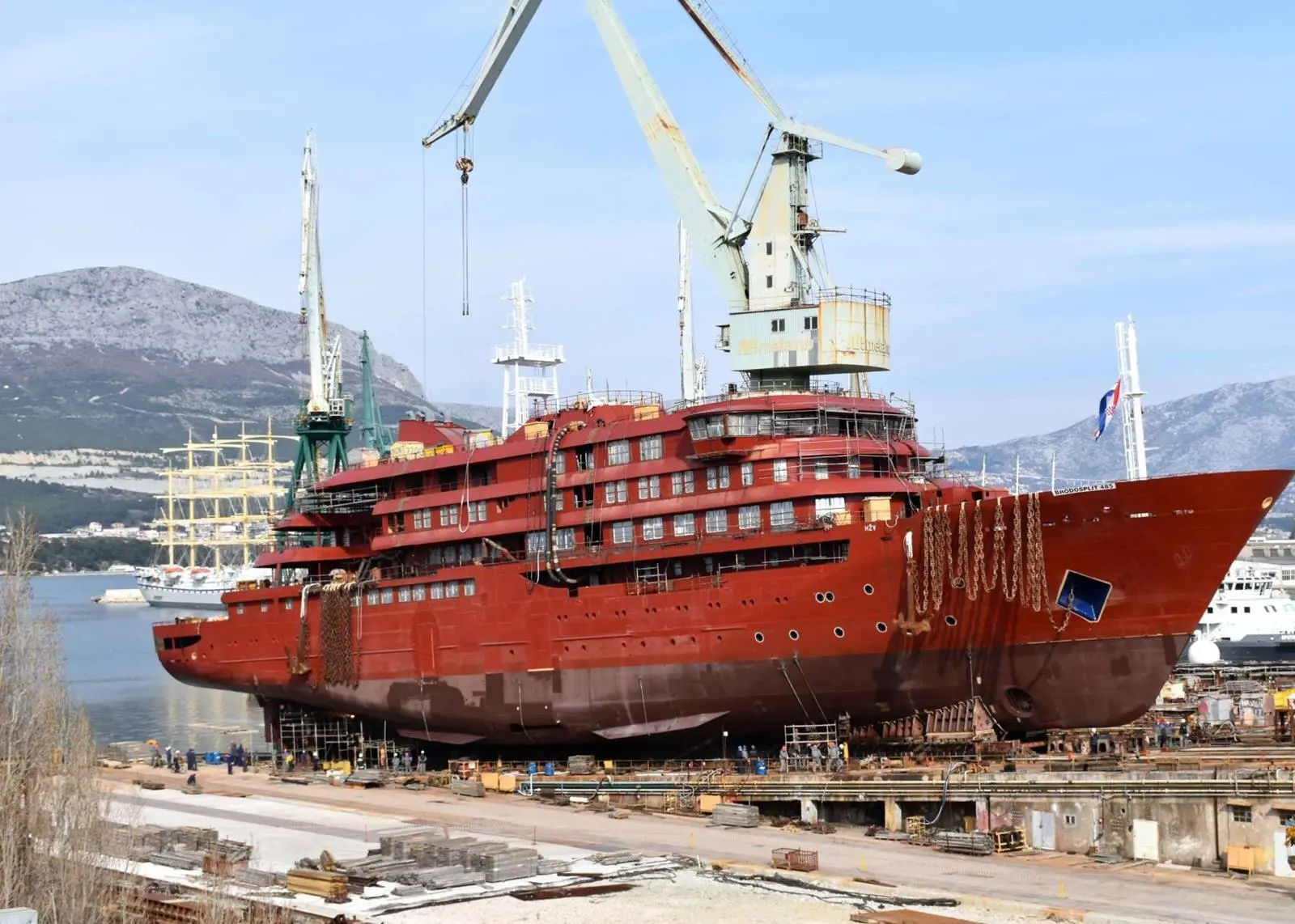
The research consortium, made up predominantly of technical institutes, research bodies and technology vendors, is convinced as to the path the industry has to follow: “In order to avoid a worsening of the already started competitive drawback, the SME yards need to enhance their productivity and manufacturing capabilities(cost, lead time, quality), taking advantage of the latest developments within digital production, i.e. advanced robots and cobots (collaborative robots), machine vision, Internet of Things (IoT), flexible production systems, 3D printing, supply chain integration across multiple sites, skills development and deployment strategies”. The consortium includes Croatian shipyard Brodosplit, as well as Spain’s Astilleros Nodosa.
Flexible and reconfigurable robotic solutions and the associated development of human-machine interfaces for robotic programming, and tools that can preserve industry-specific workers’ knowledge and skills, are seen as pivotal elements. Handheld and portable AR/MR (augmented reality/mixed reality) tools are expected to have a profound effect on the efficiency of ensuring precision and quality in constructing specialised tonnage.
Related Articles
 PROPULSION
 GENERAL NEWS
 HYDROGEN