



The bigger they are the harder they fall
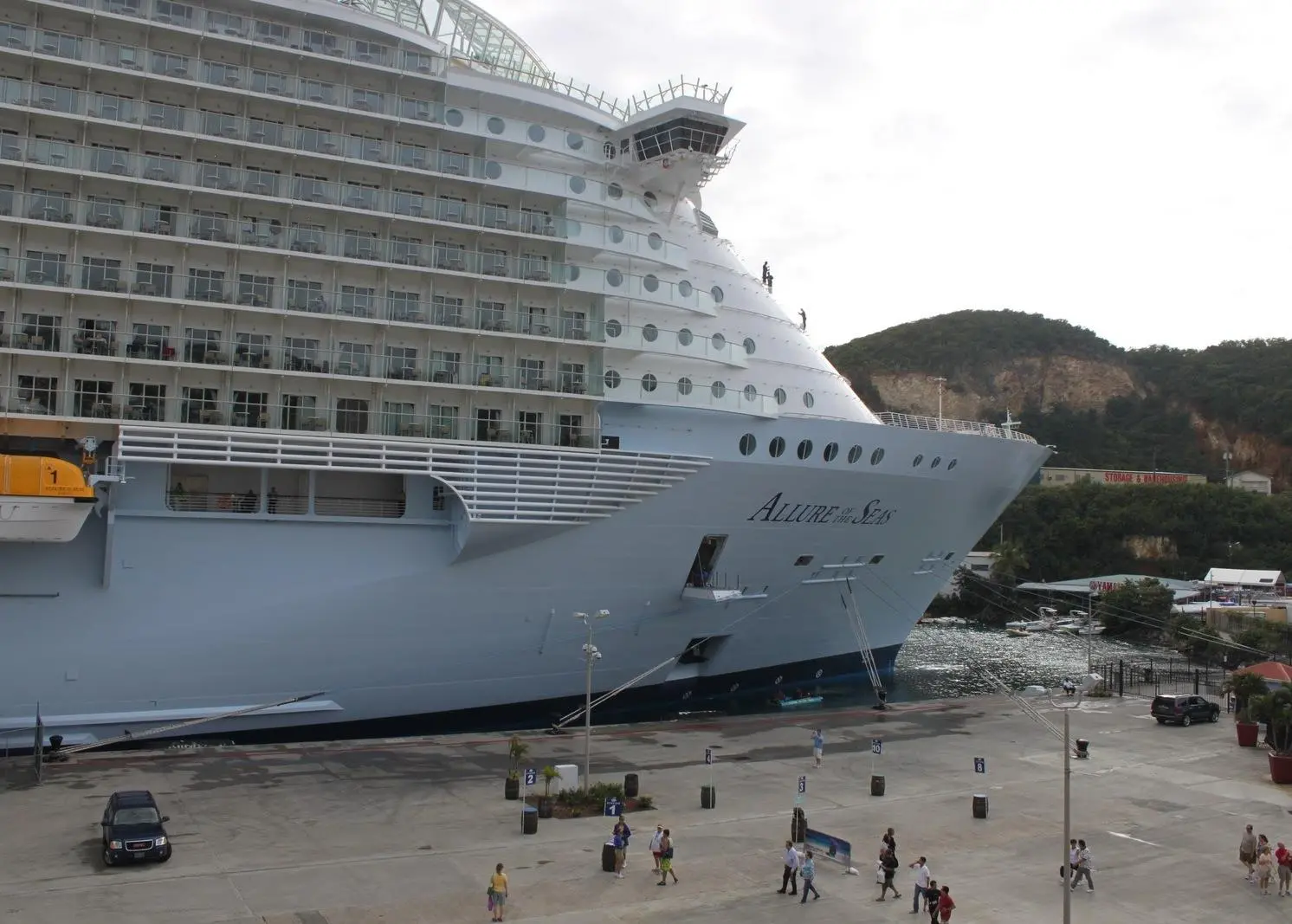
These days the focus on size increase has switched to cruise ships, container ships and LNG carriers. These are the ship types where the economies of scale start to have a significant impact and where the infrastructure can be developed to match the scale.
Both VLCCs and bulk carriers developed problems as they increased in size back in the 1980s. Here the problems stemmed mainly from ship structure where the stresses on larger hull structures had not been fully appreciated, or where there were actual construction defects. As is usual with the shipping industry solutions were found and the world moved on but are we storing up problems for the future with the increases in scale of other and newer ship types? Are the economies promised by the increased capacities justified by the potential risks if something goes wrong?
We have seen similar increases in size taking place in the aircraft industry with the Airbus A380 doubling passenger capacity compared with the aircraft it replaces. This economy of scale has been achieved without significant problems if you discount the odd engine explosion and wing cracks. However the aircraft industry is much more structured than the marine side and aircraft are tested virtually to destruction before a passenger steps onboard. Compare this to the shipping industry where a new ship that sets records for its size or capacity enters service after just a week or two of trials that may or may not even embrace any rough sea operation. Aircraft are designed to be built in series production whereas nearly every ship is a one-off to a certain extent where intensive testing cannot be justified.
It is a tribute to the naval architects and the classification societies that new and larger ships enter service with few or no apparent problems. Sophisticated systems monitor and control all the aspects of ship operation these days so there should be no room for errors to creep in and most of the accidents involving shipping seem to involve older and smaller ships. Is this because the new ships are better staffed than the old ones or are they better equipped and designed? Can we be comfortable that the pioneering new breed of modern large ship can operate safely and securely in all conditions that they are likely to encounter?
The answer is that we simply do not know, because a new large ship may not be put to the test for several years after it enters service. Sophisticated ship routing systems should keep ships away from severe weather and modern navigation systems should prevent groundings and collisions. In theory, everything operates as designed and according to plan but how narrow are the safety margins on the new generation of large ships? Passenger ships encounter rogue waves that cause damage and injury, container ships have structural problems (the Napoli), and LNG ships can go aground and have collisions. All of this suggests that even on the best-operated ships, the safety margins can be quite small. The human element is still a major factor in ship safety and crew expertise and effectiveness can be questionable.
The regulations for safety at sea that have been largely established by IMO tend to be developed re-actively rather than pro-actively with the regulations only changing following a major incident. This means that a new and significantly larger ship is designed to meet regulations that were developed for smaller ships. Are the SOLAS requirements for a 1,000-passenger cruise ship adequate to cope with the problems of a 4,000-passenger ship? Are the Colregs that were developed mainly for ships that operated at a sedate pace adequate for the latest generation of high speed ferries and 25 knot large container ships?
IMO works hard to keep up with developments and the new passenger ship safety requirements are an example. These work on the basis that rather than trying to abandon ship in the event of a disaster there should be a safe haven created on board where passengers can await rescue in safety. “The ship is her own best lifeboat,” is the mantra proclaimed by IMO, so keep the passengers on board if at all possible. The Costa Concordia incident showed how inadequate such an approach might be and it is unlikely to work in the event of a severe collision or grounding. As ships get larger the ability to cope with accidents becomes more and more difficult simply because of the sheer scale of the problem.
In any marine disaster outside help is a vital component of safety and rescue, and this is where the economies of scale may be storing up problems for the future. Where is the outside help coming from to go to the assistance of a Concordia type disaster that might occur in some of the remote locations that cruise ships now visit? How do you cope with a 15,000TEU container ship that is perhaps on fire or in collision and sinking in the open ocean? What about when one of the latest generation of LNG ship starts to leak gas, or has an explosion passing through the Straits of Gibraltar?
Safety at sea still depends heavily on assistance being provided by other ships of opportunity that are found in the vicinity of the casualty and the AMVER system operated by the US Coast Guard does a great job of directing ships to those in trouble. Most of the time that works when the casualty is relatively minor but more and more modern ships are simply not designed for, or suitable to effect, rescue at sea. There is little point in sending a ship to assist a casualty if it cannot do much when it arrives.
The offshore oil industry has been aware of the potential for disaster in its operations in hostile waters and there are requirements to have a stand-by vessel in attendance to cope. It is an expensive solution but it has proved effective. However, for shipping roaming the world’s oceans it is hardly practical. Salvage tugs that used to be strategically located to go to the assistance of shipping have virtually disappeared and as ships get larger and larger and perhaps more vulnerable we simply do not have the infrastructure to cope with a major maritime disaster.
It seems inevitable that we will wait for such a disaster to happen before any action is taken, otherwise where is the incentive? Trying to get international agreement to spend money will be almost impossible. Trying to improve the safety of shipping is the alternative – and is the current approach – but at the end of the day safety of shipping depends heavily of the human element and time and time again this has proved to be the weak link. Disasters at sea will continue to happen and as ships get larger that ability to cope will become more and more difficult. At what point do we say stop, enough is enough and ships of a certain size and above are no longer viable because of the unacceptable risks that they present?
Related Articles
 ALTERNATIVE FUELS & LUBRICANTS
 ALTERNATIVE FUELS & LUBRICANTS
 OPINION