



The changing face of towage
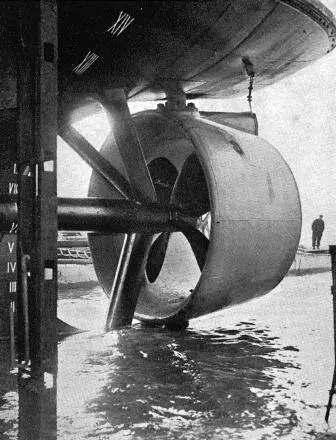
Back then, bollard pull was flavour of the month, this being said to be more important than mere power. Although high-powered tugs with static pull up to 25 tons were mentioned, the normal figure 50 years ago was in the region of 9-13 tons. Engines were of 1,100 to 1,250 bhp output, with one author considering that 1,600 bhp represented the reasonable working limit to the power that could be squeezed into a hull of 105ft x 28ft. Compare those figures with a not-untypical present-day tug design, which has well over 5,000 bhp in a similarly-sized package, this offering something in the region of 80 tonnes bollard pull. Such a prospect would have horrified the author of that article, who questioned whether a 20-ton pull tug was essential, safe or desirable.
There was much still to be learned about tug technology. The Diesel tug had only just come to the fore over the steam-powered boats, and the new technology had not been without its problems. The volume of air available in comparatively small engine rooms had proved inadequate, while the fact that a Diesel engine could suffer overload damage whereas a reciprocating steam engine could not be overloaded was seen as a further disadvantage. Manoeuvrability and fast response are seen as important in today’s tugs, while 50 years ago twin-screw four-stroke engine with reversing/reduction gearboxes were compared unfavourably with the comparative simplicity of the low-speed single engine tugs.
Related Articles
 50 YEARS AGO
 50 YEARS AGO
 50 YEARS AGO