



The Motorship to host second ExxonMobil roundtable
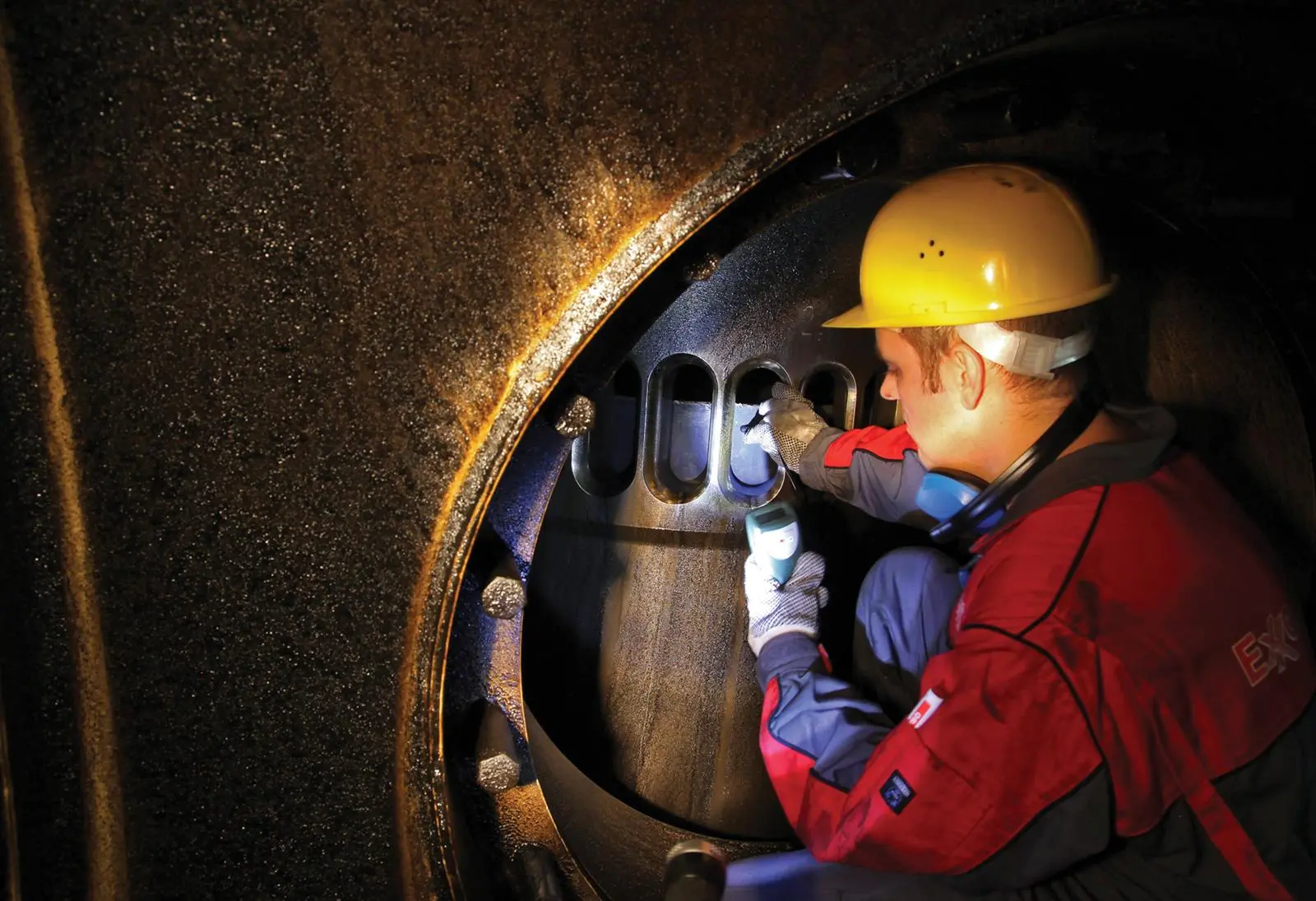
To be held in Copenhagen on 5 October – just one day before the Danish Maritime Days event – the discussion will explore some of the challenges facing ship owners and operators in the crucial field of cylinder lubrication. It is a timely meeting: representing almost two-thirds of marine lubricant costs on average for ship owners, the cylinder lubricant landscape has never been more challenging.
Spurred by unprecedented regulation of emissions – in particular the fuel sulphur limits introduced in Emission Control Areas (ECA) at the start of this year (0.1%) and globally by 2020 or 2025 (0.5%) – the industry has been presented with a range of fuel choices and operational scenarios that add new complexity to the already challenging areas of engine maintenance and performance.
The continuing evolution of marine engines brings its own challenges on top of those related to regulatory changes. Increasingly long and slow piston strokes on modern low-speed engines will ensure that the perennial issue of cold corrosion, caused by the build-up of sulphuric acid as a result of low pressure in cylinders, leading to liner wear, remains a concern. Finding new means of combatting that threat to engine longevity will be crucial.
But as some industry advances throw up further obstacles on the path to optimum engine conditioning, others are beginning to show a clearer way forward. Cylinder condition monitoring, a relatively recent but already widespread industry tool, allows ship operators to diagnose cylinder problems almost instantly as soon as they arise – or ideally before.
As a leading supplier of marine lubricants and fuels, ExxonMobil is well placed to lead the discussion on the future of this rapidly-evolving field. And with one of the most comprehensive and longest-established cylinder condition monitoring programmes in the marine industry, ExxonMobil has a wide portfolio of practical, in-the-field experiences to draw from. At next month’s roundtable, the company will use data from its extensive database to show how operators can avoid the potentially harmful effects of lubricant misuse.
In one recent case study, the operator of a container vessel was concerned that its Wärtsilä 12RT-flex 96C engine was susceptible to cold corrosion. The company asked ExxonMobil to conduct field trials to measure the effectiveness of its Mobilgard 5100 cylinder lubricant in tackling this issue.
At the start of test the vessel’s engine was operating at a 45% load on a heavy fuel oil (HFO) with a 2.97% sulphur level, and running an industry standard 70 base number (BN) cylinder oil. The vessel was operating at a feed rate of 1.29g/kWh and any further reduction resulted in the reserve BN levels falling below the levels recommended by the OEM, thus making the engine susceptible to effects of cold corrosion.
A team of ExxonMobil engineers switched the 142,105dwt vessel to a 100 BN alternative oil, Mobilgard 5100. The move tackled the issue of cold corrosion and enabled effective engine operation under varying load conditions. By implementing a programme of cylinder condition monitoring (CCM) in tandem with the changeover to Mobilgard 5100 it was possible to safely and efficiently optimise feed rates to 0.95 g/kWh – a 26% reduction in cylinder lubricant consumption. The vessel operator has now implemented the switch to Mobilgard 5100 on seven other vessels in its fleet to reap the technical and commercial benefits of optimal lubrication.
Reduced lubricant consumption is not the only benefit of optimising cyinder lubrication. In another example, engineers from Athens-based Danaos Shipping were able to extend the piston overhaul interval on containership MV CSCL Europe by over 250%, as well as reducing cylinder oil feed rates for the vessel’s DOOSAN-MAN B&W 12-cylinder K98MC-C engine to the minimum setting of 0.6g/KWhr.
The achievement was especially significant because the containership had been running under the more strenuous operating conditions of slow steaming since 2009. During this time, the vessel has been averaging 15.6 knots with engine loads as low as 30-40%, as well as operating with a reduced cylinder oil feed rate.
Built in 2004, MV CSCL Europe had been lubricated with Mobilgard 570 since it began operation. Danaos has maximised the use of the high-performance lubricant by using the ExxonMobil Cylinder Condition Monitoring programme to detect changes in cylinder condition, allowing engineers to safely reduce Mobilgard 570 feed rates without increasing wear.
Engineers gradually extended the overhaul period on successive pistons in the vessel’s 12-cylinder engine. Overhauls started at 16,000 hours (the MAN recommended interval) and continued systematically at extended intervals, based on the good condition of the engine’s pistons, rings and liners. In cylinder number 11, the overhaul was done at 42,575 hours, with scavenge air port inspections showing that all monitoring parameters were still within the normal range.
The overhaul revealed that even at 42,575 hours, cylinder number 11 was in remarkably good condition, suggesting that the interval could have been extended much further. Liner wear rate, piston ring wear and the ring groove clearance were all well below the allowable thresholds identified by MAN Diesel & Turbo and no evidence of scuffing was found.
The very fact that knowledgeable ship operators can still make such improvements highlights the need for further discussion around cylinder lubrication. And as important challenges as well as groundbreaking lubricant advances will no doubt continue to arise, the second ExxonMobil roundtable hosted by The Motorship will be a critical platform for the debate.
The Motorship will report on the ExxonMobil roundtable in detail, both in the November print issue and on www.Motorship.com.
Looking back, moving forward
The debut ExxonMobil roundtable hosted by The Motorship, held during the 36th Propulsion & Emissions Conference in Hamburg last year, was notable for several important interventions from ship owners and engine designers. Summing up the discussion Lars Robert Pedersen, deputy secretary general of BIMCO, offered five ‘take-home’ points:
• Engine companies stress the need for high base number lubricants in later-design engines, particularly when slow steaming;
• For these later type low speed engines onboard scrape down oil analysis should be promoted;
• Charterers need to be educated in correct operation of engines at loads below the engine design load profiles; and
• The use of 0.1% sulphur fuel will be a major challenge to the industry, with no low speed engine ships yet operating on such fuels there are no opportunities for sea trials in advance of the legislation.
Many of these themes – particularly the last – are likely to resurface at this year’s discussion. To give a flavour of the debate, and to pave the ground for this year’s debate, below are some further choice observations from last year’s participants.
“The way in which, in certain engine types and under certain conditions, cold corrosion leapt out of control took MAN and other engine designers by surprise.” – Kjeld Aabo, customer support director MAN Diesel & Turbo
“The traditional way of selecting a cylinder oil was based solely on fuel sulphur content. But new operating challenges mean that shipowners must take a number of other factors into account including vessel speed, engine load, engine model and whether there have been any modifications to enable running at low load.” – Steve Walker, global builder manager, ExxonMobil
“We need a cylinder oil that can cope with all [bunker] conditions. This did not seem to be a problem some two and a half years ago, when several oil companies offered a ‘universal’ oil that was said to cope with the full range of conditions. Now, it seems, one oil is definitely not enough.” – Lothar Schüler, Hammonia Reederei
Related Articles
 ALTERNATIVE FUELS & LUBRICANTS
 FUELS & LUBRICANTS