



The superiority of motor ships
Progressive owners of steam ships were, apparently, rushing to convert them to motor vessels, lured by talk of coal shortages, falling freight rates which made the more efficient motor ships more attractive, greater cargo capacity, even prospect of a reduction in the cost of living.
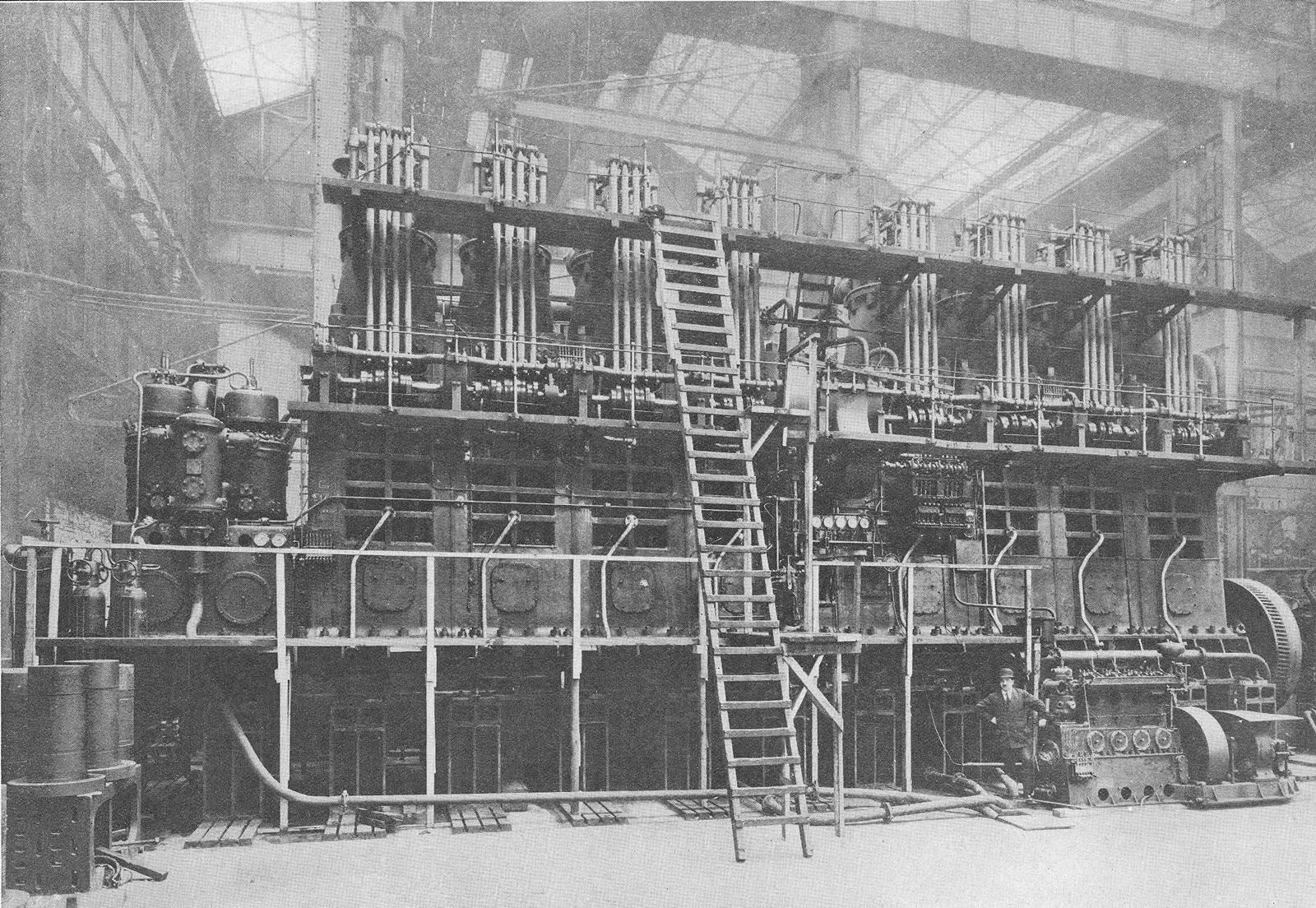
A full-page photograph featured a contemporary engine, one of a pair in the Glenapp, the highest powered motor ship then afloat. It didn’t mention the designer, but the ship was an interesting one, having been commissioned from Barclay Curle on the Clyde by the Imperial Russian government, and, after the revolution, completed in 1918 as a passenger ship for Glen Line.
The real space saving benefits of Diesel power had yet to be realised; in comparison with the man, and the small auxiliary on the right, it took a large lump of iron to produce 3,200 hp.
But even then a note of caution was sounded. “Is there enough oil?” asked a comment piece. Referring to the high consumption of oil-fired steam ships draining the US oil fields, the article looked forward to Mexico and Persia replacing America as the great oil supply sources. Again prophetically The Motor Ship expressed concern about the lower quality of Mexican crude, and said that Diesel engines must be made to burn such oils.
Related Articles
 50 YEARS AGO
 50 YEARS AGO
 50 YEARS AGO