



Thinking systematically about propulsion: Wärtsiläs Stefan Nysjö
From an engine design and operation perspective, what do you think have been the most important technological innovations during your career?
Two significant advances come to mind. The first, which predates my time, was the successful adaption of four-stroke medium speed diesel engines to operate on heavy fuel oil in the wake of the oil crisis in the 1970s. Wärtsilä engineers were the first to achieve this breakthrough. [The Motorship notes this came just a few years after Wärtsilä engineers designed their first engine, Vasa 14, in 1959.] A second, more recent engine-related innovation was the introduction of the first dual-fuel marine engine to operate on liquefied natural gas, the Wärtsilä 34DF dual-fuel engine in 2003. This drew on our work on gas-diesel engines in the late 1980s and spark-ignited pure gas engines in the early 90s. Both of these innovations have had a wide impact on the industry as a whole.
But, if we look away from engine technology towards wider innovation, Wärtsilä has played a leading role in applying systems thinking to the marine industry, which informed our Smart Marine Ecosystem vision. Further, from a commercial perspective, we were the first company to establish and expand a fully armed global service network, for example. More recently, innovations have been based on applied digital technologies and the use of data.
As a mechanical engineer by training, how do you see the future role of the internal combustion engine? Will it remain the main mover for marine transportation in the future?
I started out in the power generation side of Wärtsilä in the 1990s but have been working in the marine business since the 2000s. So you could say I have some experience in this market. As a company, we believe that engine technology will remain at the centre of marine propulsion, particularly for deep-sea shipping. I believe it will remain the prime mover there for many years to come. However, we think that we may see different combinations of propulsion in the short-sea market, where we expect the recent growth in battery hybridisation to increase. For some ferries and passenger ferries, fully electric vessels may become more widespread for short crossings.
You mention hybridisation as a technology. Looking at the current market for hybrid vessels, how do you see the technology and the market evolving?
Since we unveiled our Wärtsilä HY module at Nor-Shipping in 2017, we have seen commercial interest in hybridisation rapidly evolve. Our hybrid solutions for tugs, dredgers and offshore vessels offer double-digit efficiency savings and have grown rapidly. But the advantages of the technology are not limited to short-sea vessels with fluctuating energy consumption patterns.
We also see opportunities for hybrid solutions to help to optimise operations in the cruise vessel sector and also in the ro-pax segment where hybrid solutions can help to optimise the operation of auxiliary engines.
I am personally convinced that we will see hybrid solutions grow across different segments, including deep-sea vessels.
How do you see the development of battery technology affecting the market?
We recognise that battery technology is developing, and that this is being driven by investments by the automotive industry. The emergence of more powerful marine batteries with higher energy densities will support expanding the scope of hybrid solutions in the future. We anticipate that marine batteries will become commoditised, which means they can be replaced in the same way and at the same time as you bunker or maintain a vessel today.
Do you see further possibilities for hybrid solutions to evolve as data availability improves?
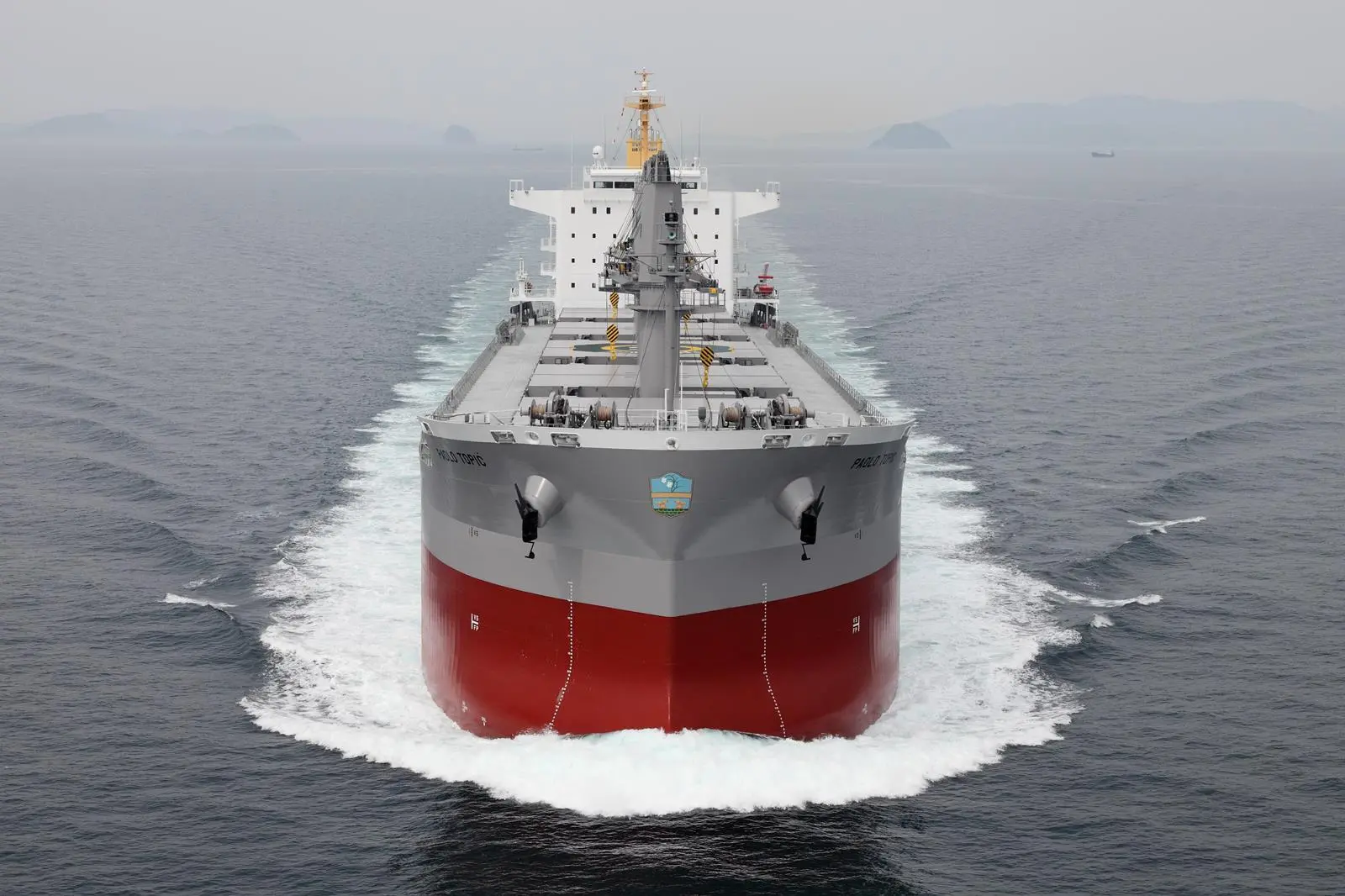
Looking further ahead, we have been carrying out research into a range of different configurations, including deep-sea vessels with battery installations, such as a hybrid system combined with photovoltaic panels aboard Paolo Topic. We have also signed an agreement with rotor sail company Norsepower to maintain their installations, which will improve our understanding of renewable energy generation.
While the solutions we are looking at differ, they draw on our insights into the vessel’s underlying systems. We have used a data driven design approach to identify potential areas where efficiency gains and other operation benefits can be achieved.
How does your recent research into autonomous and semi-autonomous systems feed into this?
We have been undertaking research with PSA Marine in Singapore to develop the “IntelliTug”, a smart tugboat, through which we strive to improve safety and efficiency. Autonomy enabled vessels offer the potential for significant improvements in these area.
But we also see possibilities for wider efficiency gains from the utilization of data. Our Fleet Operations Solution, which combines voyage optimisation, fuel efficiency monitoring and engine performance analysis, is an example of how efficiencies can be achieved looking at many vessels/engine systems, as well as by looking at one.
Shifting focus slightly towards Wärtsilä’s broader strategy, Wärtsilä anticipated a number of the discussions in the industry that we are undergoing now.
As an OEM, you have to anticipate your customers’ requirements! And one of the secrets of innovation is that you have to have the guts to believe in it. But, more seriously, we also realised that we did not have all the answers, and that we would need to collaborate to create an ecosystem around the industry.
That’s why we joined the Getting to Zero coalition, which brings together different stakeholders to develop a zero-emission ship by 2030. We have also played a supportive role to enable other platforms to be set up, such as the SEA20 initiative which promotes discussions and collaboration between port cities.
We have heard many different perspectives on potential zero carbon fuels. What is your perspective about the current debate about alternative fuels?
Wärtsilä has a lot of experience in the field of alternative fuels and has been supplying dual-fuel engines to the shipping and power generation markets for almost 30 years. We do not know which fuels will be adopted, and the industry may well be driven by a variety of different fuels.
We think that the answer is fuel flexibility, to ensure that vessels are future proofed as far as possible.
This would mean that today’s dual-fuel engines running on HSFO and LNG might run on LNG and drop-in hydrogen or ammonia in the future, just as one potential scenario or step on the journey.
This might have wider design implications for ship designers or shipyards, who would need to design a vessel’s systems with the flexibility to allow future conversions.
But the many alternative fuels currently being discussed, such as hydrogen or ammonia, are currently uneconomical and are not currently feasible. For the time being, the sensible thing to do would be to use LNG, which is increasingly widely available, and has existing bunkering infrastructure in place.
If we are going to meet the IMO’s greenhouse reduction target to halve emissions from shipping by 2050, we are running on a very tight timeline. We have to act now.
How has the systems thinking approach fed into your Smart Marine Ecosystem vision?
We saw the need to respond to shipping’s environmental challenge as a shared challenge. We also realised that we would need to collaborate with stakeholders inside and around the industry.
But looming at the shipping industry as an ecosystem, we see the need for different technologies and stakeholders to come together, as elements work together in any ecosystem. This ranges from vessel-level systems, such as engine management systems, through wider digitalisation and data-led services, such as our Fleet Operations Solution, to areas of new innovation, such as our work on autonomous vessels. By bringing together the benefits from these different technologies, we can eliminate inefficiencies and help to improve safety and efficiency.
That is where the bigger gain is, not just for us, but for the whole industry.
Related Articles
 INTERVIEWS
 CONVENTIONAL FUELS & OILS
 GENERAL NEWS