



This is no time to hesitate
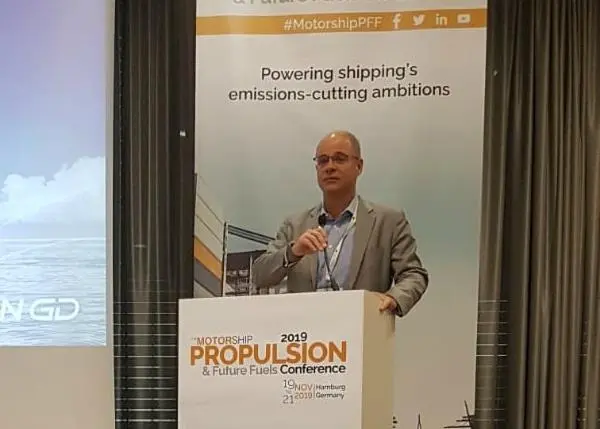
From the perspective of an engine designer, the IMO’s 2030 greenhouse gas reduction targets are going to come into effect very soon.
We have recently conducted our own modelling work on pathways to 2050, and have concluded that shifting towards low carbon or zero-emission fuels offers potential greenhouse gas savings of up to 100%.
By comparison, the other main pathways to reducing emissions, such as adopting digitalization tools, and potentially achieving efficiency savings in the logistics chain, or optimising hull forms and introducing air lubrication or wind technology solutions are between 10-20% at best.
The fourth pathway is that of achieving efficiencies in machinery, and this is an area in which we at WinGD have naturally focused. We have focused on optimising our engines, and are proud to announce our X82-B engines have attained 56% efficiency at part-load, and we expect to improve that closer to 60% in our next generation of engines.
Simply put, there are no alternative propulsive technologies that can match the efficiency of our engines at different loads.
For the overall machinery sector, we think further savings of 5-20% can be achieved, via waste heat recovery, engine de-rating and potentially by introducing battery hybridisation into the deep-sea shipping sector.
It should be clear to all of us that while adopting best practice in the digitalisation and logistics, hull form and machinery fields will be necessary to meet the IMO’s medium- and long-term targets, none of the efforts will be sufficient without a shift to a sustainable low-emission fuel.
A range of different fuels
One of the most interesting aspects of supplying low-speed engines to the marine market at the moment is that there is little clarity about what type of future fuel the market will adopt.
The range of fuels being discussed is dizzying, ranging from existing fuels such as low sulphur liquid fuels, VLSFO or MGO, and LNG, through to bio-fuels and the widely discussed e-fuels, such as synthetic natural gas (SNG), or hydrogen and ammonia.
Each of the fuels has their respective advantages and disadvantages. Liquefied hydrogen suffers from volumetric density issues that mean it is unlikely to ever represent a realistic substitute for LNG for deep-sea routes, even if the fuel could be produced cheaply enough. Ammonia’s toxicity is also likely to hamper its wider adoption, while it also suffers from volumetric and gravimetric density issues.
We need to beware the risk of making the perfect the enemy of the good.
We have an existing low-carbon fuel that can meet the energy requirements of the deep-sea fleet. Years of technical development and close collaboration with classification societies and suppliers has helped develop the necessary regulatory framework. That fuel is LNG.
No time to delay
LNG has a role to play in the shipping industry’s energy transition. We agree with DNV GL and BV that supply chain issues and the availability of adequate supply are likely to be significant factors in the adoption of new fuels: we have seen how long it has taken, and the investment it has required, to develop LNG bunkering networks.
I also believe that advances in LNG production, including blending with zero-emission synthetic natural gas (SNG), and Bio-LNG or potentially with other energy vectors, could further reduce the GHG footprint of LNG.
However, my main concern is that further confusion about fuel choices may lead to ship owners sitting on their hands, or to slower investment in LNG bunkering facilities. This would be exactly the wrong message to send to the industry, as we are clear that it will require a coordinated effort by market participants across the industry to meet the IMO’s ambitious greenhouse gas reduction targets.
From our perspective, that of an engine designer, 2030 is almost tomorrow. The development period for a new generation of our engine platforms is between five and eight years, and if you factor in the lead time for a new engine order, there is little time remaining. There is no time to waste.
Related Articles
 INTERVIEWS
 CONVENTIONAL FUELS & OILS
 GENERAL NEWS