



TotalEnergies joins ammonia initiative
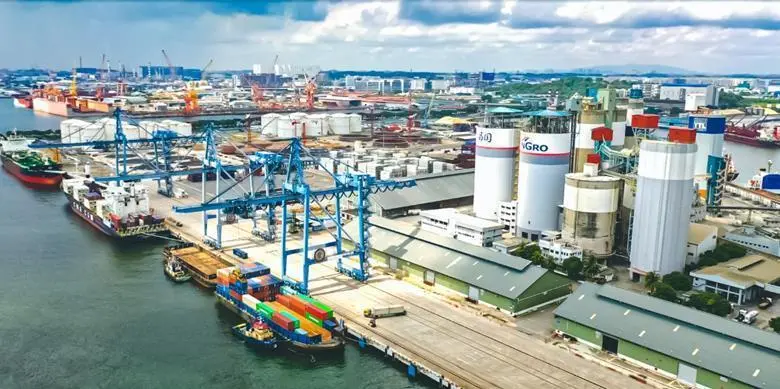
The global coalition, which includes MISC Berhad, Lloyd’s Register (LR), Samsung Heavy Industries (SHI), MAN Energy Solutions, the Maritime and Port Authority of Singapore, Yara Clean Ammonia and Jurong Port, was established in January 2020 and its most recent project milestone was the April 2022 memorandum of understanding for a pair of zero emission deepsea tankers vessels.
The first VLCC is expected to be launched in 2025 and the second in 2026. They will be owned and operated by AET.
The Castor Initiative members are identifying green shipping corridors to facilitate the bunkering of the vessels. They will also be looking into the establishment of approved training syllabus for seafarers in at least two maritime training institutions, saying it is crucial to ensure that the latest training and education is provided to the crew to enable the smooth operations of the zero-emission VLCCs.
Since the project began in January 2020, LR has made significant progress in early safety appraisals and research into the development of suitable fuel storage and supply systems, and the necessary risk assessments that will be required. In September 2021, LR awarded Approval in Principle (AiP) to SHI for its ammonia fuel supply and fuel storage system. SHI had earlier received an AiP in September 2020 for its ammonia-fuelled tanker design.
Jérôme Cousin, Senior Vice President Shipping, TotalEnergies, said: “Among various decarbonized marine fuel alternatives, ammonia could rapidly become a viable solution in the maritime sector while challenges remain to be addressed, in particular on the safety aspects. We are therefore enthusiastic to join the Castor initiative, one of the most comprehensive and ambitious projects dealing with ammonia as a fuel today. As a multi-energy company committed to the energy transition, TotalEnergies will strive to bring its charterer perspective in this consortium of highly reputable industry players.”
While ammonia is one of the fuels being considered by maritime stakeholders, the partners also recognise that the shipping industry will need to explore multiple decarbonisation pathways and hope their collaboration will spur others in the maritime industry to work collectively on addressing this global challenge.
Related Articles
 AMMONIA
 AMMONIA
 AMMONIA