



Towing kite supplier validates automation system, projects 16% fuel reduction
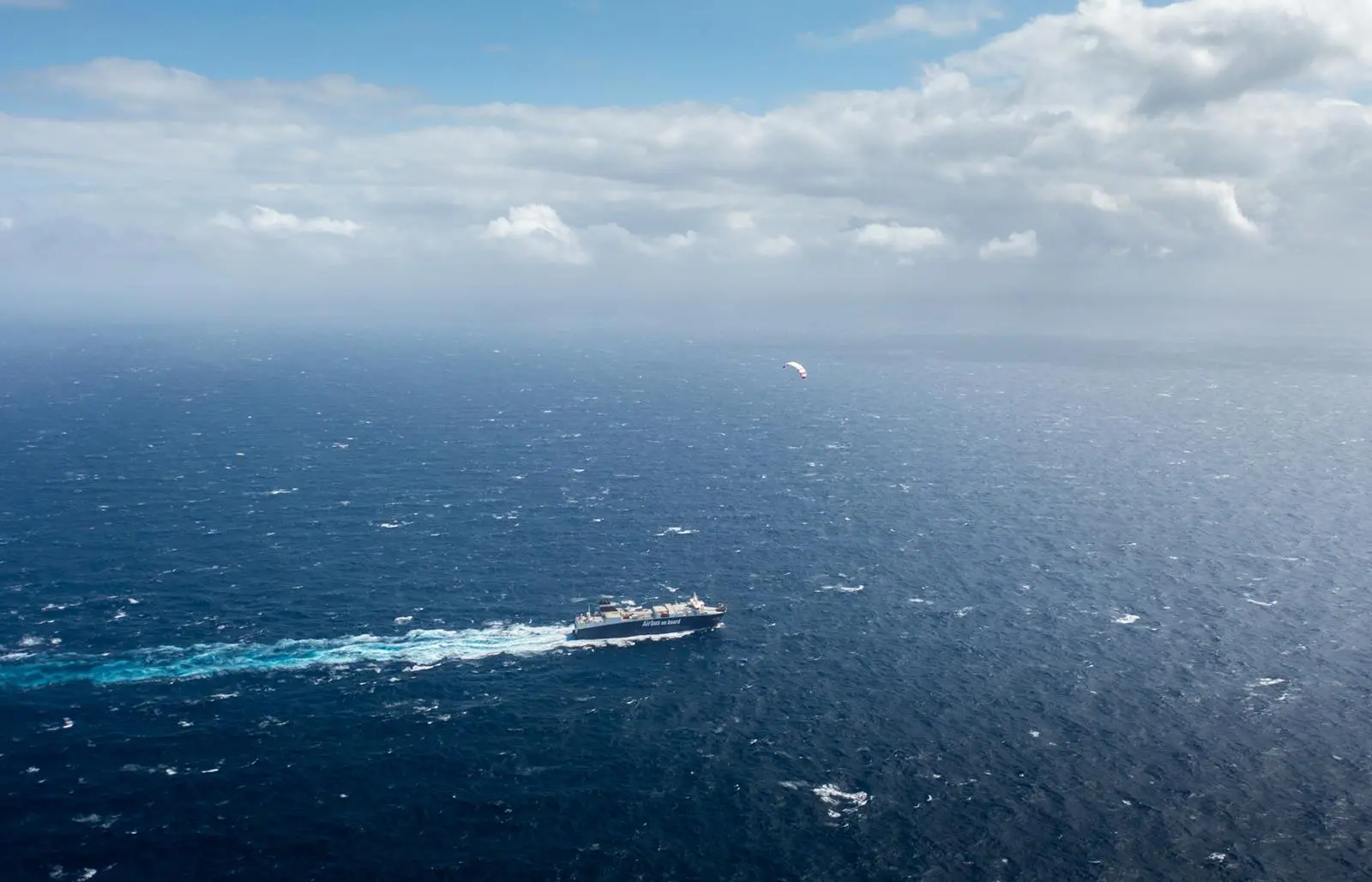
The wind assisted propulsion supplier also announced that analysis of the data from its latest sea trials have revealed projected fuel and emissions reductions of 16% based on a normalised transatlantic voyage.
The 16% projected fuel and emissions savings were calculated from the tonnes of traction measured on the Seawing system during the final round of sea trials on the 5,291 dwt ro-ro vessel Ville de Bordeaux, owned by Louis Dreyfus Armateurs, during transatlantic voyages.
The validation of Airseas’ automation system demonstrated that it successfully controlled the Seawing’s dynamic flights without any human intervention. This builds on earlier technical achievements in the sea trials on the Ville de Bordeaux, including the validation of automated take-off and landing phases, the first traction flights with the kite in “static” position, and dynamic flights that increase the kite’s traction power.
The next steps of the Seawing development roadmap will focus on delivering the kite’s full performance, with tests in ground conditions at Airseas’ new R&D centre in Dakhla, Morocco, as well as sea trials on a 211,982 dwt capesize vessel owned by Japanese shipowner “K” Line, which purchased five Seawings with options for up to 51 in total.
Mathieu Reguerre, Flying components Project Manager at Airseas, commented: “Validating automated dynamic flights is a huge technical achievement and a major milestone in the development of the Seawing. We are pleased with our initial performance figures, which enable us to progress with the confidence that the system is working as planned, and that we are on track to deliver even more fuel and emissions savings as we fine-tune the system to optimise its performance.”
Related Articles
 ENERGY SAVING DEVICES
 ENERGY SAVING DEVICES
 AMMONIA