



TRANSLOADER BULKERS FOR VIETNAM PROJECT
Self-reliant both in loading from deep-sea bulkers and in discharging at the final point of delivery, two such transloaders were contracted from Chengxi Shipyard in China by the Lübeck-headquartered company. The newbuilds will play a pivotal logistic role, shuttling coal from capesize bulkers at a deepwater offshore anchorage to the power station jetty in shallow waters at Nghi Son, on Vietnam’s northern coast.
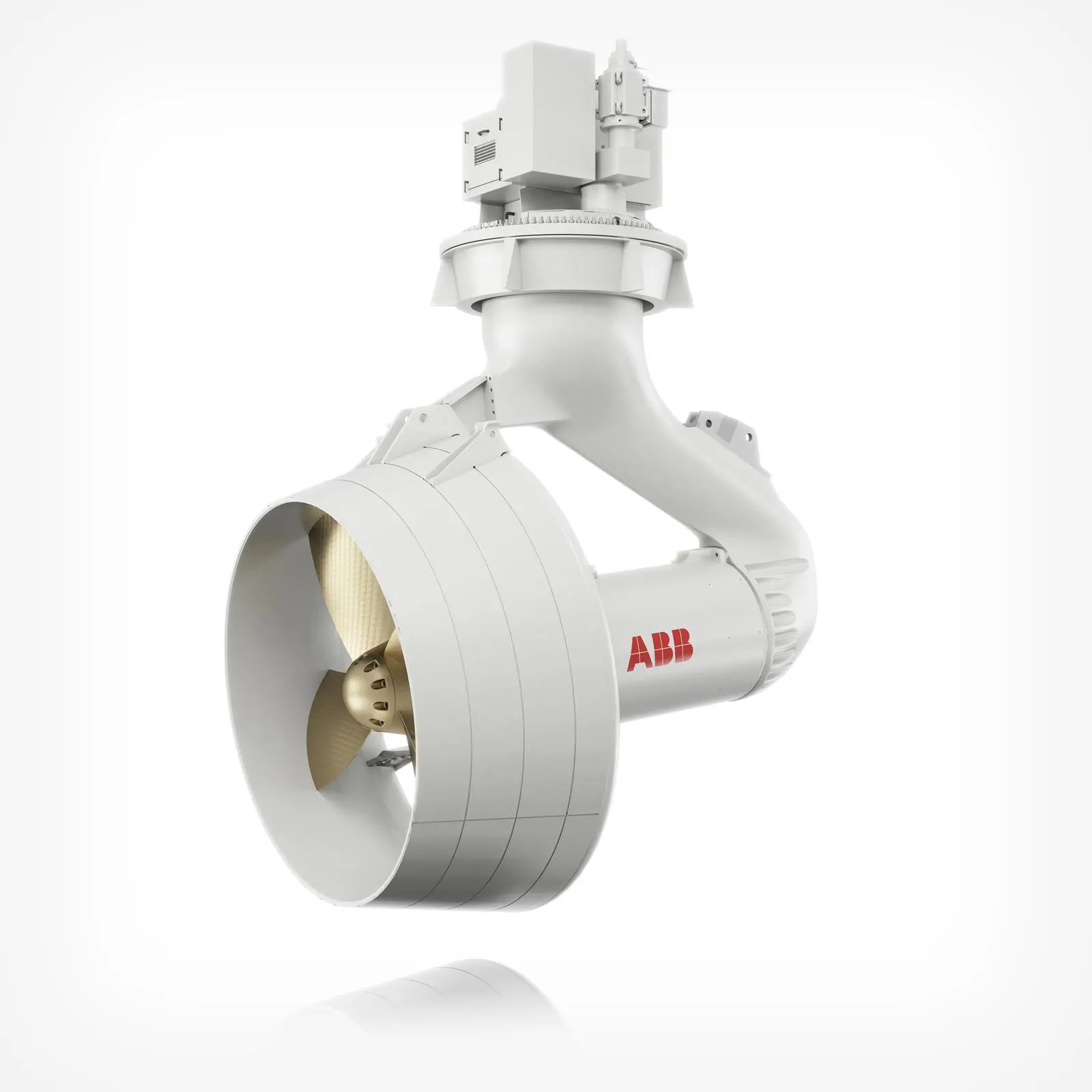
Calypso and future consort Anna have been specified with diesel-electric power and propulsion systems and provide opening references in the bulkship sector for ABB’s Azipod azimuthing propulsor. In each case, twin podded units will confer operating efficiency and the high degree of manoeuvrability essential to ship-to-ship transfers and to working into a port restricted in both draught and space.
Oldendorff Carriers’ agreement with the Japanese-South Korean consortium responsible for the construction, ownership and operation of the Nghi Son 2 plant in Thanh Hoa province means that the transloaders will be assigned to the project for 25 years. The German bulkship specialist’s contract covers the entire marine transportation and cargo handling chain, so that transhipment will be effected from Oldendorff capesize bulkers.
The transloaders will thereby provide a continual delivery feed from the designated anchorage to the power station terminal, a distance of some 11 nautical miles, using their own gear to lift cargo out of the capesize ocean carriers and to self-discharge at the jetty.
Besides controlling one of the world’s largest fleets of deep-sea bulkers, numbering at any one time between 700 and 750 ships, Oldendorff ranks among the leading practitioners of bulk cargo transhipment, and that expertise has fed into the development of the new-generation transloaders. Each is 145m in length overall and of 34m breadth, equipped with two starboard side-mounted cranes for loading from the ocean bulkers and with a gravity self-discharging system and unloading boom for delivery at the power plant jetty. Bridge and accommodation are positioned forward and the discharge station is aft.
Oldendorff capesize vessels will transport about 4.1m tonnes of cargo per annum to the offshore transhipment point from five Indonesian ports, namely the anchorages at Balikpapan, Samarinda, Adang Bay, Muara Jawa and Muara Berau. For the transhipment and final delivery stages in the coal supply logistics, Oldendorff has established a Vietnamese joint venture with Haivan Shipping Services Corporation of Ho Chi Minh City.
The nascent Nghi Son 2 (NS2) thermal power plant, comprising two super-critical coal-fired generators with a combined capacity of 1,300MW, is a joint venture of Marubeni Corporation and the Korea Electric Power Corporation (Kepco). Expected to be fully commissioned in July 2022, the station will adjoin the existing Nghi Son 1 (NS1) plant. Carbon emissions per unit of electricity produced from NS2 will be significantly less than those from NS1.
Each transloader shipset of two self-loading cranes has been provided by Liebherr. The four-rope grab cranes incorporate a 10m eccentric platform, rendering handling flexibility and enhancing the operating radius to 46m. The CBG 360 models selected ensure a 48t bulk load capacity on the ropes and offer an average throughput rate of 1,200 tonnes per hour, and a maximum outturn of 1,300tph.
Fenders are integrated along the starboard side of the hull so as to obviate damage from contact with the deepsea bulker during ship-to-ship cargo working. The loading capacity of the newbuilds is optimised by means of high hatch coamings, formed so as to foster self-trimming. The vessels are expected to handle the payloads from two capesize deliveries per month, involving up to two grades of coal. The transloaders self-discharge using a gravity-fed belt conveyor system and a boom of maximum 35m outreach to feed the jetty hopper installation at a rate of up to 2,500tph.
Each transloader is propelled by two 1.9MW Azipods, signifying the first such application in bulk carriers, complemented by two 1,300kW bow thrusters. Compared to a conventional propulsion system, the relatively simple design and ease of installation of the podded azimuth propulsors, housing the electric drive motors, reduced construction complexity. The system also frees up more of the hull envelope for cargo space.
The propulsion units are CZ 980 models, nozzled versions of the Azipod C-series. The CZ design was developed for dynamic positioning vessels, and is claimed to deliver significantly greater thrust than mechanical thrusters of equivalent power.
The Azipods form part of the comprehensive electrotechnical package supplied by ABB Marine, encompassing the diesel-electric plant, drive systems, bow thruster motors, power management systems for propulsion and cargo handling, and also the 50/60Hz connections for drawing on shore power when in port. The three main generator sets are each of 2,941kVA capacity.
The scale of Oldendorff’s involvement in the dry bulk trades is considerable, encompassing between 700 and 750 ships at any one time, plus 10 transhipment projects around the world, and the provision of complete logistic services. The various transhipment operations include iron ore for steel industry clients in the Arabian Gulf, coal for power stations in Turkey and Bangladesh as well as Vietnam, bauxite from a river in Guyana, and a multi-commodity transhipment hub in Trinidad.
PRINCIPAL PARTICULARS – Calypso
|
Length overall |
145.00m |
|
Length bp |
139.23m |
|
Breadth |
34.00m |
|
Depth |
12.00m |
|
Draught, summer |
8.5m |
|
Deadweight |
21,500t |
|
Gross tonnage |
23,739t |
|
Cargo capacity |
34,205m3 |
|
Propulsion system |
Diesel-electric |
|
Electric propulsion motors |
2 x 1,900kW |
|
Main generator power |
3 x 2,941kVA |
|
Bow thrusters |
2 x 1,200kW |
|
Class |
ClassNK |
|
Class notations |
NS*, BC-XII, PSPC-WBT, NC, IWS, IHM, NOx-III(SCR), MNS* |
Related Articles
 PROPULSION
 GENERAL NEWS
 HYDROGEN