



UK funding for methanol-fuelled leisure vessel concept
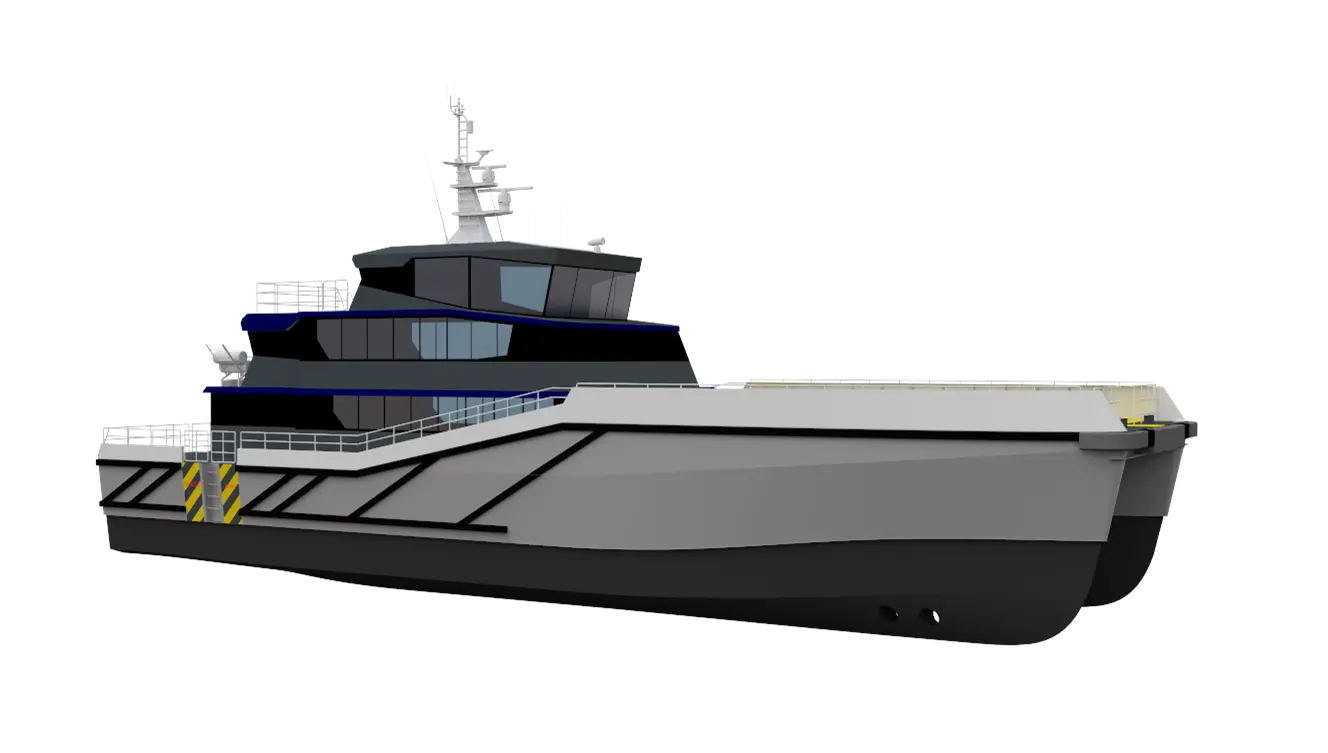
The company is partnering with Boat Electric & Electronics and Engineered Marine Systems on the development project. The vessel will initially be targeted at the leisure sector although Chartwell Marine plans to apply learnings from this design to the offshore wind sector, introducing components into crew transfer vessel (CTV) design as necessary.
The design is also expected to be applicable to the commercial workboat sector.
The Innovate UK project funding will finish in September 2023, at which point Chartwell Marine hopes to develop the concept design further. ”During the project we will be approaching industry partners, and applying for further funding to develop the concept vessel,” a Chartwell Marine representative tells The Motorship.
In terms of the concept design’s propulsion solution, the project is assessing the potential applicability of methanol reformation technologies to a medium-sized multi-hull vessel.
While methanol reforming technologies are currently available commercially, they have been largely untested in commercial or leisure vessel design. The methanol reformation technology partner has not yet finalised. ”We want to make the design as flexible as possible so we can scale the solution.”
”We are planning on integrating a number of different technologies such that we can replace components as the technology matures. At the moment we are planning a combination of methanol reforming, fuel cells, and methanol 4-stroke. The prop shaft will almost certainly be powered by an electric motor, so we will have a series hybrid system.”
Chartwell notes that by combining methanol reforming technology with fuel-cells, it would be possible to produce energy near zero carbon emissions.
Methanol fuel can be stored safely and effectively in standard atmospheric conditions, and spills have little adverse effect on the local aquatic environment, unlike other potential future fuels, such as ammonia.
Andy Page, Director and Naval Architect at Chartwell Marine, welcomed news of the grant, commenting “We’re grateful to Innovate UK for the opportunity to delve deeper into the feasibility of methanol-based propulsion. As a company, we’ve delivered over 30% of hybrid vessels in the UK offshore wind market, all complete with the latest state of the art electric-diesel hybrid technology.
That gives us a great starting point to take methanol forward in a meaningful way and cut through some of the challenges we’ve seen in the development of alternative fuels, which may be a long time from full viability. There are still hurdles to overcome with methanol, of course: a lack of refuelling infrastructure onshore, weight issues, and fully efficient conversion to energy, to name some.”
Related Articles
 METHANOL
 METHANOL
 2-STROKE & 4-STROKE