



UK green hydrogen project put on ice
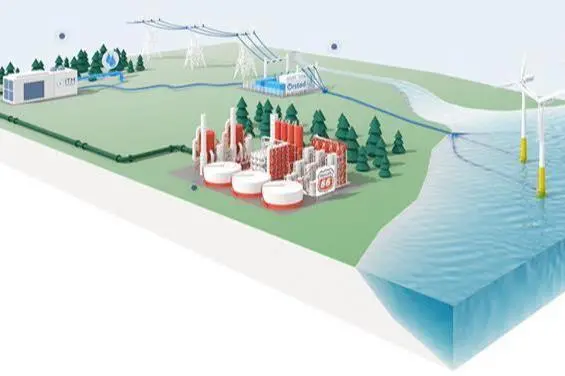
Gigastack was a project that aimed to make the green fuel using electricity generated by offshore wind and was backed by the UK government’s Department of Energy Security.
“We have made a joint decision to withdraw our bid from the funding process and pause the Gigastack project,” a spokesman on behalf of project partners, Phillips 66 and Ørsted said in late August.
“Phillips 66 Limited and Ørsted believe that further project maturation together with supply chain development is required to unlock the maximum potential of this world-scale electrolytic hydrogen project. We will continue to work with the governments of the UK, industry and stakeholders to help realise the enormous potential of green hydrogen.”
Put on ice
Philips 66 is an American energy manufacturing and logistics company that owns the Humber Refinery in eastern England, where the hydrogen project was planned to be situated.
ITM Power, which designs and manufactures electrolysers, was also involved in the project.
The Hornsea 2 offshore windfarm, slated to be the world’s biggest, was going to generate the electricity for the electrolyser technology, which was how it could be labelled ‘green’ hydrogen.
ITM Power has so far not commented, but a spokesperson for the Department for Energy Security and Net Zero said: “Phillips 66 and Ørsted withdrew from the HAR1 bidding competition. We cannot comment further on the decisions of independent companies.”
“We are committed to realising the huge potential of green hydrogen in boosting our economy, supporting jobs and helping us reach our net zero targets. We are supporting a number of hydrogen projects and have already committed £240 million (€280 million) through our Net Zero Hydrogen Fund.”
It is not clear exactly how much work had already been done, or how much public money has been spent on the project to date.
But the UK government’s Department of Energy Security had certainly committed £7.5 million (€8.7 million) to the project under its Hydrogen Supply Competition, which was run when the department was called the Department for Business, Energy and Industrial Strategy (BEIS).
Related Articles
 AMMONIA
 HYDROGEN
 HYDROGEN