



VIKING SKY BLACKOUT HIGHLIGHTS SAFETY POTENTIAL OF DIGITAL TWIN
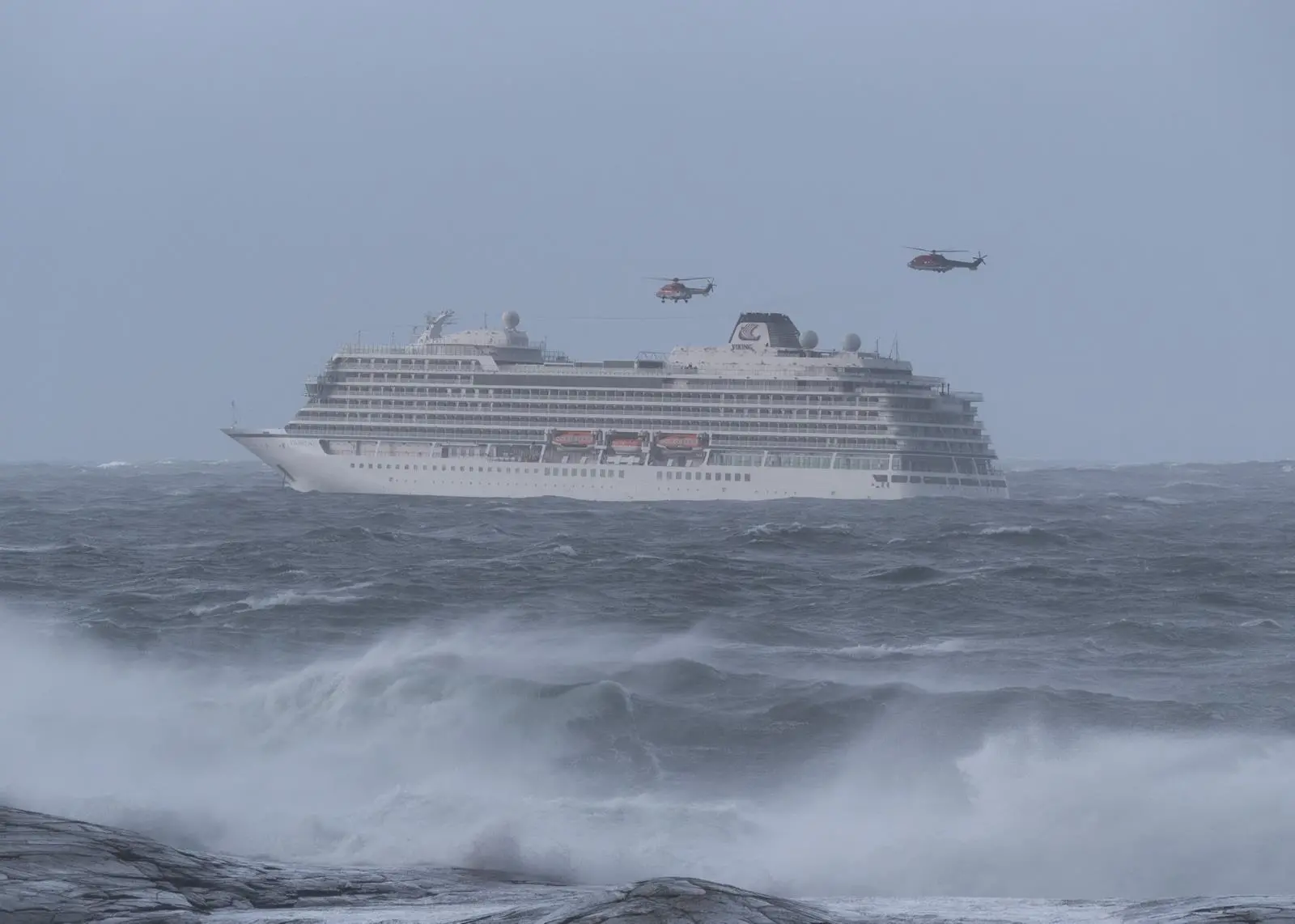
The Viking Sky came within a ship’s length of grounding after the vessel’s generators shut down in response to low lubricating oil conditions. Oil levels were relatively low but within set limits, but the ship’s movement in stormy conditions experienced in Hustadvika waters off Norway’s coast resulted in the shutdowns. Earlier alarms had been accepted and cleared within a few seconds, and at the time of the blackout, the engineering team could not immediately identify the cause.
The vessel’s anchors were deployed to slow its drift towards the shore. As the vessel’s lifeboats were not able to be deployed, 479 of the 915 passengers onboard were airlifted off by helicopter before the situation was resolved. The vessel subsequently headed to port under her own power, with tug assistance.
The study, published this year in Engineering Failure Analysis, documented technical precursors to the incident including that one of the vessel’s four diesel generators had been inoperable for about a week before the incident due to a turbocharger failure. Study authors Drs Michaela Ibrion, Nicola Paltrinieri and Amir R. Nejad, all from NTNU, also highlighted the belief by some stakeholders that such a modern vessel, delivered in 2017 and built to SOLAS Safe Return to Port standards, could overcome stormy weather in a place that had previously earned a reputation as a ‘ship graveyard’ due to the number of vessels sunk there.
Noting that the advantages and challenges associated with digital solutions remains to be further explored by the shipping industry, the researchers say that a digital twin based condition monitoring system could have been used to simulate fault scenarios. This would reduce the risk of unexpected shutdowns, such as the one caused by the turbocharger failure. In particular, they note the value of vibration analysis as a reliable and cost-effective monitoring method, along with other potential data sources such as infrared thermography, ultrasonic measurements and oil analysis to predict component life.
A project is underway that aims to develop the digital twin concept for polar operations. The Life Prediction and Health Monitoring of Marine Propulsion System under Ice Impact (HealthProp) project was initiated last year and is being coordinated by NTNU. Over three years, the project partners aim to develop a digital twin platform – by combining intelligent sensors, data acquisition systems and fault detection algorithms through physical and data-driven models in the cloud – for monitoring the propulsion system and drive line of ships in Arctic and Antarctic operations. The project participants are Stellenbosch University, South Africa; Technische Universität Hamburg, Germany; RWTH Aachen University, Germany; EDRMedeso, Norway and Otto Piening GmbH, Germany.
While there was no ice impact in the Viking Sky incident, the NTNU researchers indicate that the project will help develop a relevant approach for preventing similar incidents, and they recommend that classification societies and equipment manufacturers support ship operators in developing condition monitoring capability that takes a prognostic approach to failures.
Related Articles
 ENERGY SAVING DEVICES
 LNG
LNG
 ALTERNATIVE FUELS & LUBRICANTS