



Wärtsilä advances testing of new combustion concept
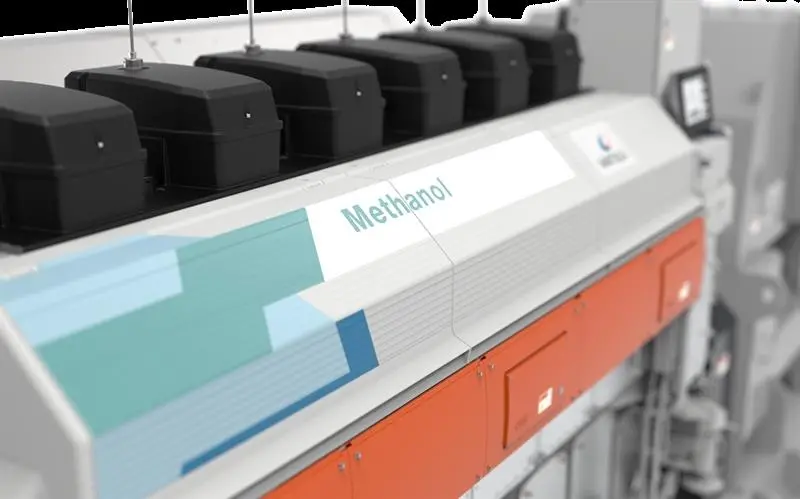
The SeaTech project has involved the development of a set of engine technologies which enable a novel combustion concept that leads to a drastic reduction of CH4 and NOx emissions. Wärtsilä says its new technology results in an overall CO2 equivalent improvement of 10% compared to the best products currently on the market.
The development work started in 2017 on the W6L20CR 2sTC research engine and the initial promising results drove the decision to scale up the technology to medium bore. The proposal was included in the SeaTech project which set the aim of combining bow-mounted foils with new, sophisticated control systems for a Wärtsilä dual-fuel 31 engine to allow the engine to work in tandem optimally with the foils. Since June 2022, activities have been ramped up on three platforms including on the W10V31DF lab prototype for the full-scale validation.
During this process it was also decided to pilot the concept on the Aurora Botnia RoPax vessel, upgrading one of its four W8V31DF engines with the new technology package. The retrofit work took place in September 2022 and by end of the year the engine accumulated about 300 hours in gas mode. The first field measurements fully confirm the expectations from the R&D laboratory results showing the step change in the performance level of this novel concept, says Wärtsilä.
The newly developed combustion technology goes beyond just the LNG applications. The enhanced hardware flexibility of the fuel injection and valve train systems, combined with the advanced combustion closed-loop controls, will serve as a solid platform for building effective performance concepts largely based on hydrogen and ammonia in the future. Early laboratory tests indicate this potential.
Related Articles
 2-STROKE & 4-STROKE
 2-STROKE & 4-STROKE
 2-STROKE & 4-STROKE