



Wavefoil aims at CTVs for bow foil solution
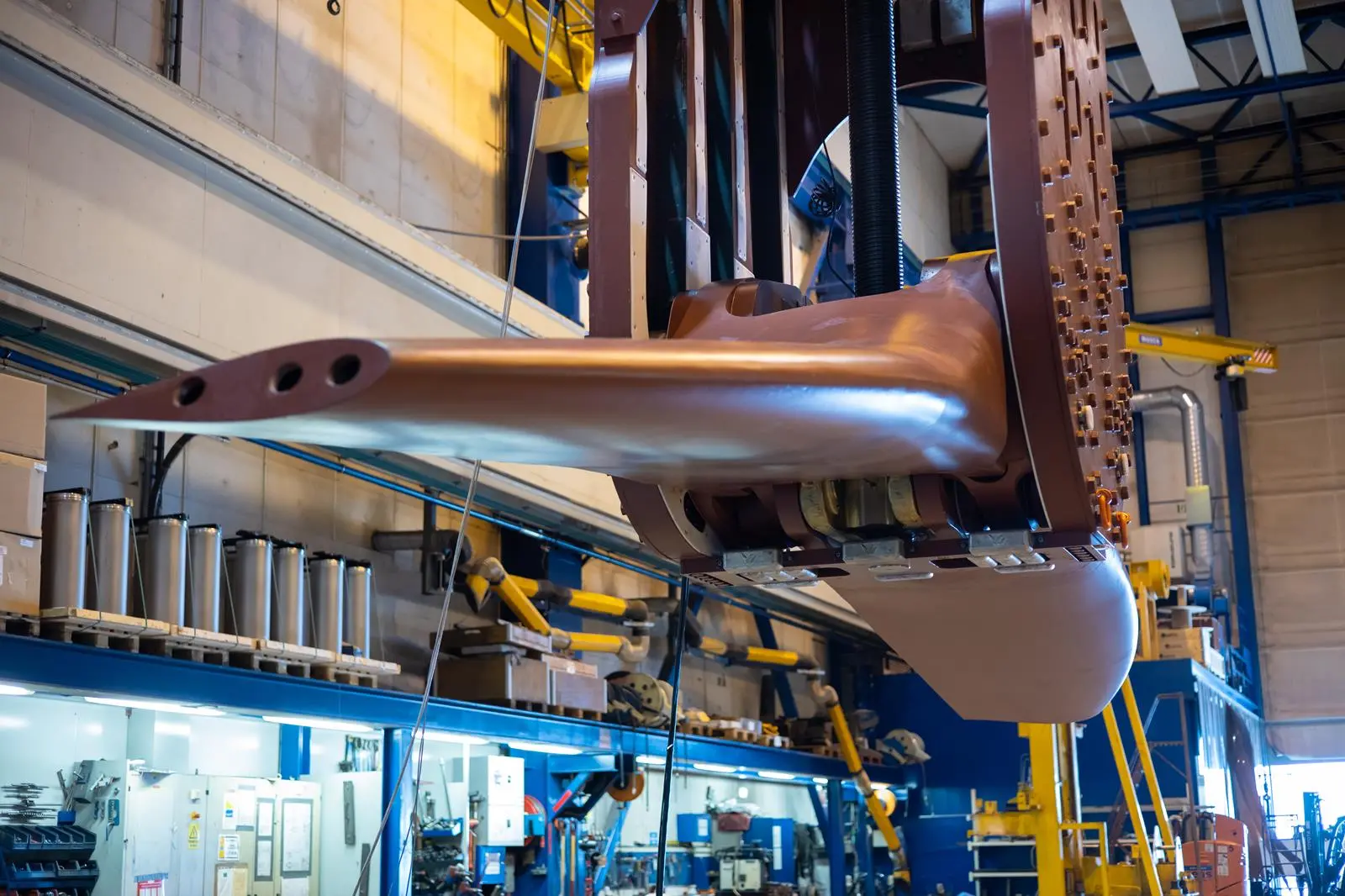
How the foils function
The foils function by lowering the added resistance in waves and by providing auxiliary forward thrust in all wave angles. Both head and bow seas give large pitch motions and added resistance, which the bow foils reduce.
One of the obstacles to bow foil installations has been their variable effect on thrust. In other words, in calm water, the foils can exert additional backward drag, rather than providing forward thrust.
The propulsive force is generated when waves are ‘moderately’ rough, said Wavefoil’s CEO, Bente Storhaug Dahl. Wavefoil’s bow foils can be managed tactically to ensure that a ship operates optimally.
The system provides advantages for seakeeping insofar as that it reduces slamming, the energy of which is redirected into a bonus for propulsion. Though Wavefoil says a 15% reduction in fuel costs is possible, 11% appears to be highest it has recorded in the field, putting it on a similar footing to what has been achieved using rotor sails. “11% is what has been measured on the Teistin ferry so far, which is in line with what our predictions for this vessel were,” said Storhaug Dahl.
Target Markets
Storhaug Dahl admitteed that Wavefoil will not be much use on deep-sea vessels, whose length make them longer than the length of the waves.
But on workboats, she said, Wavefoil would have a key role to play – especially once the energy transition sets in. While battery power and alternative fuels have been posited as ways for Norway to decarbonise its PSV, fishing, SOV and ferry fleets, compromises will have to made if they are not to suffer a serious detriment to their capabilities. “With a hydrogen fuel cell or a battery, for example, you don’t have the same storage volume as fossil fuel; the energy intensity is much lower in alternative fuels, which means that range is limited.”
Wavefoil systems have been delivered to six vessels at time of writing, including car ferry Teistin, three ambulance vessels, and two passenger ferries. However, more are on the way, including three fishing vessels. “Relat[ing] to the offshore wind activities, I believe the [Crew Transfer Vessel] market is a core market for Wavefoil,” said Storhaug Dahl.
The company has also developed a smaller foil module solution for high-speed catamarans between 20 and 40m long. That solution is cast from bronze and has a shorter retraction/deployment period of about a minute.
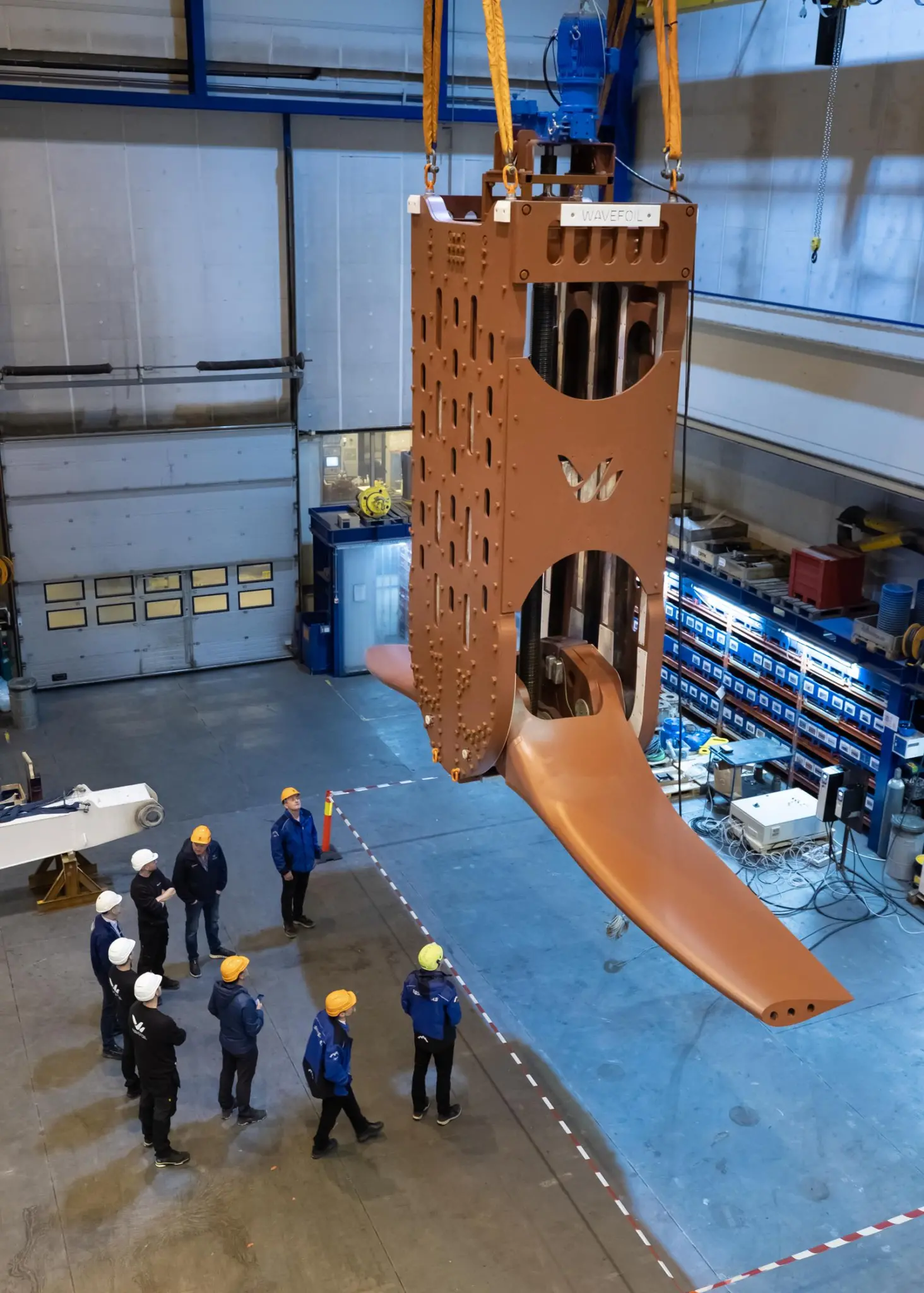
“For highspeed catamarans, the motion damping is major, which will increase both safety and comfort combined with reduction in fuel consumption due to less motions and a more even load on the propellers… [since] the vessel does not dive so deep down in the waves and does not go so high on the top of the waves.”
Becker retractable ventral system
Wavefoil is far from being the only developer looking at harnessing the propulsive effects of air and wind to achieve fuel savings. The recent focus on the propulsive potential of wind is leading to a renewed focus on having corresponding systems to optimise what happens to vessels beneath the waterline. Dirk Lehmann, Becker CEO, recently discussed with The Motorship this very point during a discussion of Becker’s new retractable ventral system.
Sail designers told Becker that something is needed to support “the core stability of the ship” he said. “It is a hollow profile, so very efficient and with low drag. When the ship has a certain deviation, it produces lift to the correcting side, like the daggerboard on a sailboat.”
A foil does not feature any control surfaces, distinguishing it from a rudder or fin. Lehmann told The Motorship that by cancelling out the lateral push on the ship inflicted by sails, and keeping it on a steady course, fuel savings of 5% are possible, but by adding a system which would enable it to swivel, turning it into a fin, the additional width would provide extra drag and cancel out these fuel savings.
Related Articles
 ENERGY SAVING DEVICES
 ENERGY SAVING DEVICES
 AMMONIA