



When rigs need relief
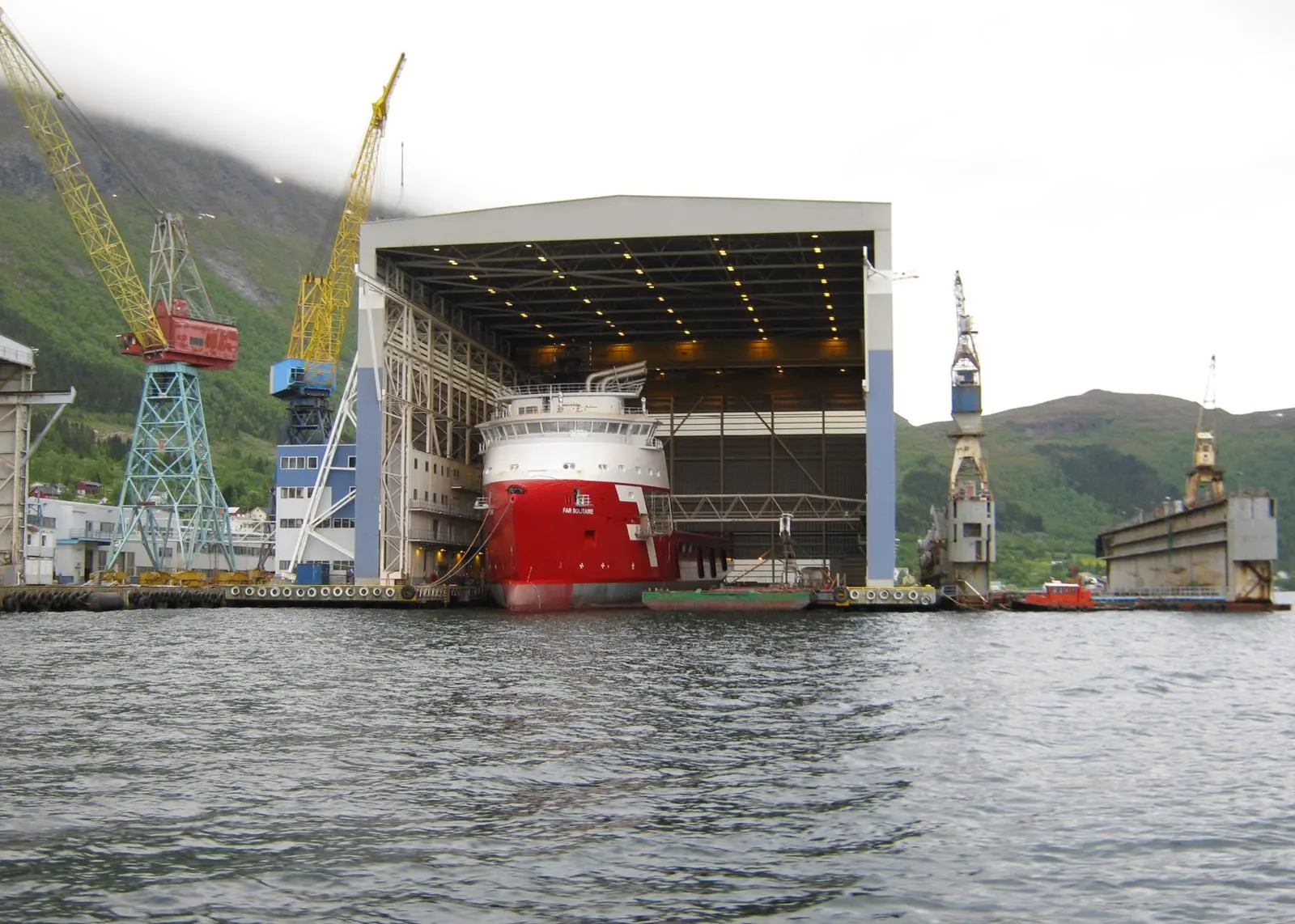
The design is a novel one, and it has been developed with an eye on not just what goes onto a rig, but – increasingly – what comes off. A conventional Offshore Supply Vessel is usually limited in its ability to carry noxious liquids on board at any one time but these ocean platforms have a growing need for the removal of waste. The usual 800m³ limit that most PSVs have to keep to has been shown to be increasingly inefficient for both platform and supply vessel operators.
So, a few years ago, Farstad Shipping embarked on the task of developing a safe, compliant PSV for the transportation and handling of large quantities of noxious liquids. Finally, amongst a clutch of new orders at the end of 2010 Farstad
Shipping announced the new design: the chemical-tanker compliant UT754WP, developed in close cooperation with Rolls Royce Marine Ship Technology Offshore, to be built at the STX OSV shipyard Langsten close to Ålesund.
The new vessel has a length of 91.6m, a breadth of 22.0m, a cargo deck area of 1,020m² and 5,700dwt (metric). Most importantly it doubles the previous capacity for tanks, capable of holding 1,600m³ of noxious liquids.
However, the challenges on the way to getting the vessel design to completion have been both technical and regulatory: the IMO rules covering transportation of noxious liquids – the International Bulk Chemical Code (IBC Code) Chapter 2 are stringent, and the design needed to meet strict damage stability criterias. In short, the whole design needed a rethink, and tank structure and configuration are quite different from conventional PSVs, explains Borge Nakken of Farstad. Despite this, in many cases the difficulty was turned into a virtue by way of a little lateral thinking.
For example the five tall cylindrical stainless steel tanks for low flammable liquids are fitted between the larger carrying tanks. “However, because of the increased variety of different chemicals onboard, both the pipes and the pumping systems needed to be kept separate,” Mr Nakken explains: mixing different products would, as you could guess, result in a number of unexpected, unpleasant and possibly volatile results.
This issue has been met by installation of dedicated deep well pumps in all noxious cargo tanks rather than the conventional solution with common cargo pumps placed in a pump room. Further, just in case there is a failure, the vessel is arranged with hatches in the main deck so the pumps can be shifted around with the vessels own cargo rail deck crane.
To take advantage of space, the pump equipment has been placed in the void resulting from a regulation-required void between the tops of the cargo tanks and the main cargo deck.
There have also been some interesting crossovers. A new cargo rail crane for PSVs has been adopted from the success of these installations on larger anchor handling vessels. The UT754WP is therefore the first PSV with a sliding dual draglink crane on the starboard side cargo rail, covering the full length of the cargo deck. The main advantages of having a dual draglink crane are an increased work area and stable horizontal movement. The wireless controlled crane can be used for various tasks both offshore and alongside in port, easing the work for the deck crew and reducing risk of accidents.
On top of this, sophisticated slop and backload tanks are equipped with alarm systems to monitor the hydrogen sulphide gas (H2S) resulting from certain enzymes and bacteria associated with waste from offshore installations.
Rolls-Royce’s new wave piercing bow also means improved hydrodynamics: pitching has been reduced while slamming has been almost eliminated. Borge Nakken of Farstad adds that the spray from the bow has also been reduced and so there is less ice accumulated when operating in very cold conditions.
Due to steadier speeds – even in bad weather – fuel consumption has been reduced and the propulsion machinery is less exposed to variable loads. But it is not just the hardware, the human factor benefits – in an industry that is traditionally stressful and often challenging work a better-rested crew results in efficiency and safety gains.
Three main engines power the diesel electric propulsion, but the main electric switchboard is split into different sections, tied in with three separate thrusters. This has a number of advantages – one is simply that the vessel can run at an economic speed on just one engine, also adding to the efficiency of the catalytic converters.
Another benefit is redundancy during DP operation. Due to the configuration of these three separate systems, an ERN number of 99.99.99.99 has been achieved: interestingly this last number – a new designation – applies to “worst case single failure results” says Mr Nakken, adding that not many companies get this close to a simple series of nines in the ERN designation. Further, as far as damage stability is concerned, he says the factors now add up “to similar to those found in the passenger vessel industry”.
Lastly, even the landside neighbours are being kept happy. A new generation shore connection has been developed, where cold ironing power from shore supply of any voltage and frequency can be used independently or continuously in parallel with the diesel generators, port generator included. This will increase the utilisation of renewable energy when the vessel is in port – and if necessary, means the vessel can shift between shore power and diesel power without blackout.
By Stevie Knight
Related Articles
 PROPULSION
 GENERAL NEWS
 HYDROGEN