



WinGD alt fuels research picks up momentum

When Klaus Heim, ceo of WinGD, told The Motorship in November 2021 that the Winterthur-based engine designer would bring methanol and ammonia-fuelled engines to market by “2024-2025”, the extremely short timescale was almost as noteworthy as the company’s ambition to develop multiple alternative fuel engine platforms in parallel.
Andreas Schmid found time during the recent Nor-Shipping conference to provide an update on the solid pace of WinGD’s engine development projects.
Schmid began by offering a high-level description of the research team’s approach to mapping out the introduction of a new fuel, which begin from first principles.
“As longtime members of the EU Hercules project, our understanding of alternate fuels goes back nearly two decades. We closely study the combustion properties of various alternate fuels within our labs which provides us with a solid understanding of who these fuels will interface with existing engine technology. We begin by understanding how the fuel burns, and then by identifying what we need to do to ensure that the fuel burns in the way we want it to. This influences the hardware requirements, and then we connect them up to the rest of the ship to make sure that this fits perfectly into each vessel.”
Turning to WinGD’s methanol research, Schmid notes that methanol – which is basically one molecule with a few smaller molecules – is “rather clean, compared with fuel oil, which is highly complex and sticky and contains hundreds of different components, each of differing lengths with their own boiling curves”.
Diesel cycle concept
Schmid confirmed that WinGD had selected a Diesel cycle concept for new or retrofitted methanol engines, although the final choice would be influenced by other considerations, such as the emissions profile. Physical tests are ongoing as an essential step to test some of the combustion concepts identified by the combustion simulations.
Combustion research to optimising the combustion of methanol is going to be carried out on the engine designer’s single cylinder engine in Winterthur in 2022. “Some of the research will also help us to improve the combustion itself as a key goal” Schmid said, “we know that these new fuels will come at a high price so optimising the combustion is essential for our customers before methanol can be considered a viable choice”, adding that WinGD would be leveraging its in-house expertise with the spray combustion chamber later in 2022.
One of the advantages of conducting the spray chamber combustion tests with methanol in-house is that the test data can be used to validate existing digitalised combustion model data (which is primarily based on 4-stroke combustion data).
Validating the commercial data was also likely to support the development work of Schmid’s colleagues who are looking at abatement solutions, and the overall environmental impact of the engine in a digital environment. Most importantly, it would also give an understanding of the engine concept’s expected fuel consumption and other performance parameters.
A separate team was assessing the hardware concept that the engine designer intended to select, although a final decision was likely to be influenced by the final choice of combustion concept.
Schmid noted that today’s advanced digitalisation technology allowed for parallel progress for advancing the engine development. Some of the development of the methanol engine will occur in parallel, rather than in sequence, as Schmid understands was the case in previous alternative fuel engine developments.
“The pace of the industry’s advancement of alternate fuels today is remarkable when you consider how far we’ve come in a relatively short timeframe. It is exciting to be a part of this change and the pace is what we need to achieve the IMO’s GHG targets. In order to accelerate everything, we came up with a plan before we had the serial approach for the developments.”
Main test engine
Concurrently, WinGD engine designer was about to start engine tests on its main RTX-6 test engine at Winterthur – “our workhorse multi-cylinder test engine,” as Schmid described it. The entire engine will be converted to be capable of operating on methanol during the autumn of 2022.
The engine designer planned to start combustion tests on its main RTX-6 test engine at Winterthur by Q1 2023.
Turning to other aspects of the new fuel development, Schmid expressed cautious confidence that methanol would not pose significant challenges from a tribological perspective.
“I would say, if we burn it the right way, we don’t expect to see many problems with the methanol.”
However, the engine designer was conducting its own research into the area, as most of the operational data for vessels operating on methanol was produced by vessels powered by 4-stroke engines.
Commercial and licensee considerations
One advantage of this development approach was that commercial, engine builder and ship-owner considerations were also directly considered by the project development team.
“This allows the project team to consider the pros and cons of different approaches, including the economics of different solutions, ease of manufacture, and so on. And then we identify customer, builder and supplier requirements.”
Similar considerations applied to discussions with individual customer. Schmid gave the example of fuel supply as a key constraint on customer specifications. “We have some customers who would like to order vessels without aftertreatment, on the understanding that they will operate on methanol most of the time. While this is exactly what the customer wants, we can see that it is not what he needs,” Schmid said.
“As the customer is not one of the major operators who will be able to secure significant volumes of methanol over the coming years, it is likely that they will have to operate on compliant fuels over the coming years. Therefore, we will probably go with an SCR or an EGR system, depending upon the individual customer’s needs and operational profile, and how often the vessel operates outside Tier III, etc. maintaining as much flexibility for our customers as possible.”
Potential methanol engine targets
Schmid noted the initial focus of the development programme would be on the engine sizes closest to its 52-bore development engine in Winterthur, which would be the first engine to be added to the engine programme. “As soon as we know the concepts, we will look into how we can upscale to prepare. Shortly after 52, we will add the 62 and the 72. We will then look to add methanol versions of the 92 and 82 engines after the smaller engines are handed over.”
Ammonia development cycle
Turning to the second of the alternative fuels under development, Andreas Schmid noted that a number of similar research steps were being carried out for ammonia as a fuel.
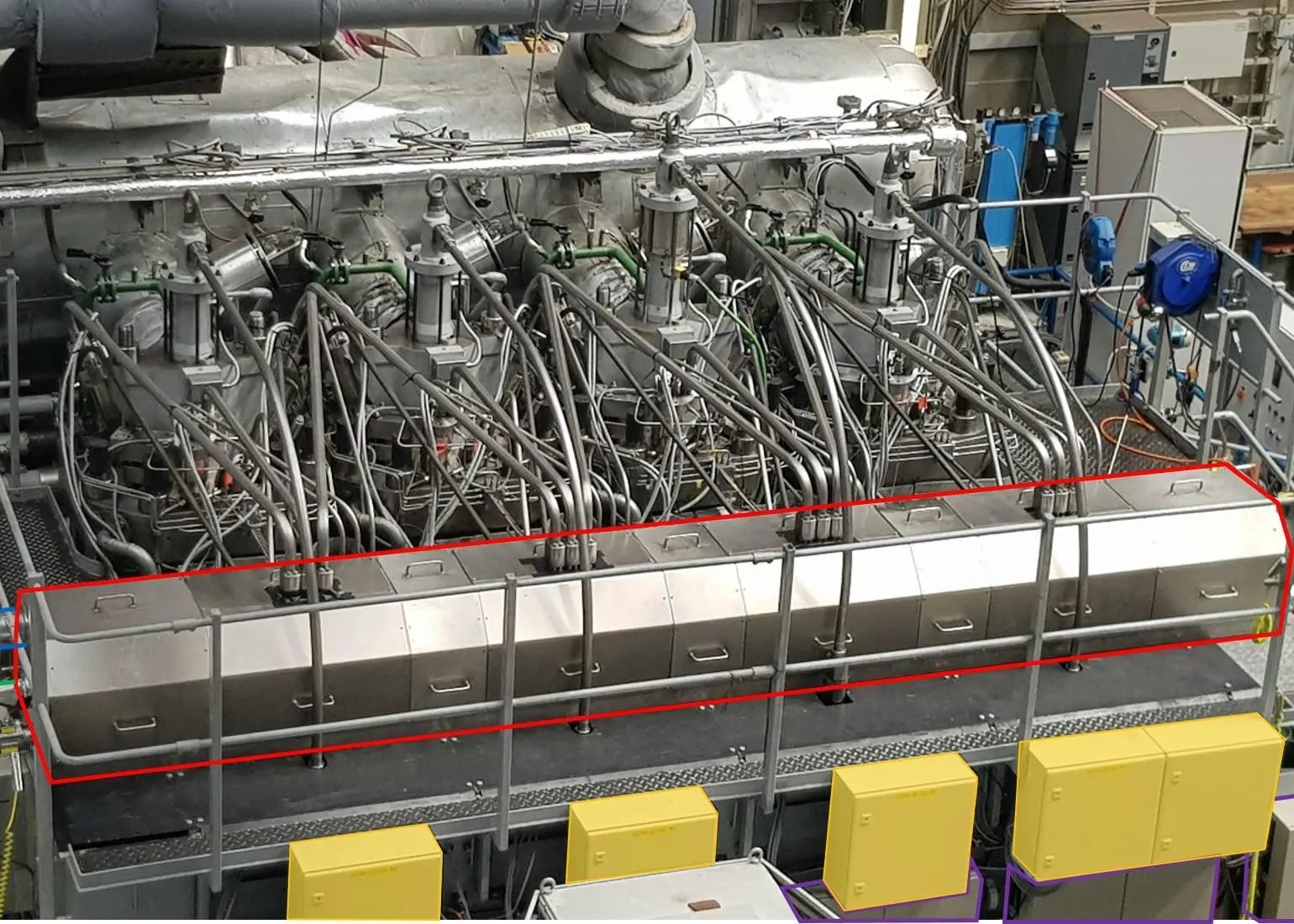
WinGD has identified four different combustion concepts for its ammonia engine, including both Diesel cycle and Otto cycle concepts. The next step would be for the engine designer to shortlist two of the potential combustion concepts, with the intention of conducting combustion tests on the company’s single cylinder engine by Q3 2023.
In tandem, WinGD was developing its own ammonia combustion datasets. Unlike methanol, where commercial combustion model suppliers could draw on the operational data from 4-stroke engines, there is little data available for ammonia.
Here, WinGD was leveraging existing relationships In the field of primary research, working with academic partners, such as the Universite d’Orleans in France, and the ETH in Switzerland. The Universite d’Orleans was the first academic institution to publish ammonia combustion data in the last 40 years.
One particular focus for ammonia combustion research was how to minimise emissions of nitrous oxide, which as The Motorship has previously reported, is a highly potent GHG.
In passing, Schmid noted that while significant advances had been made in the accuracy of combustion models in recent years, the complexity of reproducing highly complex chemical processes meant that models were less accurate in estimating emissions.
Future Fuels Laboratory
Schmid notes that research into analysis of the combustion characteristics of ammonia have already begun in Winterthur. The engine designer is considering installing a second spray combustion chamber in its new dedicated low flashpoint fuels research laboratory in Winterthur, but is conducting research into ammonia in parallel with methanol at the moment.
Ammonia challenges
Schmid concluded by identifying a number of challenges for the development of an ammonia engine. The fuel itself has corrosive properties, and is also reactive to certain non-ferrous metals, which has implications for materials selection.
Schmid also noted that the development of the system was likely to require slightly larger changes to the fuel injection system as well as changes to the turbocharger setup.
“There are also likely to be practical issues around the collection of scrape down samples from engines that have been running on ammonia.”
Related Articles
 2-STROKE & 4-STROKE
 2-STROKE & 4-STROKE
 2-STROKE & 4-STROKE