



DNV GL launches additive manufacturing guidelines
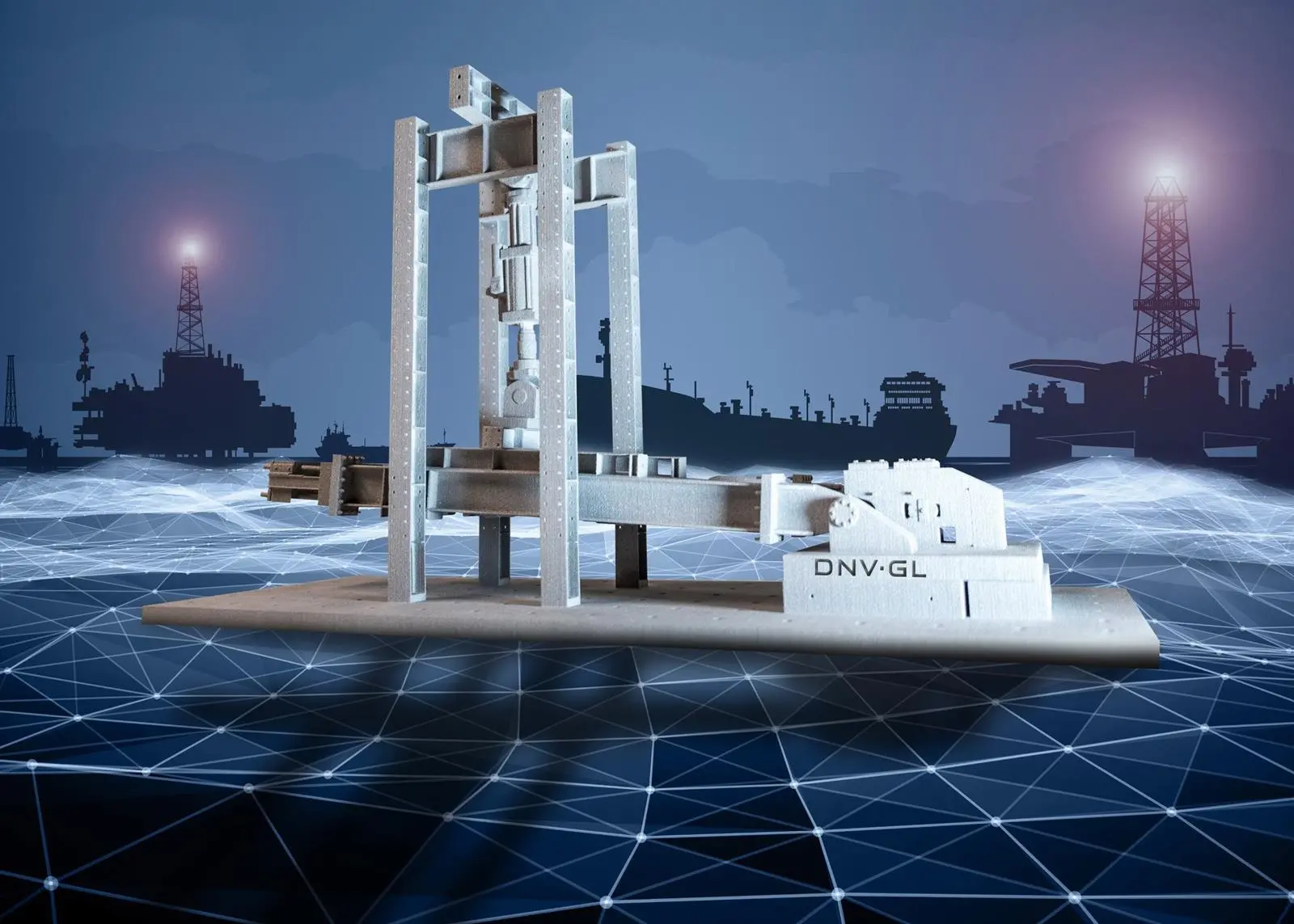
The guidelines are designed to help manufacturers, sub-suppliers of materials and end users adopting AM technologies, ensure that all components created have the same level of quality assurance as traditionally manufactured products.
“We have been investigating the potential of 3D printing for the maritime and oil & gas sectors since 2014,” said Marit Norheim, Vice President, Material Specialist, Hull, Materials & Machinery at DNV GL – Maritime.
“With the introduction of the class guideline DNVGL-CG-0197, DNV GL is now ready to certify and support our customers and industry stakeholders to take advantage of this rapidly maturing technology. It will give end users confidence in the products and allow suppliers to offer their technologies and products for use in vessels and offshore installations.”
Metal printing
The latest AM processes allow printing in metal, something which is of particular importance to the maritime and oil & gas sectors. A variety of products and parts have now been successfully printed for industry, including screw pins, bearing shells, box heat exchangers and propellers.
Because components can be printed according to local needs, or even on-board ships and offshore installations, they can reduce lead time, cost, labour, logistics, and need to keep stocks of spare parts.
AM can also be used for maintenance and repair, simply adding layers of material to worn components, thus negating the need to replace them.
Related Articles
 ALTERNATIVE FUELS & LUBRICANTS
 GENERAL NEWS
 GENERAL NEWS