



Rolls-Royce advances autonomy agenda
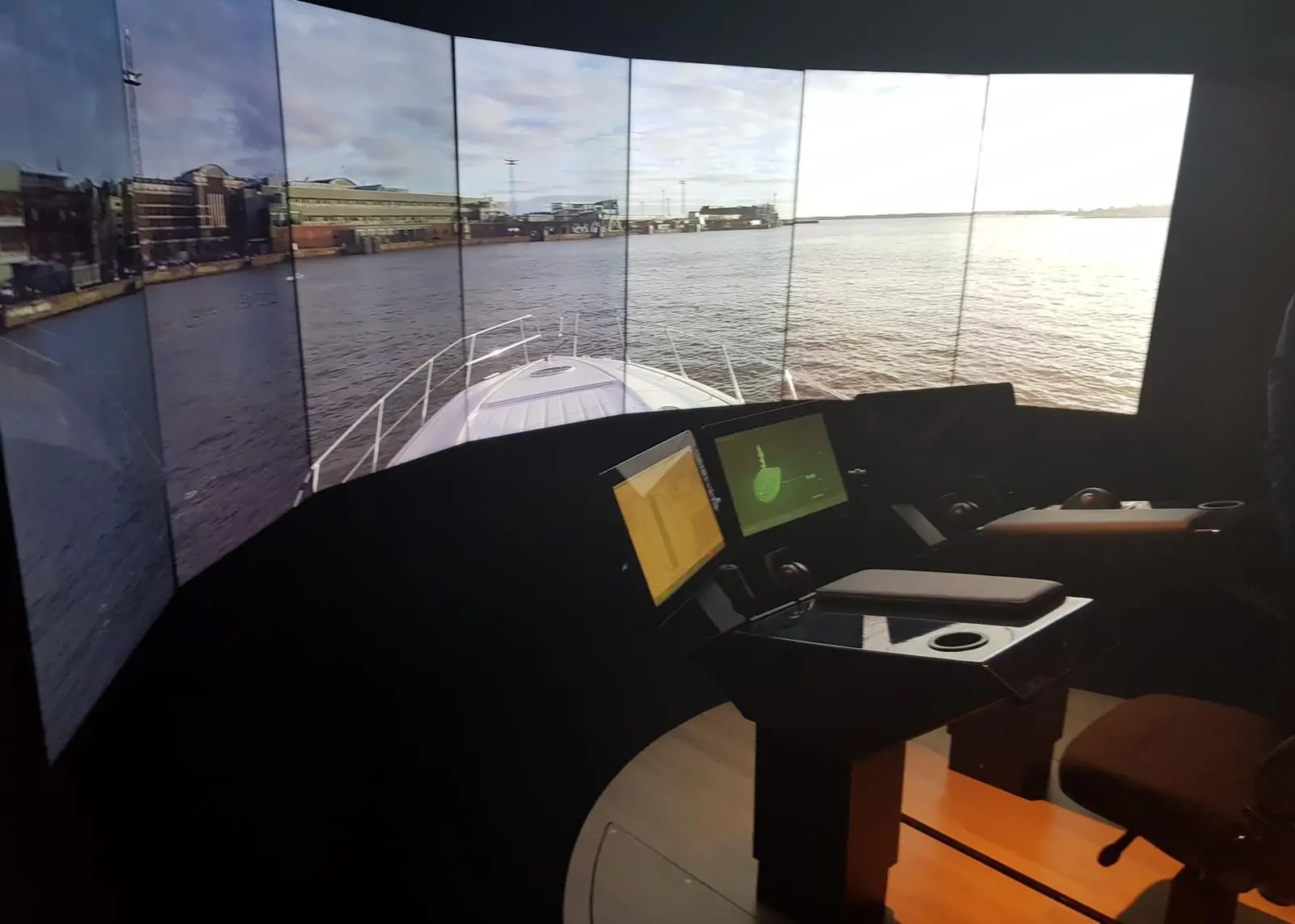
It may have been put under ‘strategic review’ by its parent company – more plainly, the division is up for sale – but that hasn’t stopped Rolls-Royce Marine from developing its offering in the fields of ship intelligence, as its new remote and autonomous operations hub in Turku exemplifies.
Staffed by 70 employees, the facility – the only research centre in the world dedicated to remote and autonomous ship operations – is the latest investment in a long-time commitment to ship intelligence and autonomy. According to Kevin Daffey, director of ship intelligence, Rolls-Royce Marine, over the past three years around a quarter of the marine division’s research and development budget has been directed towards ship intelligence, and in that time the team has secured just shy of 40 patents.
Daffey acknowledges the challenge in encouraging industry acceptance of autonomous ship operations over and above any technological hurdles. To this end the company – as well as trying to sell its vision to potential customers – has been working both with the International Maritime Organisation (IMO), where it is due to present its views on autonomy to the Maritime Safety Committee in December, and with flag states that will likely instigate local rules of engagement.
The new research centre and its accompanying ‘experience space’, a showroom of cutting edge ship intelligence technologies, should be helpful in this regard. The centre plays host to a team comprising marine engineers, ship designers and software developers – an unusual mix tailored to deliver the ship intelligence solutions that Rolls-Royce is aiming for.
ACCELERATED EXPECTATIONS
Karno Tenovuo, senior vice president of ship intelligence, believes the time was right for the centre to open. “We’re targeting the first commercial application of an autonomous vessel by the turn of the decade. Those will likely be coastal ships – tugs or ferries. If you talk about ocean-going ships, we initially projected autonomy by 2035 but we now believe that will happen sometime in the 2020s. The pace of development means that we have been bringing that date forward every year.”
According to Tenovuo, Turku on the west coast of Finland was an ideal location for the new hub. “There is a unique blend of maritime and ICT expertise in the local industry here,” he notes. “And the Finnish government has a very progressive approach to developing the maritime autonomy ecosystem. It has been very supportive of our developments.”
Finland has been host to some of Rolls-Royce’s breakthrough autonomy projects. An example of projects in which the company is involved in FInland is the One Sea project coordinated by DIMEC – the ‘co-creation company’ in which Rolls-Royce and its counterparts each have a stake – to establish the basis for Finland’s autonomous marine ecosystem.
Another example, the multi-lateral, Rolls-Royce led Advanced Autonomous Waterborne Applications (AAWA) initiative, was launched in 2016 and has already delivered some tangible technologies. Among those is the foundation of Rolls-Royce’s Intelligent Awareness System, a commercially available sensor fusion array that offers ship crew and onshore staff unparalleled visibility of a ship’s surrounds.
As this magazine goes to press, one of Mitsui OSK Line’s (MOL) Sunflower ro-pax ferries is set to begin a trial of the Intelligent Awareness System. The vessel, which sails the 12-hour voyage between Oita and Kobe, will feature a so-called ‘Tripod’ system – a plug-and-play version that is used to verify the performance of the full system.
SAFER OPERATIONS
The system can present the results of its sensor fusion array in virtual reality, augmented reality or precision chart format depending on the demands of the user. The system is capable of highlighting hazards and real time and providing short- and medium-range object detection, thus assisting bridge crew to operate ships safer.
Iiro Lindberg, general manager of ship intelligence, Rolls-Royce Marine, noted that MOL is testing the system on a challenging route that is sailed at night time and involves navigating around an oil terminal as well as hundreds of small fishing vessels (and their nets).
A similar ‘Tripod’ trial will take place on Stena Lines’ ro-pax Stena Atlantica once initial desk trials have been completed. Both the Stena and MOL projects are part of collaborative research initiatives designed to further identify what prospective customers will demand of the Intelligence Awareness System.
The Intelligent Awareness System is just one technology that is being showcased to customers at the new experience space. Another is the remote operation centre (ROC) recently trialled on a tug boat operated by Svitzer in Copenhagen. The centre, which relies on sensor data from the vessel as well as intelligent awareness of surroundings, was designed with input from captains to place the different system components in the optimum position. The aim is to create a future proof standard for the control of vessels remotely.
Tenovuo concludes: “The centre allows us to more accurately communicate our capabilities, what we have available today and what will be available tomorrow. It will completely focus on the development of solutions capable of smoothing the maritime industry’s transition to the digital age. An autonomous maritime ecosystem will open up unprecedented opportunities.”
Centre stage for autonomy at IMO
At its 98th meeting last year, IMO’s Maritime Safety Committee (MSC) considered a proposal from Norway, Denmark, Estonia, Finland, Japan, the Netherlands, South Korea, UK and the US to discuss vessel autonomy at its next meeting, with the aim of drawing up a plan of how it will consider the matter further. As a result, the committee’s meeting in December will feature more than 50 papers on vessel autonomy, according to Juha Rokka, vice president of engineering, ship intelligence, Rolls-Royce Marine.
The company will be a prominent voice at MSC 99. It has been invited to present its view on the future of regulation for autonomous and remotely operated vessels. And as part of the Finnish marine autonomous ecosystem Open Sea project coordinated by DIMEC, it will contribute to two further submissions. One is an information document on Finland’s autonomous test bed – the first in the world and the only one open to any organisation that wishes to explore autonomy (subject to a small fee that covers DIMEC’s administration costs and compensation for local fishing vessels).
The second paper considers levels of autonomy. Several organisations have presented their own versions of autonomy levels – ranging from simply assisted decision making to complete autonomy with no human intervention. Despite the number of different level systems, there is broad agreement across the industry, explains Kevin Daffey, director of ship intelligence, Rolls-Royce. The paper will therefore suggest that IMO does not need to introduce its own scheme in order to discuss autonomy.
Related Articles
 ALTERNATIVE FUELS & LUBRICANTS
 GENERAL NEWS
 GENERAL NEWS