



Shipping’s SMMart revolution in the spotlight
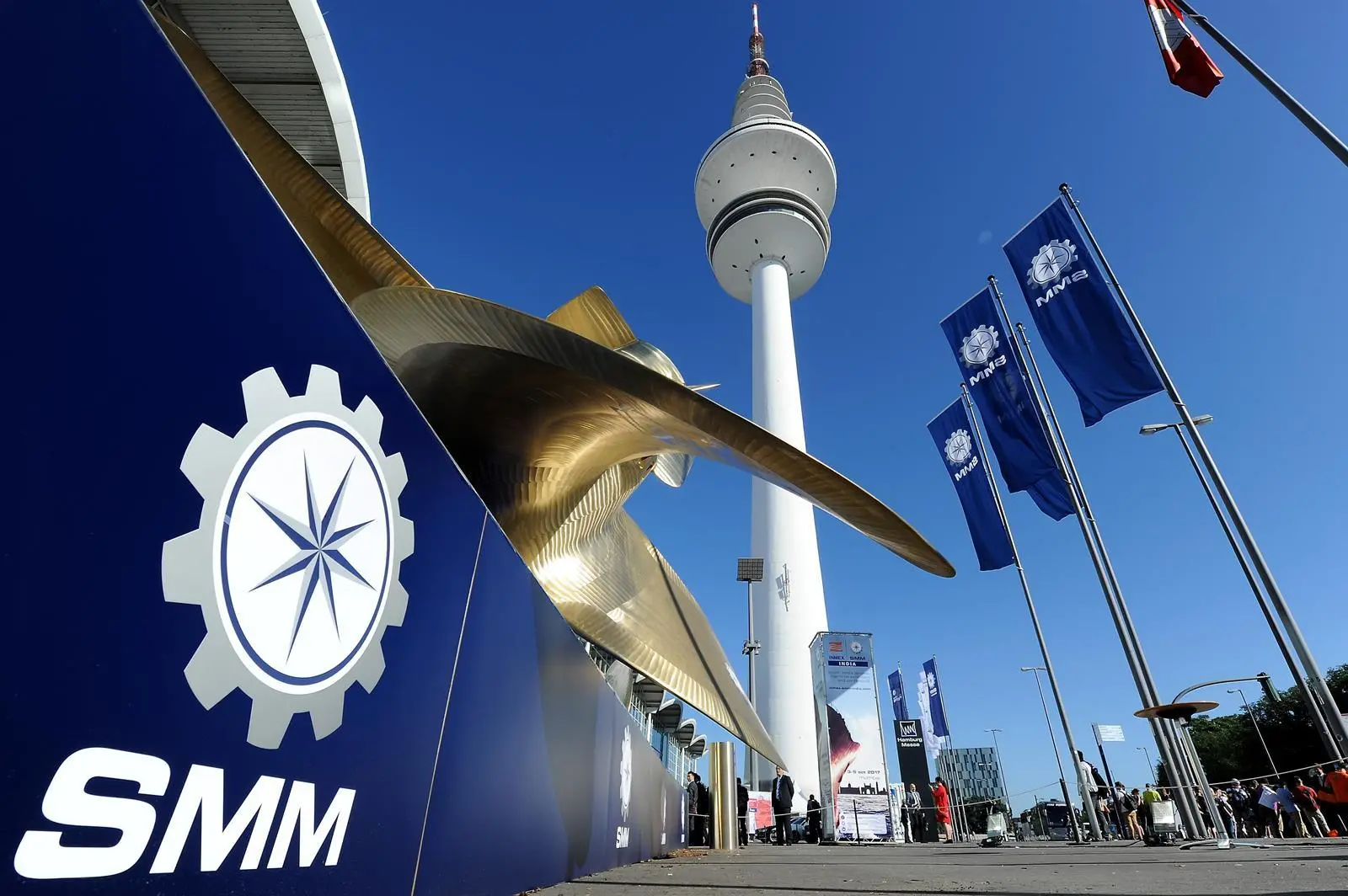
With more than 2,200 exhibitors and approximately 50,000 industry visitors from over 120 nations, leading maritime trade fair SMM is a linchpin of the calendar for many companies. This year promises to be no exception. At an advance press event earlier this year, shipping executives highlighted some of the trends that are likely to dominate discussions around the Hamburg Messe in September.
The theme of this year’s event is ‘Trends in SMMart shipping’, a topic picked up by Martin Stopford, non-executive president of maritime consultancy Clarkson Research. In a market disrupted by recent economic difficulties as much as by new technologies and regulatory demands, Stopford argued that digitalisation can be a driver of increased efficiency within the sector. A “smart shipping toolbox” could help build smarter ships, manage fleets better, and ensure logistics are truly efficient, he said.
Such new thinking would be welcome in the current climate. Stopford confirmed that while some shipping segments have recovered, the overall mood is subdued. Over the past two years shipbuilders have faced increasing pressure and tonnage entering the market this year will amount to less than half of that delivered in the boom year of 2011. South Korea in particular is losing market share, while European yards have seen business grow rapidly, with a 34% market share in global shipbuilding thanks to the doubling of cruiseship orders between 2015 and 2017.
One executive who will know about both the ups and downs of the current shipbuilding market is Kjersti Kleven, chair of shipyard and equipment manufacturers association SEA Europe and until recently a co-owner of Norwegian yard group Kleven Maritime. The yard group is under new ownership by Hurtigruten, which has a pair of cutting edge expedition cruiseships under construction at the facility.
Kleven’s recent experience highlights the pressures ship builders are facing. But Kjersti Kleven noted too the enormous advances that shipyards can benefit from today. In the age of digitalisation, investments in research and development were of paramount importance for the industry, she said. One emerging example is the field of 3D printing. Although the realisation of these ideas could still be a long way off, the technology holds promise and could even drive new business models, Kleven added.
SMM will present a special exhibition on 3D printing this year with project partner Maritime Cluster Norddeutschland (MCN). A dedicated area in hall B6 will showcase exhibitors’ capabilities in additive manufacturing, with companies including Rolf Lenk, Gefertec, MMG, Treo and SLM as well as MCN taking advantage of the new facility. Visitors will be able to speak with subject matter experts while watching live additive manufacturing processes using a variety of materials.
OWNER DEMANDS
The exhibition is driven by the equipment and system demands of ship owners, represented at the press conference by Antony Firmin, chief operating officer of container line Hapag-Lloyd. Firmin described what a ship owning company can do to overcome current economic challenges, which have ignited a rigorous consolidation process among line operators.
Stricter environmental regulations would bring extra pressure, Firmin said, adding that the company aims to operate its ships in the most eco-friendly manner possible and supports environmental initiatives including sustainable ship recycling. But misplaced regulatory involvement represents an unhelpful intrusion: Firmin noted that the IMO’s Data Collection System was preferable to the regional EU MRV Directive as “the collection of commercially sensitive information must take place in an anonymized and confidential manner”.
Wayne Jones, chief sales office, MAN Energy Solutions, called recent decisions by IMO on the reduction of greenhouse gas emissions “an enormous success”, admitting that the goal was very ambitious. It is therefore very important for the entire industry to support this decision, he said.
“We have been promoting a maritime energy transition for years, and we are committed to driving a carbon-neutral global economy that includes shipping. We firmly believe that the switch to low emission gas fuels is the silver bullet to decarbonise international shipping.”
If such environmental solutions offer a potential boon to traditional equipment suppliers, so too does the growing market for digital services. Jones noted that MAN would be presenting a ‘major digital innovation’ at SMM this year. He noted that reducing complexity and increasing transparency were key areas where digitalisation could benefit shipping – a point on which he was closely aligned with fellow panellist Knut Ørbeck-Nilssen, CEO of classification society DNV GL – Maritime.
DIGITAL CHANGE
“Digital transformation will forever change the shipping industry and pave the way to new business models,” said Ørbeck-Nilssen. “The development and spread of cloud-based technologies and computer power will change not only how we manage data but how we design, build and test vessels, their systems and components.”
All these topics will play a role in SMM this year. In particular, conferences focusing on digitalisation, environment, security and defence as well as polar research will impart crucial knowledge. The Offshore Dialogue on 6 September will focus on topics such as Arctic technologies and deep-sea mining. The Maritime Career Market on Friday 7 September will for the first time offer interested young talents an information forum with lectures on maritime job profiles and advice for job applicants. And the TradeWinds Shipowners Forum takes place at SMM for the first time.
Bernd Aufderheide, managing director of SMM organiser Hamburg Messe und Congress concludes: “We want to deliver concrete answers to the industry’s most pressing questions, and are looking forward to welcoming exhibitors, industry visitors and conference participants from more than 100 countries when Hamburg once again becomes the epicentre of the maritime world for four days.”
Related Articles
 ALTERNATIVE FUELS & LUBRICANTS
 GENERAL NEWS
 GENERAL NEWS