



BIMCO plans underwater hull cleaning standard
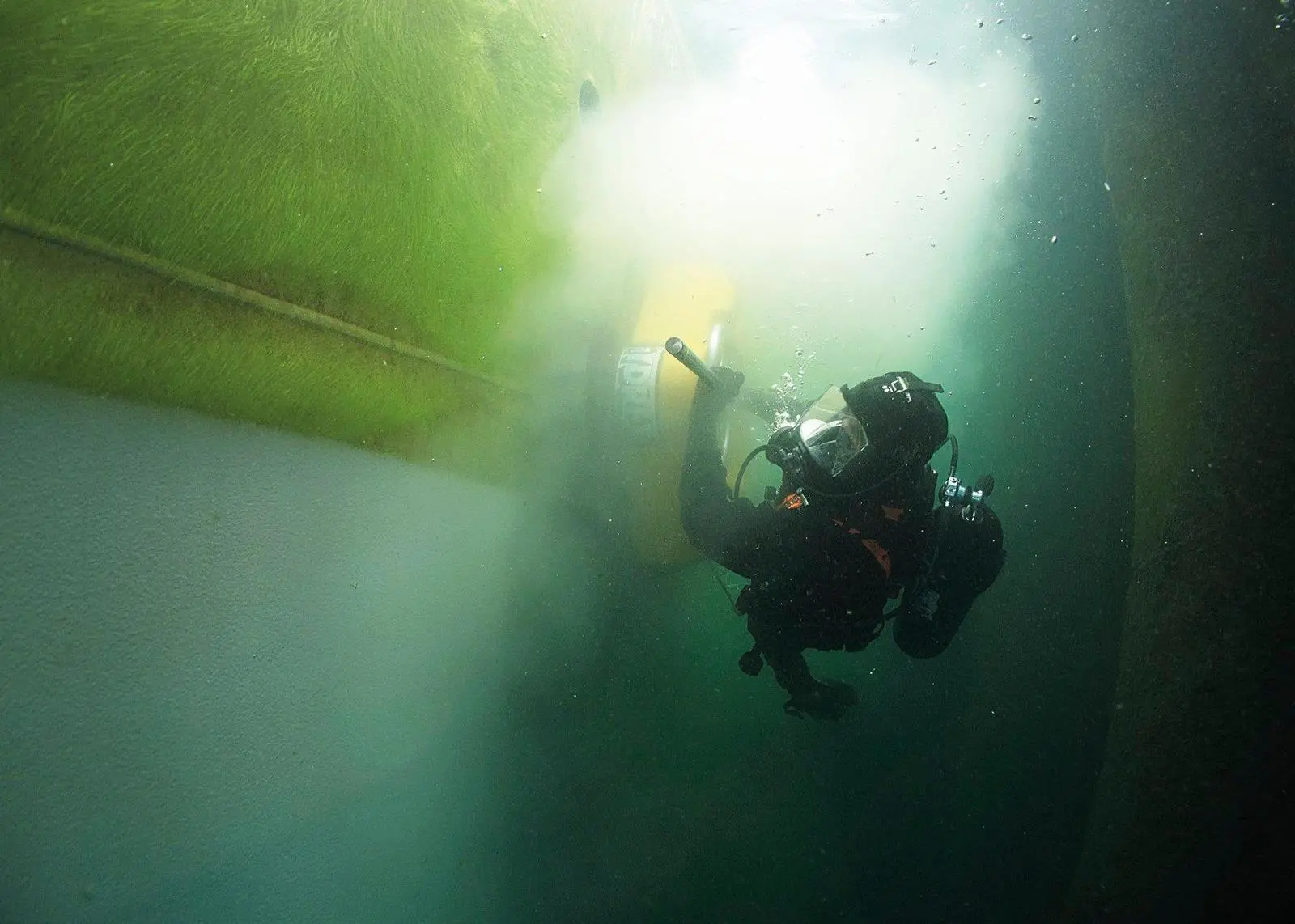
Underwater hull cleaning is available in very few locations and is increasingly restricted by ports due to concerns about the environmental impact of cleaning residues. But hull cleaning prevents fouling that can contribute to speed loss (and therefore fuel consumption and emissions) as well as transporting non-native species across oceans.
“Creating an international standard is important,” said Aron Frank Sørensen, head of maritime technology and regulation, BIMCO, who is leading the underwater hull cleaning working group. “We believe that a standard that is safe, efficient and environmentally sustainable will encourage states to make more places for underwater hull cleaning available.”
The eight-strong working group, which includes paint manufacturers, ship owners and cleaning companies, hopes to finalise the standard by late 2019.
Part of the standard will relate to ensuring that paint is not damaged during cleaning and that debris and washwater is collected in a practicable and sustainable manner. The standard will cover how ship owners can use it in their ongoing maintenance plans as well as establishing an approval system for underwater cleaning companies.
The standard will be subject to practical trials before its launch. BIMCO said it will aim to garner endorsement of the standard from appropriate international organisations.
The proposed standard can be seen in the context of increased debate around the role of hulls in transporting invasive species. New regulatory requirements for biofouling prevention were introduced in California last year and IMO guidelines on the subject are expected to become mandatory at some stage in the future.
BIMCO’s project follows the publication of ISO 19030 in late 2016. The earlier standard concerns measuring changes in ship-specific hull and propeller performance. It offers a common approach for assessing the impact of hull fouling and cleaning on the performance of individual ships.
Related Articles
 ALTERNATIVE FUELS & LUBRICANTS
 GENERAL NEWS
 GENERAL NEWS