



UK partners develop waste heat recovery
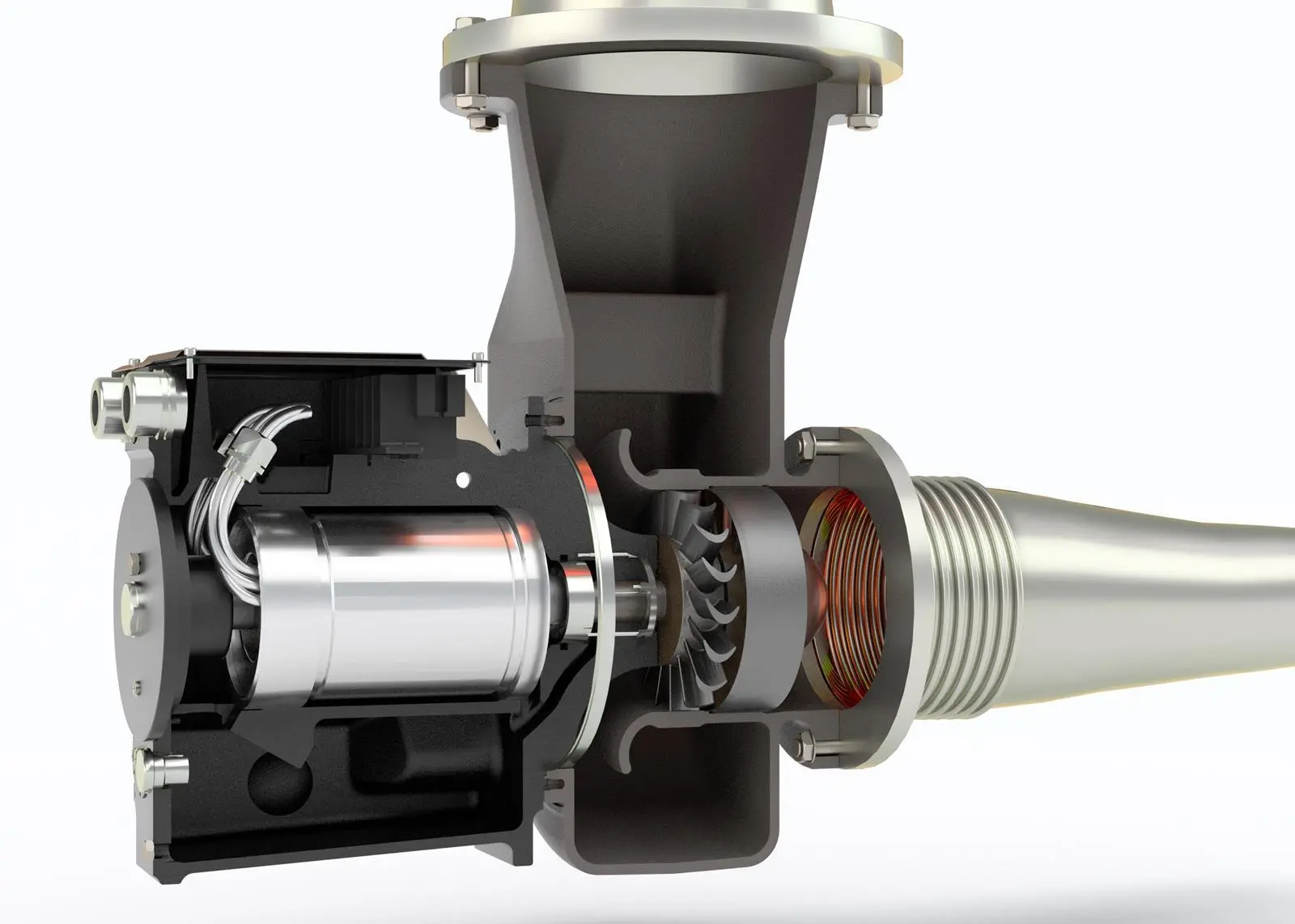
The £1.5m (US$1.9m) project, recently completed after four years of study, indicated the potential of the technology for achieving fuel savings of up to 7.8%, and cutting CO2 emissions.
Southampton-based Bowman, founded in 2004 to provide solutions to improve the efficiency of reciprocating engines, was joined in the endeavour by Rolls-Royce Power Systems, Lloyd’s Register(LR), and University College London (UCL). Innovation accelerator and funding agency Innovate UK covered just over £1m ($1.3m) of the project’s budget.
The objective of the collaboration has been to deliver a design solution and prototype hardware to demonstrate the application of ETC at full scale on marine diesel and gas engines, recovering and converting waste heat from the exhaust stream into electrical power.
The core technology has a track record of effective and reliable performance in land-based, stationary power generation. Transfer to the maritime environment presents new challenges and additional regulatory requirements.
Bowman put forward its flagship ETC 1000 system as the basis for the development. Applied in-line with the engine’s turbocharger, the ETC 1000’s turbo generator harnesses energy from the exhaust, producing electricity typically at around 1,000Hz. To maintain engine performance, the turbocharger is re-matched to work with the turbo generator. Through the power electronics element of the system, the high frequency electricity is converted into grid-quality electricity at 50/60Hz, as suited to a shipboard net.
Rolls-Royce provided key information and simulation results for the study using an MTU Series 4000 M93 high-speed, four-stroke engine. This was fitted with a twin ETC 1000 arrangement.
So as to determine the feasibility of ETC technology across a range of vessel sectors, the Marine Research Group at UCL devised a system modelling approach to explore the benefits, performance limits, secondary impacts and expected results. The software afforded insights over complete operating profiles.
Following completion of the modelling, Bowman moved forward with prototyping and testing. Seven different turbo generator and power electronics unit prototypes were built and tested in different applications, enabling simulation of real operating conditions.
In addressing the requirement for mechanical and electrical marine compliance documentation, and so as to ensure that the product would meet specific criteria for the marine market, Lloyd’s Register brought its know-how in statutory and certification issues to bear on the project.
As a result of the work, validated with testing, the participants have delineated a road map and route to market for the system in marine applications, against the backcloth of IMO’s bid to drastically reduce carbon emissions from shipping over the coming years.
Besides the indicated fuel savings achieved with the ETC 1000 installation on the MTU Series 4000 engine, predicted optimum payback time on system investment was 2.3 years.
Bowman said that it is in discussions with two large engine manufacturers and a major ferry operator to bring the solution to market.
Related Articles
 EMISSIONS REDUCTION TECHNOLOGY
 EMISSIONS REDUCTION TECHNOLOGY
 EMISSIONS REDUCTION TECHNOLOGY