



Brunvoll to deliver propulsion systems to autonomous ship Yara Birkeland
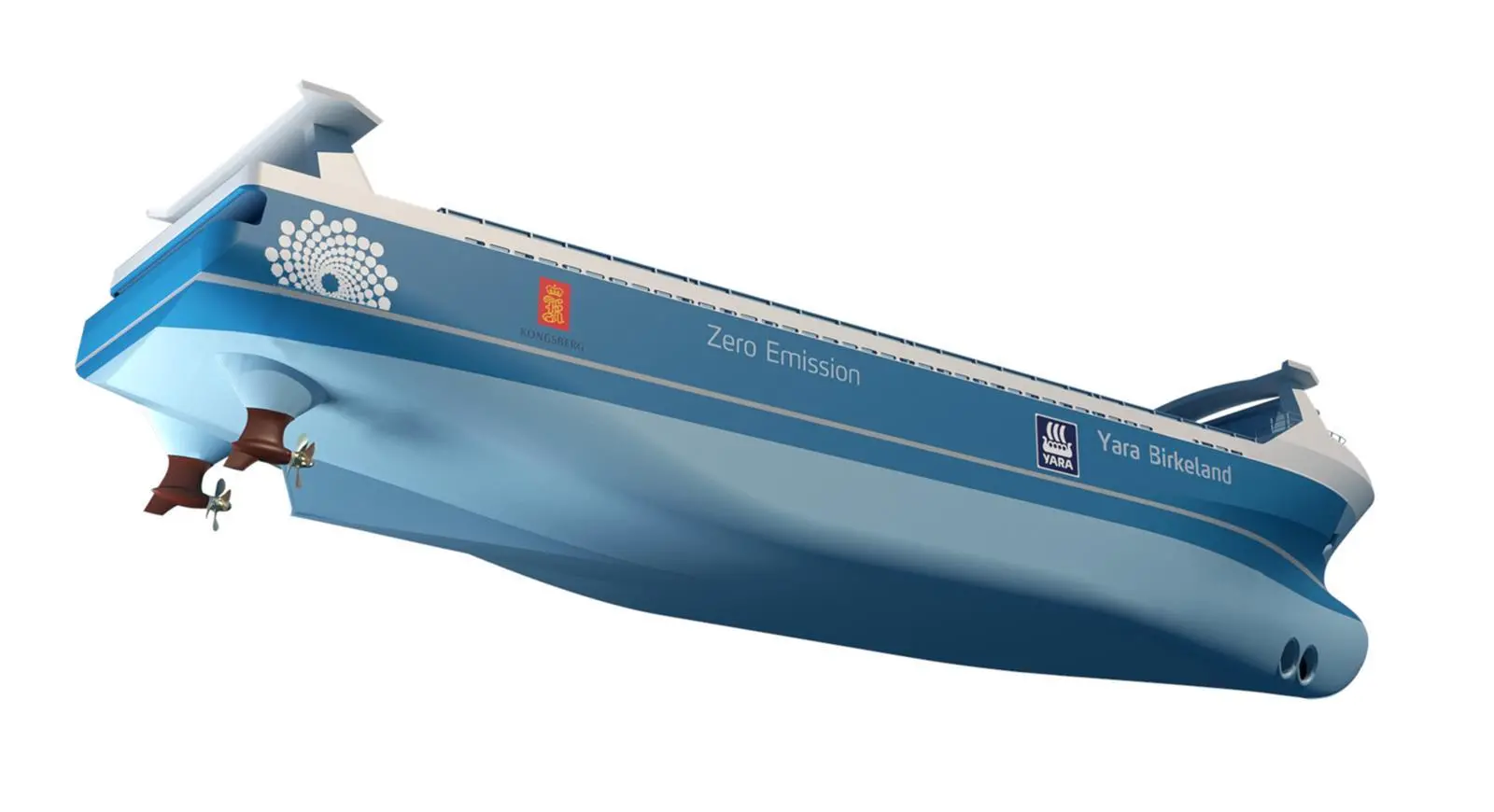
Brunvoll’s delivery consists of two 900 kW type PU74 pulling azimuth thrusters, a 2.2m-diameter controllable Pitch Propeller, as well as two 700 kW diameter type FU63 tunnel thrusters in the bow. The design focused on maximising efficiency, utilising large slow-turning propellers and in the hydrodynamic design of the thruster.
“We are honoured to have won this contract and it is a recognition of our capabilities” says Knut Andresen, Executive Vice President responsible for Product and Business Development at Brunvoll. The contract is a result of the investments Brunvoll is making in innovation and development.”
The Yara Birkeland contract was the second for this type of azimuth propulsion unit developed by the Molde based company. Brunvoll will also supply 10 such azimuth propellers to five ferries for Fjord1 which are currently under construction at Havyard’s Shipyard in Leirvik.
Brunvoll also offers larger azimuth units with diameters up to 3.3 meters and a power of up to 3200 kW for main propulsion.
Brunvoll offers complete propulsion and manoeuvring systems for ships with rudders and ships with azimuth thrusters. These systems include propellers, gears, azimuth and tunnel thrusters, rudder and steering machines, all complete with their automation systems, as well as electric drives and battery packs with control systems.
Fertilizer manufacturer Yara and the Kongsberg Group is behind this first autonomous ship of its kind in the world. Yara’s goal of the project is to transport fertilizer by sea between its factory at Herøya and the ports of Brevik and Larvik. The vessel will reduce NOx and CO2 emissions by reducing diesel-powered truck transport by around 40,000 journeys per year.
The vessel YARA Birkeland will be the world’s first fully electric and autonomous container ship, with zero emissions. However, after the ship is delivered and put into service by 2020, over a two-year period it will be tested with a limited number of crew before it becomes fully autonomous.
Related Articles
 ELECTRIFICATION AND BATTERY HYBRIDS
 BATTERIES, SUPERCAPACITORS, FUEL CELLS AND OTHER ENERGY STORAGE TECHNOLOGY
 ELECTRIFICATION AND BATTERY HYBRIDS