



DNV GL AiP for LNG-fuelled Wozmax design
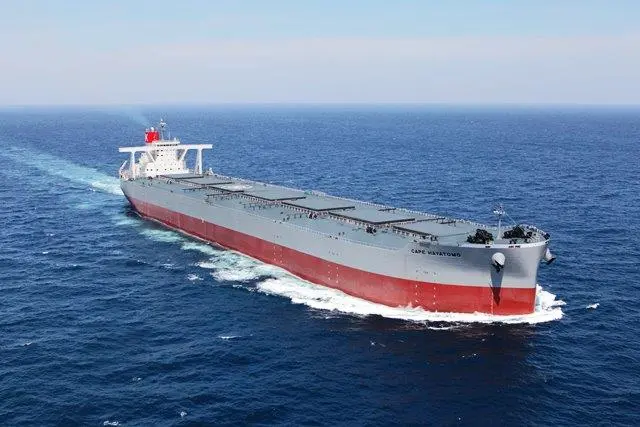
The design is an evolution of Namura’s Wozmax design, denoting the maximum size for iron ore loading ports in Western Australia. The shipyard delivered the first example of its 250,500 dwt second generation of ore carriers in 2017.
The design features the same optimised hull envelope of just under 330m length overall by 57m breadth. The draught is unchanged at 25.60m, permitting access to tidal ports in the region. The design was propelled by a single dual-fuel engine, replacing the previous design’s MAN B&W 6G80ME-C9.5 main engine.
The design incorporates LNG fuel tanks located in the centre section of the hull, unlike some other recent LNG-fuelled ore carrier designs. The vessel will have sufficient endurance to make the round-trip between Singapore and Brazil in gas fuel mode, which extends the proposed vessel’s potential range of operations.
The design is expected to achieve compliance with the EEDI Phase 3 target (a 30% reduction of CO2 emissions emitted per ton/mile compared with the 2008 baseline). No VLOC bulk carrier in operation has yet reported compliance with the target. Meanwhile, interest from customers in the dry bulk market for more efficient bulk carrier designs is increasing. BHP released the world’s first bulk carrier tender for LNG-fuelled transport for up to 27 million tonnes of its iron ore in July.
K-Line reports that the project implemented a variety of energy-saving devices, including a shaft generator and a Lithium-Ion (Li-Ion) battery. This would allow auxiliary engine operations to be optimised, which would further reduce CO2 emissions.
The design also includes Kobe Steel’s binary cycle power generation system unit, an innovative waste heat recirculation system that generates electricity from the exhaust heat emitted by the ship’s main engines. K-Line has been monitoring the performance of the system since it took delivery of Corona Youthful, a 91,861 dwt coal carrier, in February 2019.
The shaft generator, Li-Ion battery and binary cycle power generation system are expected to achieve a additional further 4% reduction in fuel oil consumption.
Related Articles
 ALTERNATIVE FUELS & LUBRICANTS
 GENERAL NEWS
 GENERAL NEWS