



LNG Retrofits: Why Better Lateral Thinking is Needed to Ensure Reliability
This year saw a landmark in the LNG retrofit world when Hapag-Lloyd announced the retrofit of the 15,000-TEU boxship Sajir, converted to dual-fuel LNG. As one of the largest LNG retrofits, it attracted a great deal of attention, just as another large boxship project, the launch of the first of CMA-CGM’s mega boxships, Jacques Saade, did at the end of September.
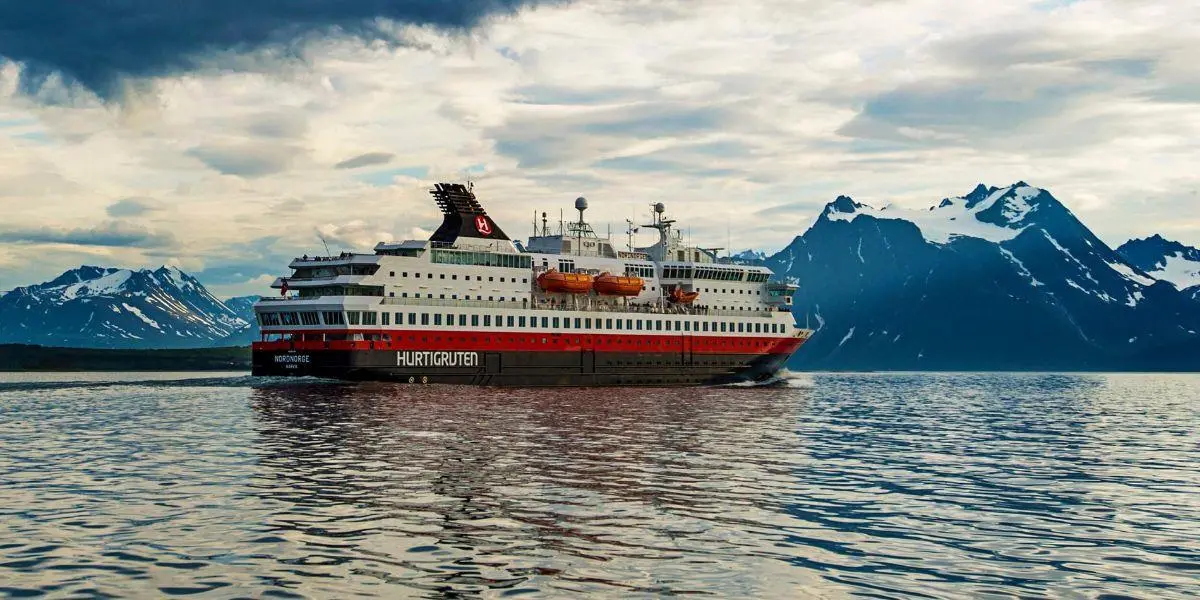
As these launches indicate, we are certainly living in exciting times for the LNG shipping market, with fuel more widely available and a broader range of vessel types and owners looking to convert to this greener fuel in an effort to meet IMO 2020 guidelines. Some, like Hurtigruten, whose fleet Høglund is retrofitting with fuel gas handling and control systems, are looking even further ahead to sustainable biofuels, one of the most promising pathways to CO2-neutral shipping.
However, the advent of LNG as a fuel source is requiring shipping to rethink its approach to retrofits – just as it is requiring innovative design in the newbuild space. Due to the specific regulatory requirements LNG as fuel brings, it is more important than ever that designers, engineers, automation experts and system integrators are aware of the complexities of one anothers’ work and co-ordinate better to meet the high standards of safety and reliability that shipping demands.
Our Projects
Høglund has been involved in some of the most significant recent gas retrofit projects, building on the years of expertise gained in the delivery and operation of automation of gas handling and control systems in the field.
This year, we were awarded a contract by Bergen Tankers to deliver a cargo handling system (CHS) for the LNG bunker vessel Bergen LNG. As part of a long-term charter with Shell Gasnor, the vessel will be the first LNG bunkering vessel to operate in Norway and will be retrofitted from an existing fuel oil bunkering vessel. Bergen LNG will operate in Bergen harbour from Q4 2020 and will serve LNG customers in this area with a focus on the future LNG cruise ships from Hurtigruten and Havila Coastal Route.
Høglund will supply a full package of design and engineering, hardware and automation solutions to ensure safe and efficient operations. The CHS includes an IMO Type C cargo tank, cargo pumps, bunker manifolds, custody transfer system (CTS), and a ship-to-ship transfer system. Høglund’s automation experts will also provide cargo control and emergency shutdown (ESD) systems, and ship-to-shore/ship-to-ship link systems (SSL).
Last year, we received orders for supplying completely customised and integrated Fuel Gas Supply System (FGSS) solutions including process design and related automation for Hurtigruten’s fleet of LNG cruise vessel retrofits. The project also includes mechanical gas engineering and gas tank design, providing Hurtigruten with a unique offering that also includes an overall project management for the delivery and all relevant interfaces on board, plus a 24/7 after-care support.
The project will mark the first time a large passenger vessel has been converted to run on both, LNG and LBG – a fossil-free, renewable gas produced from organic waste. In general, the difficulty of converting an existing passenger vessel and meeting the necessary safety requirements for the placement of fuel gas equipment demands highly specialised design and engineering.
Economics – To Retrofit or Not to Retrofit?
The first question when it comes to retrofit is whether it’s worth doing in the first place. Given the complexity of the work involved – particularly if a project requires a new engine – it is often cheaper for an owner to select a newbuild vessel than retrofit an existing one. For this reason, it’s uncommon for vessels above a certain size to be considered for retrofit in the first place. The reason that the Hapag-Lloyd vessels are being converted is that they were designed to be LNG-ready. Many other retrofit projects will not provide the same preconditions. The main type of vessel that qualifies to be considered for retrofit is generally a small or mid-scale vessel that needs to operate in an Emission Control Area (ECA) and has a decent lifetime ahead. The upcoming IMO 2020 Sulphur Regulation will widely increase the number of potential candidates for a conversion.
Another significant factor crucial for a conversion decision is the amount of time that a vessel needs to be out of service for a retrofit. Any temporary off-hire of an existing vessel stands against the overall lead time of a new build. For example, with the Hurtigruten vessels, the priority was that they should be ready and in service quickly and in time to meet the charter requirements – hence the reason why retrofit was chosen. This came at a significant cost in complexity, however, when it came to solve the problem of integrating LNG systems into the wider complexity of a cruise vessel.
Narrowing of Options
Further complicating the decision is the fact that major equipment suppliers are narrowing the range of options they supply – tending to specialise in only a few tank types or sizes. This makes it even harder to calculate the feasibility of an LNG conversion.
The root cause of this issue is the complexity inherent in LNG retrofits, as both a technical challenge and new ground for owners, suppliers and regulators. For example, if the owner of a container feeder vessel requires an LNG retrofit, the existing regulations don’t outline a single solution. Owners must consider various options, based on operating areas, expected lifecycle, the experience of the suppliers, and what trade-offs they are willing to make when it comes to cargo space. This affects tank type, shape, location, related arrangement of hazardous areas, and overall integration of additional equipment. As owners often lack dedicated expertise in the field of LNG retrofit, it’s essential that designers and integrators can provide a study of all available options.
This is an area where we in Høglund see our competences in marine gas, automation and power engineering coming together. We see the vessel as a whole and contribute to the identification of the most suitable solution for owners’ operational requirements.
Stakeholder Management
Once an owner has decided to go ahead with the retrofit, the next, and possibly most important challenge, is to co-ordinate between stakeholders. Critically, in a conversion, the main contract partner is the owner, which means the vessel remains the property of the owner – whereas with a newbuild, it would be the yard. This means that the owner is liable for any costs, or overruns, and absorbs the risks of any delays in the process.
Then, the chosen designer or shipyard are not the same party as the equipment engineering company – which is the case for many of our projects – which adds to the complexity once again. Late changes to equipment requirements can impact the functioning of a vessel. For instance, ship designers and equipment engineers will need to co-ordinate regarding the impact on the engine cooling system, as gas processes take waste heat from the cooling circuit.
Similarly, gas retrofits require designers and engineers to manage new hazardous areas on a ship created by the installation of gas related equipment, which can be simple, or complex depending on the type of vessels and chosen equipment (e.g. gas safe or ESD engines). There is also the need to change the ventilation and air management system and consider insulation requirements to meet the IGF code. This adds measures like coordination of hazardous areas, routing of ventilation ducts and adding additional insulation into the existing ship system.
At the same time, one party provides gas systems, gas piping, etc., and ship designers provide the deck structure and define where piping needs to be routed. This creates the need for interfaces in the project execution that must be defined, such as identifying who is responsible for substructures on the deck in the area of new equipment and so on.
Importance of Automation
Another often underserved aspect of retrofits is the automation of the gas systems. Frequently, when multiple suppliers are involved, each system brings with it its own automation system, dramatically increasing the number of automation interfaces. This subsequently increases the possibility of failures between interfaces, as well as the potential for signals to become diluted and information becoming lost.
In this instance, there is a clear advantage if a supplier can handle both equipment installation and automation, and if the same supplier can automate multiple systems. As an example, the gas control and ship-shore link (SSL) are normally two different systems from two different vendors, where the SSL is usually a standalone system. If the two can be integrated both, this decreases the number of interfaces and creates a completely integrated SSL – a vital communication link that has the potential to prevent the loss of signal communication e.g. during a bunkering process and reliably triggers the emergency shutdown system (ESD) if needed.
Managing Complexity
Ultimately, managing a retrofit is not just about supplying equipment, or even ensuring that design is efficient. It requires expertise in managing a vast array of unknowns, bringing together multiple stakeholders, and being conscious of how all systems onboard a vessel interact. Owners frequently don’t have this kind of expertise in-house – hence the need for suppliers and integrators to take responsibility for effective co-ordination.
Related Articles
 EMISSIONS REDUCTION TECHNOLOGY
 ALTERNATIVE FUELS & LUBRICANTS
 ALTERNATIVE FUELS & LUBRICANTS