



Coronavirus wreaks havoc across global shipping industry
Using the word ‘pandemic’ carelessly is not helpful, said a senior official at the World Health Organisation late in February. The virus could still be contained, he believed. But as the month drew to a close, there was increasing uncertainty over whether this was actually true, as cases have been reported on every continent. While Saudi Arabia’s unprecedented move to close the two holiest shrines of Islam to foreign pilgrims captured headlines, the spread of Covid-19 in western Europe and North America is likely to have a greater economic effect.
These effects are being felt most deeply in shipping, the principal conduit of most of the world’s trade, which has felt the direct effects of the spread of the Covid-19 virus in China in reduced demand for container services. The dry bulk market, which is heavily reliant on demand from Chinese heavy industry, and the tanker markets have also also been affected.
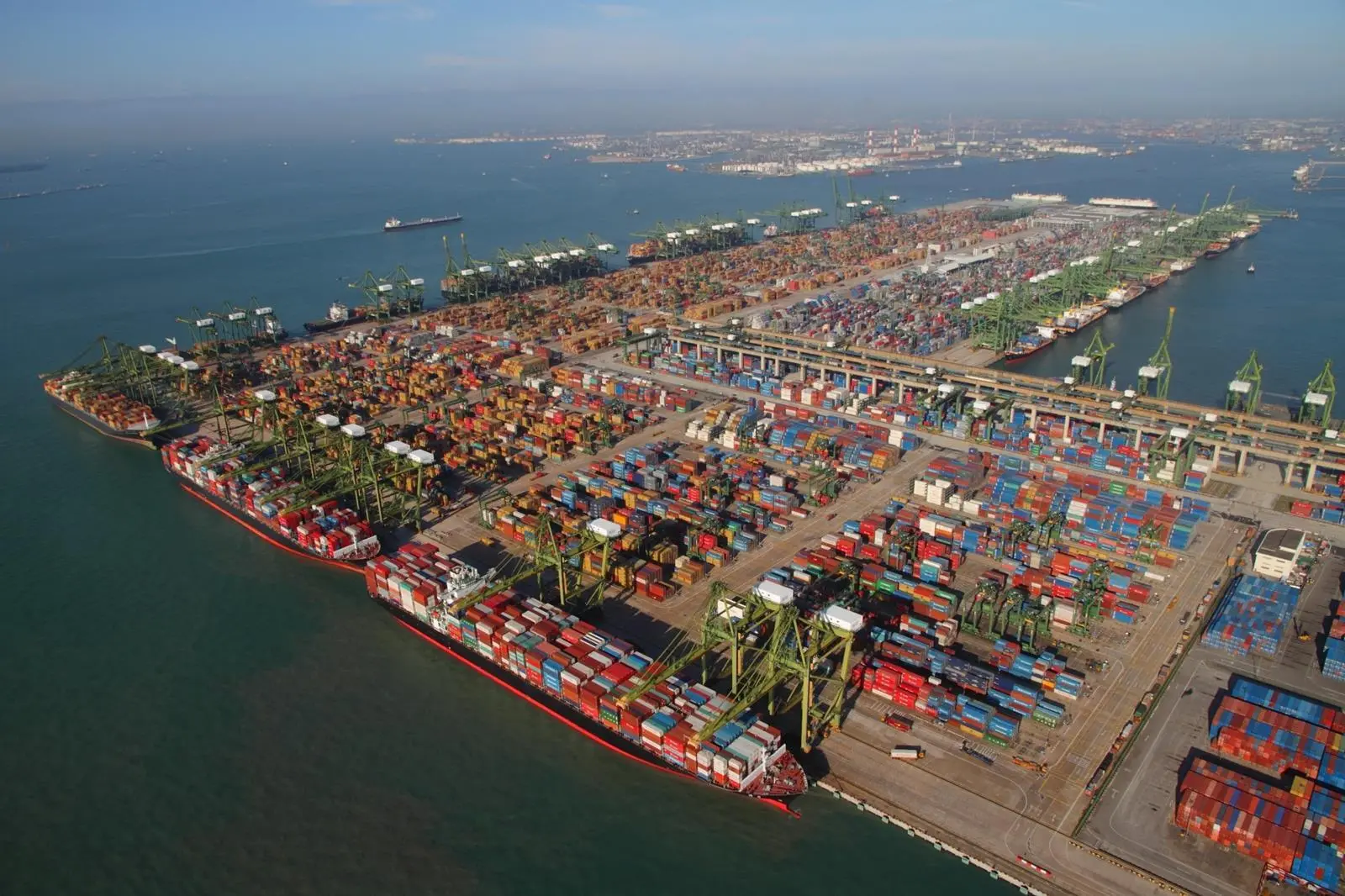
Container services using the world’s largest vessels are leaving Asia for Europe and the US, the world’s two most important liner trades, with ships that are three-quarters empty. Countless sailings have been cancelled, losing carriers millions of dollars every voyage, and storing up logistics problems such as box shortages at key hubs in Europe and North America.
Market statistics reveal the scale of devastation across most other sectors too. Tanker rates have plunged, with VLCC rates averaging more than $70,000 a day over 2019 dropping to the $20,000s by late February. LNG spot rates, which were well up in six figures for a 160,000m3 tri-fuel diesel-electric tanker in December, have come crashing down, heading towards the low $40,000s late in February, according to Clarkson figures.
Meanwhile large bulk carrier earnings have sunk into negative territory, and many operators have swamped recycling yards with a barrage of unwanted tonnage. How much of this is down to the virus and how much to IMO 2020, however, for the moment remains unclear.
Looking forward, leading indicators do not offer signs of encouragement. The International Energy Agency (IEA) is forecasting an outright contraction in global oil demand in Q1 and lowered its forecast for 2020 to under 1 million tonnes, the lowest growth since 2011. These forecasts were released in mid February and are likely to be revised lower. The Chinese economy is continuing to languish. The latest March Chinese PMI has slumped to 35.7, according to the National Bureau of Statistics, below the level seen in 2008 during the 2008 global financial crisis.
Turning to the wider impact of Covid-19 on shipping, cancellations have left many vessels lying idle in relatively warm waters of high fouling risk in Asia. On the part-laden ships that are sailing, engines are running at deeply suboptimal loads, at the wrong draught and trim, with fuel consumption and emissions affected accordingly.
Scheduled repairs, scrubber installations and other retrofits are being postponed or cancelled in China which, according to Clarkson estimates, accounts for about two-fifths of ship repairs and the vast majority of scrubber installations. Some 150 vessels were under retrofit at Chinese yards on 21 February.
Stores and spares are not available. Some suppliers in China are experiencing delays meeting orders after the extended four-week Lunar New Year shutdown, which is creating supply chain pressures.
Ship operators and OEMs have taken a precautionary approach: MAN Energy Solutions introduced travel restrictions in January, prohibiting non-essential travel and all trips to quarantined areas in China. This has now been extended to other affected areas, including northern Italy.
How newbuilding projects will be affected remains unclear. However, Oslo-based analyst Rystad Energy warned of a slowdown in commissioning floating energy units. Of the 28 floating production, storage and offloading (FPSO) units currently under construction, 22 are being built in China, South Korea and Singapore, the firm said in a circular. Extensive staffing and supply shortages should be expected in these countries which are likely to translate into significant project delays.
Released on February 28, the note said that projects could be delayed by ‘at least three to six months’. If the epidemic escalates, however, delays could increase to nine or even 12 months, Rystad said, equivalent to a 30% delay on a typical 36-month project.
Related Articles
 ALTERNATIVE FUELS & LUBRICANTS
 GENERAL NEWS
 GENERAL NEWS