



High performing hull coatings pay back handsomely
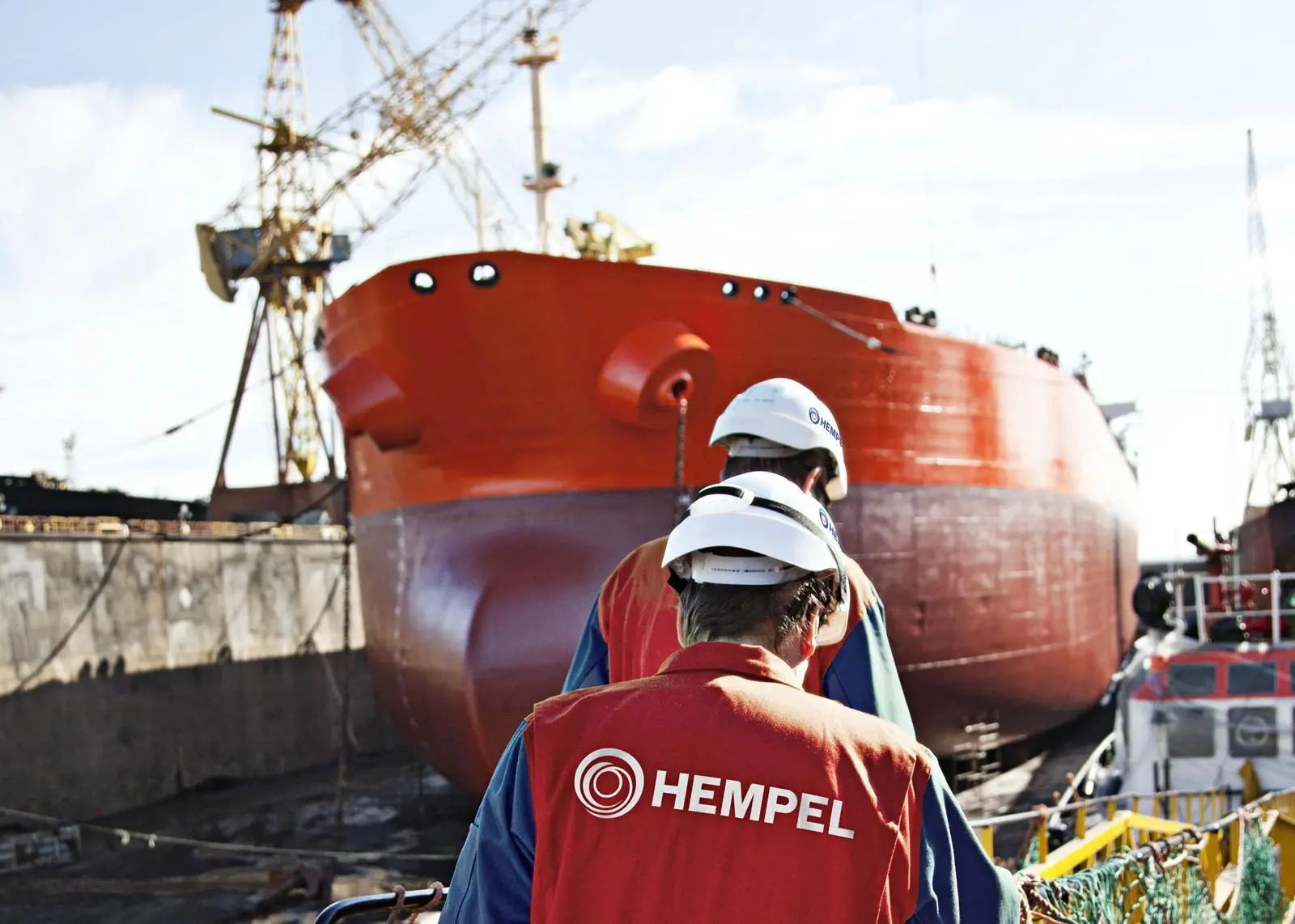
A clean, fouling free hull ensures a ship moves through the water with minimal resistance. This optimises the fuel used to maintain a given speed and contains associated air emissions. With bunker costs and environmental considerations as an important priority for ship operators, the drivers for continually developing more powerful and effective fouling-defence coatings are obvious.
Hempel has been fighting fouling for more than 100 years and its products – include both antifouling and fouling release solutions. However, in 2013, the company launched a revolutionary new fouling-defence product that effectively changed the hull protection coatings game. Traditional antifoulings incorporate biocides that render unviable the marine organisms that attach themselves to the hull of a ship. These biocides are brought to the surface of the coating by the movement of the vessel through the water (known as polishing).
Fouling release coatings use no biocide but, instead, rely on creating a super smooth surface which marine organisms find impossible to latch on to. Hempel’s fouling defence product Hempaguard Incorporates Hempel’s patented Actiguard technology, Hempaguard delivers an extremely smooth silicone surface and a hydrogel microlayer. The hydrogel layer creates an even smoother hull surface and ensures the active ingredients are maintained at the surface of the paint where they are most effective and this means that the coating only requires 5 per cent of the biocides usually found in a traditional anti-fouling paints.
Since its launch, Hempaguard has been used to fully coat more than 1500 vessels. Taken together, the owners of these ships have saved more than USD 500 million on their collective bunker bill. Extrapolating this to the global fleet would, in theory, save more than USD 12 billion in fuel costs every year plus an estimated 95 million tonnes in CO2 emissions.
In 2019, an enhanced Hempaguard product was launched – Hempaguard MaX. This is a three-coat solution that results in an increased hull smoothness achieved from the unique synergy of the three layers. The base coat is an anti-corrosive primer (Hempaprime Immerse 900) which protects the steel; the intermediary tie-coat is Nexus II; and Hempaguard X8 is applied as the fouling defence topcoat. The tie-coating links the primer and top layer, helping to reduce the number of coats. Many hull coatings require five coats but Hempaguard Max is a three-coat solution. This means owners save money on the product itself, on dry dock and application costs, and it minimises the time the vessel is off hire.
Using these three coats in combination generates maximum fuel efficiency with extreme hull smoothness. While the Hempaguard X7 had an average hull roughness (AHR) of around 100mic, the new MaX product achieves an AHR of below 80mic. Hempel offers a maximum guaranteed 1.2 per cent speed loss* over a five-year period ,up to eight per cent out of dock fuel savings have been reported compared to a traditional antifoulings while will continue to repel fouling for up to 120 days whilst a vessel lies idle. In addition, Hempaguard MaX retains full effectiveness in all ocean conditions and temperatures which gives it sufficient flexibility for use on all vessels irrespective of their trading patterns and geographies.
Investment in hull coatings can be considerable and there is a natural temptation to opt for less expensive alternatives. But cheaper products can ultimately prove to be more expensive. Hempel’s own data demonstrates that a high performing and innovative hull coating can return the initial investment in just three months. This is based on a VLCC operating at 70 per cent activity and burning low sulphur fuel over a five-year period. The fuel savings delivered by Hempaguard MaX equate to around USD 1.8 million compared with market average and this translates into a three-month ROI. And once the payback has been achieved, all further savings go straight to the bottom line for the remainder of the five-year coating interval.
With fuel savings to be made at sea and costs to be contained in dock, vessel owners might want to consider making a slightly higher initial investment in their hull coating and then reap the rewards for a long time to come.
*Speed Loss: If a vessel’s main engine is set at a specific power output, it will propel the ship at a constant speed through the water. Accumulation of fouling will happen over time, increasing drag and decreasing the vessel’s speed, in spite of a constant power output of power by the main engine. This reduction in speed is termed “speed loss”.
Related Articles
 OTHER EQUIPMENT
 LNG
LNG
 GENERAL NEWS