



Action plan outlined for UK growth
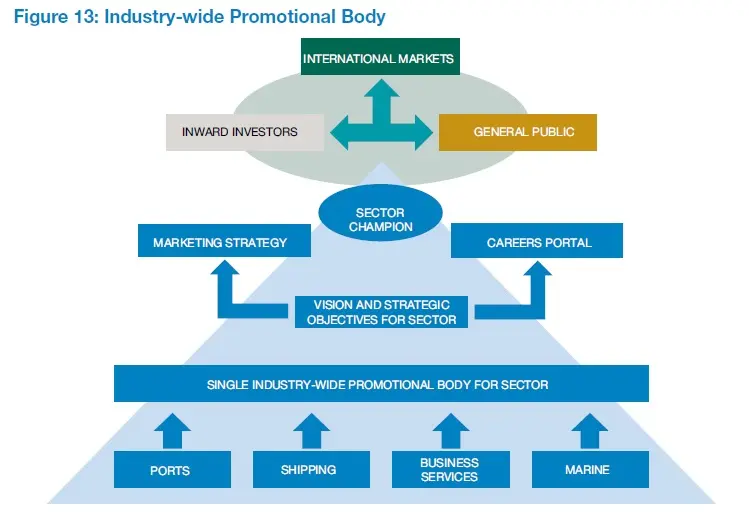
Across 18 recommendations in the 108-page document (excluding glossary and annexes), the two proposed bodies – and greater collaboration between industry and government in general – take key roles in developing the leaderships, skills base and marketing of the UK maritime sector.
Chairman of the study, Lord Mountevans – chairman of Maritime UK and a Clarksons director – called the study, and its launch at LISW, a “a once in a lifetime opportunity”. Its aim, he said, was “to enhance the contribution of the UK maritime cluster and exploit the expected growth in world trade to help create jobs, increase the export of our maritime services and encourage maritime-related investment across the country.”
The study calls on key industry bodies – including the Baltic Exchange, British Ports Association, Marine Industries Alliance, Maritime London, UK Chamber of Shipping and UK Major Ports Group– to form a ‘single, industry-wide promotional body that can market the UK maritime sector as a whole and partner with government’.
The self-funded and resourced body should appoint CEO to manage day-to-day matters and a high-profile chair to act as an industry champion and work closely with the proposed Ministerial Working Group for Marine Growth and the Maritime & Coast Guard Agency (MCA), which is also the subject of reform recommendations.
Included within the remit of the new industry body will be the development of a skills strategy identifying and addressing the need for wider training and qualifications in the sector. Related to this, the body will be tasked with establishing a ‘maritime skills investment fund’, acting as a ‘shop front’ for current maritime training support schemes and also soliciting voluntary funding from maritime companies not already engaged in training and apprenticeship schemes.
The body will further be charged with establishing a ‘ship to shore’ mentoring programme, intended to clarify and promote career paths that will retain experienced sea-going professionals in business leadership positions within the sector. A ‘Maritime Awareness’ scheme – a year-programme of activities encouraging interest in maritime careers – is also proposed, along with a marketing strategy dedicated to raising the profile of the industry and an overarching maritime careers portal.
MCA reform
On the governmental side, reform of the MCA is an important recommendation. The report proposes separating the UK Ship Register from the MCA’s regulatory functions and appointing an experienced commercial director to lead the register and MCA’s commercial functions. The MCA is asked to implement the conclusions of its recent study into survey and inspection, aiming to create a more highly skilled surveyor workforce and improving systems to support industry customers.
The development of the MCA as a commercial organisation, beyond its status as an executive agency of the Department of Transport, should also be developed, with a non-executive chairman appointed from within industry to lead these processes and act as a ‘government sector champion.
A ministerial working group is also proposed (separate from the existing Ministerial Working Group for Maritime Security), initially to drive the study’s recommendations in parallel with industry efforts, and subject to a 12-month review. The group should collaborate with industry to develop a national strategy for maritime growth.
The Department of Transport’s Maritime Adminstration Board is suggested as the senior official body for the group, but with an expanded membership of other government departments and industry representatives. That, along with a new cross-government maritime team to deliver the board’s strategies, will serve to encourage a coordinated maritime approach throughout government.
Education and investment
Governmental recommendations in the study also include a seafarer projections review (to understand and forecast the UK’s maritime skills requirements), a review of the existing Support for Maritime Training (SMarT) scheme – which currently funds 36% of a cadet’s training to ‘first certificate’ level – and the extension of the government apprenticeship programme in the maritime sector. Opportunities to raise youth awareness of the maritime professions, and better industry links with the Royal Navy, are also suggested for exploration.
The government should also explore both marketing and investment opportunities for the maritime sector, the report notes. For marketing, government should include the maritime sector in the GREAT Britain campaign, place the sector on the agenda of UK Trade & Industry foreign trade delegations and make use of foreign embassies to promote the UK maritime offer. The government is also asked to raise the awareness of maritime investment opportunities with financial institutions, encouraging schemes to improve the availability of UK finance to the sector, including in ship ownership.
The maritime industries (shipping, ports and business services) contribute an estimated £8.5 billion a year to the UK economy, while marine industries (shipbuilding and repair, construction of ports and marinas, marine leisure) contribute around £2.5 billion. Combined the sectors represented about 2% (or £1.8 billion) to the UK’s trade surplus in 2013.
But the report noted that competing global maritime hubs had put pressure on the UK’s maritime sector since 2009. Since then, the world fleet has increased by 34% to 1,669.7 million dwt, while the UK registered fleet decreased by 27% to 12.6 million dwt. In 2014 the UK’s share of the world fleet decreased from 1.9% to 1.1%, and the number of UK registered vessels over 100gt declined by 17%.
The wide-ranging report’s recommendations look to stem those losses and reassert the UK as a thriving, competitive maritime hub. But, in light of the current government’s spending review, no specific timetable for implementation has been recommended. Nor, ‘in the interests of equity’, has a schedule been proposed for recommendations relating to industry.
Nevertheless, the study’s authors believe that progress could be made within six months of publication, with little left outstanding a year on from LISW 2015. That progress, however, depends on the outcome of the government spending review and ‘its impact on the affordability constraints to which implementation plans could be subject’.
The report concludes: “It is anticipated that an inclusive approach would be adopted in taking forward the recommendations to ensure all parties are engaged as ‘one sector’. This will be critical to ensuring success from the outset.”
Related Articles
 ALTERNATIVE FUELS & LUBRICANTS
 GENERAL NEWS
 GENERAL NEWS