



Digging deep: the new seafloor industry
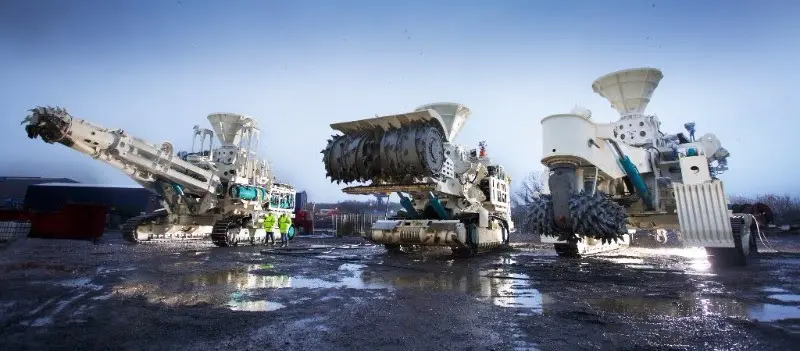
Despite borrowing technology from landside and offshore operations, the new breed of subsea mining vessels will be “a completely different kind of animal,” says Dilip Sarangdhar of SeaTech Solutions, the design company behind the world’s first Production Support and Storage Vessel which is nearing completion in China’s Fujian Mawei yard.
SeaTech’s PSSV is “part heavy-lift vessel, part bulk carrier” with a nod to a drill ship thanks to a big central derrick says Sarangdhar. But, he adds however you describe it, “everything is larger than life” on this 100,000dwt ship.
The idea itself isn’t new but it’s a tricky calculation: a pilot exploration in the Middle East turned up high-grade minerals back in the ’80s – but prices fell away before the technology was ready. More recently there’s been interest in relatively low-hanging fruit for those with the right licences: De Beers – in partnership with the Namibian government – has been hoovering diamonds from the sand in 120m of water just off the country’s coast since 2014. A 300-tonne sea floor crawler with an arm describing a 21m ‘windscreen wiper’ arc is capable of sucking up two football pitches worth of sand from the seabed every hour. This is passed up to the first-stage conveyor processing vessel,
Mafuto
, which works to wash and sort out the diamonds from the gravel – all with no human intervention.
But the minerals found at greater depths could be a game changer – or at least, that’s what Nautilus Minerals is gambling on. SeaTech’s design will take on the high-grade Seafloor massive sulphide (SMS) deposits in 1,600 metres of water off Papua New Guinea. According to Nautilus these promise very high grades of gold and copper (over three and ten times as pure as found in land-based mines), along with other minerals like zinc and silver. So despite the complexity of carving out a new industry, in financial terms it could prove worthwhile.
It’s a complex operation. Firstly, the PSSV carries the mining machines out to site: three different Seafloor Production Tools (designed and built by UK partner SMD) will roam the bed on track treads developed by Caterpillar, directed remotely and powered by the ship above. They are fearsome looking beasts. The main bulk cutter is similar to its landside ‘continuous mining’ cousin, having a series of several toothed blades on a front mounted roller that munches through a swathe of material as it progresses. An auxiliary or preparatory cutter works the rougher terrain: this is a bit more flexible as it sports a series of cutting heads at the end of a boom-type arm, making a ‘bench’ for the bulk cutter to process. The final crawler, a collection machine, hoovers up the material and pushes it to the suspended subsea slurry lift pump; from there it gets pumped up to the vessel on the surface.
These are by no means small: the cutters weigh 250 tonnes and 310 tonnes apiece. While Sarangdhar says that the transit weight “is no big deal”, he points out when these machines are suspended in the air – at a reach of 15m from the hull – it results in very concentrated loads under the footings of the launch and recovery A-frame, requiring structural reinforcement of the hull. Size helps, but inside the ship’s 227m length, 40m beam there’s also a 42,000-tonne ballasting system: Sarangdhar explains this will bring the freeboard down as low as possible to the water and all in all, the vessel should heel less than 1 degree during deployment operations.
Related Articles
 ALTERNATIVE FUELS & LUBRICANTS
 GENERAL NEWS
 GENERAL NEWS