



Confusion and delay dog FuelEU Maritime initiative
Last month’s issue of The Motorship noted with disappointment that it was not possible to report fully on the effects of the EU’s FuelEU Maritime Initiative because of a delay to its publication. Although initially planned to be adopted in Q4 2020, publication was delayed to permit further submissions, until Q1 of this year. The publication date then slipped to April but, at the time of writing in mid-April, it still remains under wraps.
Requests to the European Commission’s Directorate for Mobility and Transport for an updated timetable and a copy of the latest draft version went unheeded and, over at the European parliament, it seems there is similar frustration. Commenting to The Motorship unofficially, a member of its Research Service team said that it, too, was “waiting for the commission to put forward the proposal in question,” and could only “guess what will it contain and what feedback will have been taken on board.”
That source assumed the delay to be because “the commission wants to ensure coherency with two other proposals under preparation: the new one on aviation fuels and a revision of the directive on alternative fuels,” but it has not been possible to confirm that suggestion.
One industry body – the International Chamber of Shipping (ICS) – appears to believe that the initiative is far from ready. Last year, the commission invited feedback on an Inception Impact Assessment (IIA) of the Fuel EU Maritime initiative and ICS was not among the 81 individuals, companies and organisations that provided submissions by the deadline.
Although the second of two consultation periods closed on 10 September 2020, ICS is only now deciding its position on the proposal and its communications director Stuart Neil said that the organisation was “still trying to understand what the detail of the proposal is, to see how we can make it work to deliver on its objective.” He was speaking shortly after ICS had received a draft report about the initiative that it had commissioned jointly with the European Community Shipowners Associations (ECSA) from an emissions policy expert to help it decide its position.
Although Mr Neil could not offer any detail about the report or its likely outcomes, The Motorship understands that it runs to about 60 pages. He would not comment either about the delay in assessing its position but, since ICS and ECSA both have regular contact with the European Commission, they must be hopeful that, if they decide to express any views, they can make them known through those channels and that there is still time to have them taken into account.
In fact, ECSA was one of the few shipowner groups that contributed to the original consultation and its submission last year declared that “the European shipping industry welcomes the FuelEU Maritime initiative to increase the use and availability of sustainable alternative marine fuels and energy sources.”
However, it went on to stress that “decarbonisation of the shipping sector must firstly be an international effort” and warned that “regional regulatory measures risk ‘moving the goal posts’.” For that reason, it encouraged the commission to ensure that “any proposal [should] be coherent and not undermine decarbonisation objectives as established via the IMO.”
R&D investments
From a technical point of view, the shipyard and equipment industry body SEA Europe welcomed the commission’s broader ‘Green Deal’ initiative but advised in its submission that “significant investments will be necessary for R&D and the development and deployment of various possible alternative fuels … to transit from a low carbon footprint to a full zero-emission mode of transport.”
It also cautioned that “legislation and policy actions should refrain from imposing or prescribing specific technological solutions or specific alternative fuels” and said that internal combustion engines “will play a significant role in the decarbonization of waterborne transport, if utilised with climate-neutral synthetic fuels.”
Lifecycle assessments should used to define carbon neutral fuels and “significant RD&I investments [along with] additional (EU) funds will be necessary” to incentivise the development of green technologies and deploy green infrastructure, it went on.
[BOX]
What is FuelEU Maritime?
To give it its full name, this is the ‘FuelEU Maritime – Green European Maritime Space’ initiative, which was included in the European Commission’s 2020 work programme as part of its European Green Deal strategy.
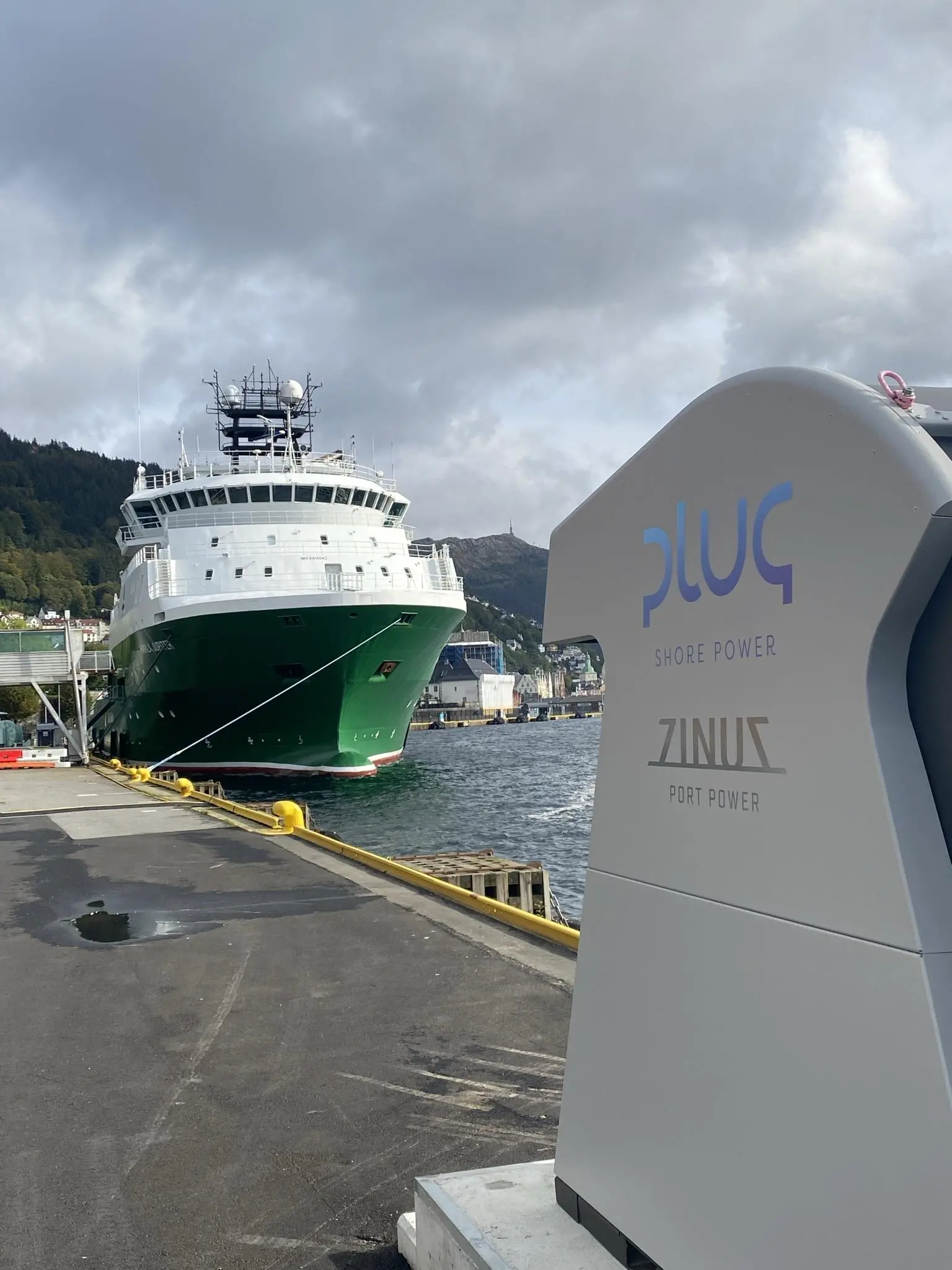
When it was announced, it was expected to “focus on ramping-up the production, deployment and uptake of sustainable alternative marine fuels.” It was also intended to support “the European Green Deal’s ambition of regulating access of the most polluting ships to EU ports and obliging docked ships to drastically reduce their emissions, including through using shore-side electricity.”
This need to reduce emissions stems from the commission’s view that ship traffic to or from ports in the European Economic Area accounts for 11% of all EU CO2 emissions from transport and 3-4% of total EU CO2 emissions.
To tackle those emissions, FuelEU Maritime aims to increase the use of sustainable alternative fuels in European shipping and ports by addressing “market barriers that hamper their use [and] uncertainty about which technical options are market-ready,” the commission’s website notes.
Some clues about what the initiative will eventually contain can be gained from a report ‘on technical and operational measures for more efficient and cleaner maritime transport’ prepared in October 2020 for the European Parliament by its Committee on Transport and Tourism.
Written by committee chair Karima Delli, it is known as the Delli report and was adopted by the European Parliament in February, receiving positive industry reaction. For example, in a statement at the time, ECSA welcomed the report’s call “for a comprehensive approach under the upcoming FuelEU Maritime proposal,” but added that it believes setting a fuel standard “for ships, instead of fuel suppliers, … would risk failing to deliver on emissions reductions and would be challenging to enforce.”
One industry executive contacted by The Motorship, but speaking unofficially, also expressed concern about this fuel-centred approach. “How is the EU going to ensure that a fuel bunkering operation in Taiwan or in Mauritania, is going to provide fuels that are in line with the EU bunkering requirements?” he asked. And if there is a way of doing that, it must not add any extra burden to shipowners and must be manageable, he said.
Life-cycle approach
Other references to FuelEU Maritime in the Delli report recommend that it should take a life-cycle approach to greenhouse gas emissions and calls on the commission to “introduce a requirement for cold ironing using green electricity or any other renewable energy” while ships are in port. It also recommends that the initiative should “integrate sail propulsion”, although it is not clear how it anticipates that should be done.
Other parts of the report contain proposals that, if they are included in FuelEU Maritime, The Motorship believes could be of concern in some industry sectors.
For example, although it concludes by calling for “substantial European funding” that targets “the decarbonisation of the sector and better cooperation between its various actors,” elsewhere it “recalls that methane emissions have a significant impact on climate change” and says in the same sentence that “European taxpayers’ money should only be used for long-term sustainable alternatives that do not risk creating lock-in effects, as is the case with LNG.”
Whether this indicates a lack of enthusiasm not only for LNG but also for methanol is not clear, but in a contribution to last year’s consultation, the Methanol Institute noted that the Inception Impact Assessment did not include methanol on its list of sustainable low and zero-carbon alternative fuels. The institute went on to detail various ways of producing methanol, including green methanol from green hydrogen and direct air capture of CO2, and argued that “the European initiative should not pick winners and losers in its quest for cleaner marine fuels.”
The Delli report also encourages a global ban on scrubber discharges. After welcoming IMO’s 2020 sulphur cap, the report says that this “should not lead to a shift in pollution from air to water” and calls on the commission “to prohibit scrubbers and discharges into the sea of waste water,” which it says should be “properly collected and processed in port reception facilities.” It then asks the commission “to address the same request to the IMO.”
How much of the Delli report’s findings, the feedback from last year’s consultation and the additional material now being prepared by ICS and ECSA will emerge in the final version of FuelEU Maritime will only become clear when it is published. What is clear is that the initiative is set to be as significant as any previous EU initiative, such as its Monitoring, Reporting and Verification regulation and its plans to include shipping in its Emissions Trading Scheme.
Related Articles
 METHANOL
 MONITORING, CONTROL & DIGITALISATION
 MONITORING, CONTROL & DIGITALISATION