



Class offers confidence in EEXI compliance: smart decisions will pay off
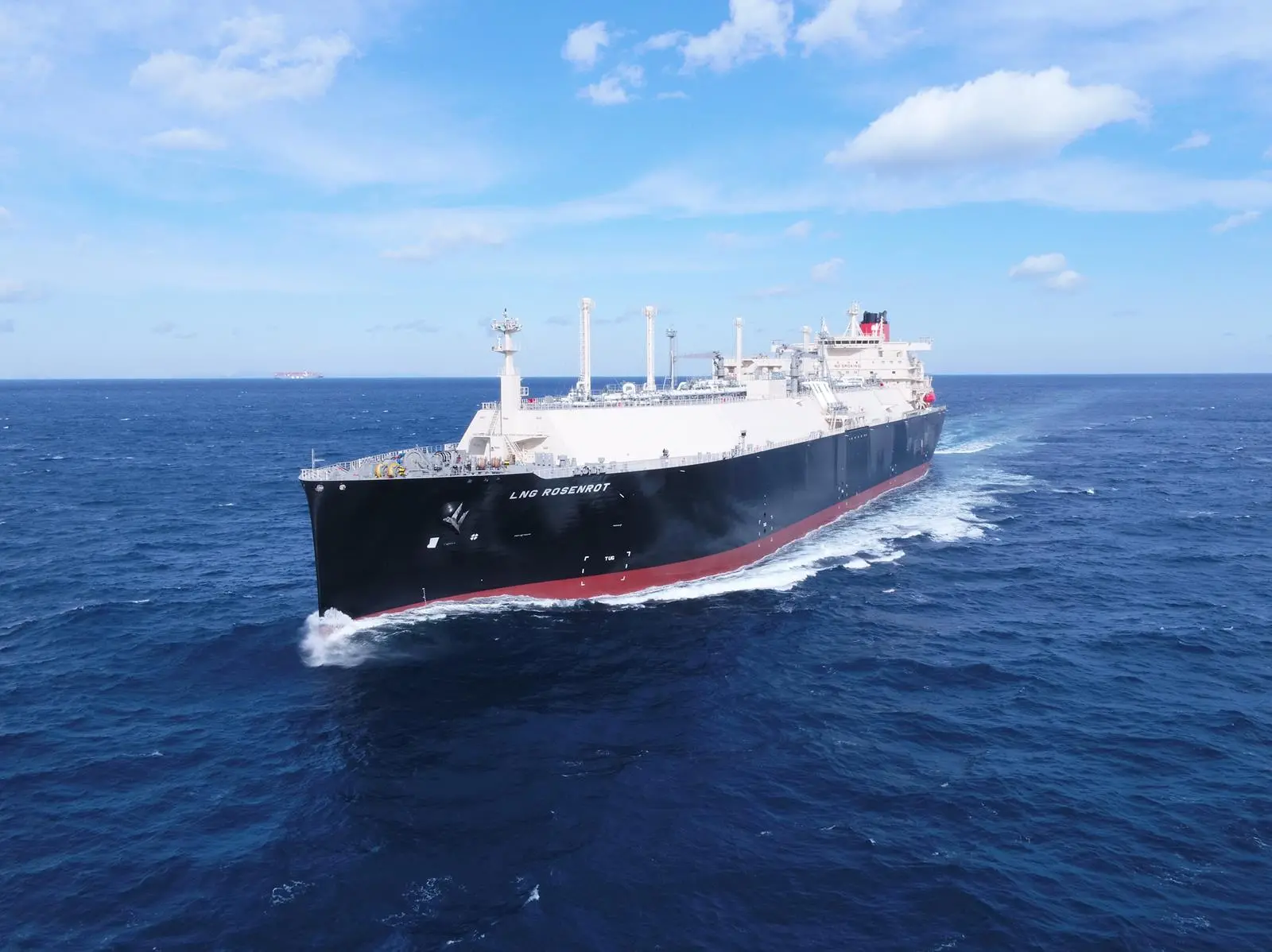
Reducing the environmental footprint of the shipping industry is a top priority for marine stakeholders and legislative bodies, with green regulations for emissions like NOx and SOx already in force. The International Maritime Organization (IMO) has set 2030 as the target date for reducing ships’ carbon emissions per transport work by 40%, targeting a 70% reduction for 2050 compared to the 2008 levels. These should be combined with an ambitious reduction of greenhouse gas (GHG) emissions by 50% in 2050 across the sector.
To achieve these targets, in June 2021, MEPC 76 will unveil two regulations that will impact ship owners worldwide: The Energy Efficiency Existing Ship Index (EEXI) and the Carbon Intensity Indicator (CII). Shipowners must make significant decisions in order to meet these two regulations. The onus will be on making smart choices that protect OPEX and CAPEX investments and lead to commercial benefits.
Sector matters
On the basis of the preliminary EEXI formulation, it can be concluded that about 70% of Bureau Veritas’ classed fleet that is subject to EEDI compliance, complies with EEXI regulation without any changes. Looking at post-EEDI ship types we have compliance in 60% of bulk carriers, 70% of tankers, 30% of containerships, 100% of LNG carriers, 57% of gas carriers and 80% of cargo ships. The most prevalent way to comply is the Overridable Power Limitation (OPL). An average of 20% OPL is needed for compliance of the global fleet. In 6% of the global fleet, over 40% OPL is needed, while 9% needs to do nothing. If the OPL for EEXI compliance does not limit power below what is in use in today’s era of slow steaming, it is unlikely to experience speed reductions over 5%. Reductions of CO2 emissions are thus expected from setting a barrier to a future of higher speeds and due to longer operation of the fleet at lower power and speeds.
It is essential for each shipowner within its market sector to analyse its fleet by individual vessel and understand where savings need to be made and how this can be done efficiently to meet the regulatory requirements and improve performance with a verifiable and acceptable Return on Investment (ROI) time. Some vessels, in addition to OPL, may revert to slow steaming, while others may choose a combination of technical measures like wind assisted propulsion and/or air lubrication to improve their metrics. In general, improvement of EEXI and CII is achieved with a mixture of technical and operational measures.
The moving goalposts
Following adoption of the new regulations, ship owners will have just over a year and a half to prepare their vessels to comply. Time is of the essence. The CII requirement uses building blocks already available in MARPOL Annex VI: the IMO Data Collection System (DCS) for fuel oil consumption and the Ship Energy Efficiency Management Plan (SEEMP). In June 2021, the details of the CII metrics will be finalized including the definition of a rating mechanism, the annual reduction of each ship type to reach the targets and the verification audit regime for SEEMP. On 1 January 2023, EEXI and CII will enter into force.
The annual reduction requirement of CII will put increasing pressure on shipping between 2023 and 2030, and may have significant implications on OPEX and CAPEX. Both EEXI and CII requirements are subject to reviews which are to be completed by 1 January 2026. These reviews will determine the extent to which the regulations might become stricter to achieve the targets. CII enforcement after 2026 is likely to become stricter as we move ever closer to 2030. It is likely there will be stricter limits – or moving of the goalposts, depending on your perspective. Consequently, ship performance must be considered on a long-term basis. Young vessels on the water today need to be making the right decisions to avoid joining the list of stranded assets.
Class is key to compliance
Vessels must be ready for 2023, to earn the certificates allowing them to continue sailing and trading. Following approval of their EEXI technical file, they receive their International Energy Efficiency Certificate (IEEC) after 1 January 2023, at the first annual, intermediate or renewal survey. For CII, managers must determine ships’ carbon intensity profiles and develop an expanded Ship Energy Efficiency Management Plan (SEEMP). This mandatory document is a ship-specific plan which contains the mechanisms to help improve its energy efficiency in a cost-effective manner.
Bureau Veritas has a plethora of tools and experience to improve both EEXI and CII metrics following a unique procedure. Potential measures are analysed with key feasibility criteria like the time, the required CAPEX, Return of Investment time, the age of the vessel, the operational profile, the ship design and acceptability of the resulting speed loss due to the OPL. Depending on required reduction of the metrics for compliance a variety of options exist.
Starting from the less effective Category A Energy Saving Devices which lower the power-speed curve like ducts, pre-swirl fins, rudder bulbs, PBCF, high performance coatings and ascending to more drastic reductions with category B devices, which include wind assisted propulsion with rotor sails and reduction of resistance with air lubrication systems. Category C devices such as waste heat recovery systems exploit the energy of exhaust gases. Significant savings can be gained through propeller and bow optimization.
We believe that a feasible way to improve the metrics is the engine optimization by retrofit and upgrade. Eco-cams ensure flexible exhaust valve timing, eco-nozzles optimize the fuel spray boosting efficiency, turbocharger cut-out at lower loads improves the efficiency of the remaining ones, variable injection timing optimizes engine performance, derating and tuning reduces fuel consumption, slide valves eliminates deposits when slow steaming and a variety of other improvements. The target is to preserve the validity of the NOx Technical File. It is also imperative to ensure an adequate Light Running Margin (LRM). For some vessels, a low-hanging fruit is the increase of the DWT which will reduce both EEXI and CII. Undoubtedly, a change of fuel – with the right fuel – is probably the most drastic way of delivering CO2 reduction, although it is also associated with high CAPEX and OPEX. Attractive candidates with affordable CAPEX are the technologically mature second-generation biofuels.
The EEXI formula is relatively insensitive to the Energy Saving Devices (ESD) with the exception of the more sophisticated options like gate rudders with a reported power gain over 15% or the counter-rotating propellers. A duct with a power saving of 5% will yield an EEXI reduction of 1.7%. Another issue is the availability of these devices. A rotor sail based on the Magnus effect can yield fuel savings between 5 and 10%, although values as high as 20% have been reported. It is noted though, that the operation of rotor sails is intermittent without continuous availability, similar to solar panels. First movers, who pioneered the installation of ESD following delivery of their vessel must now get credit for the corresponding reduction of emissions and fuel consumption by employing CFD, sea trials or model tests.
CII is more challenging given that a phased reduction is required annually. It can be reduced by a plethora of operational measures like LED lighting, VFD controlled pumps and fans, battery hybridization, utilization of higher efficiency fuel cells in lieu of diesel engines for production of electricity, frequent hull cleaning and propeller polishing, weather routing, voyage planning, trim optimization for low block coefficient ships, and installation of shaft generators, which also improves EEXI.
Each new environmental regulation advanced by the IMO reinforces how crucial the shipping industry’s energy transition has become. Bureau Veritas has a key role to play in accelerating the energy transition by supporting the efforts of ship owners and managers to reduce their environmental impact and place them in a commercial “pole position” for today and for the future. Working with class societies to benefit from their independent, accurate and impartial technical support can ensure vessels are operating efficiently, today and in the future, protecting assets and commercial operations. It is about being prepared for change and ahead of the curve. Making smart investments now will protect shipping’s future.
Related Articles
 METHANOL
 MONITORING, CONTROL & DIGITALISATION
 MONITORING, CONTROL & DIGITALISATION